
Showing posts with label carmel valley real estate. Show all posts

Tuesday, November 12, 2019

Much has been written about Residential Real Estate

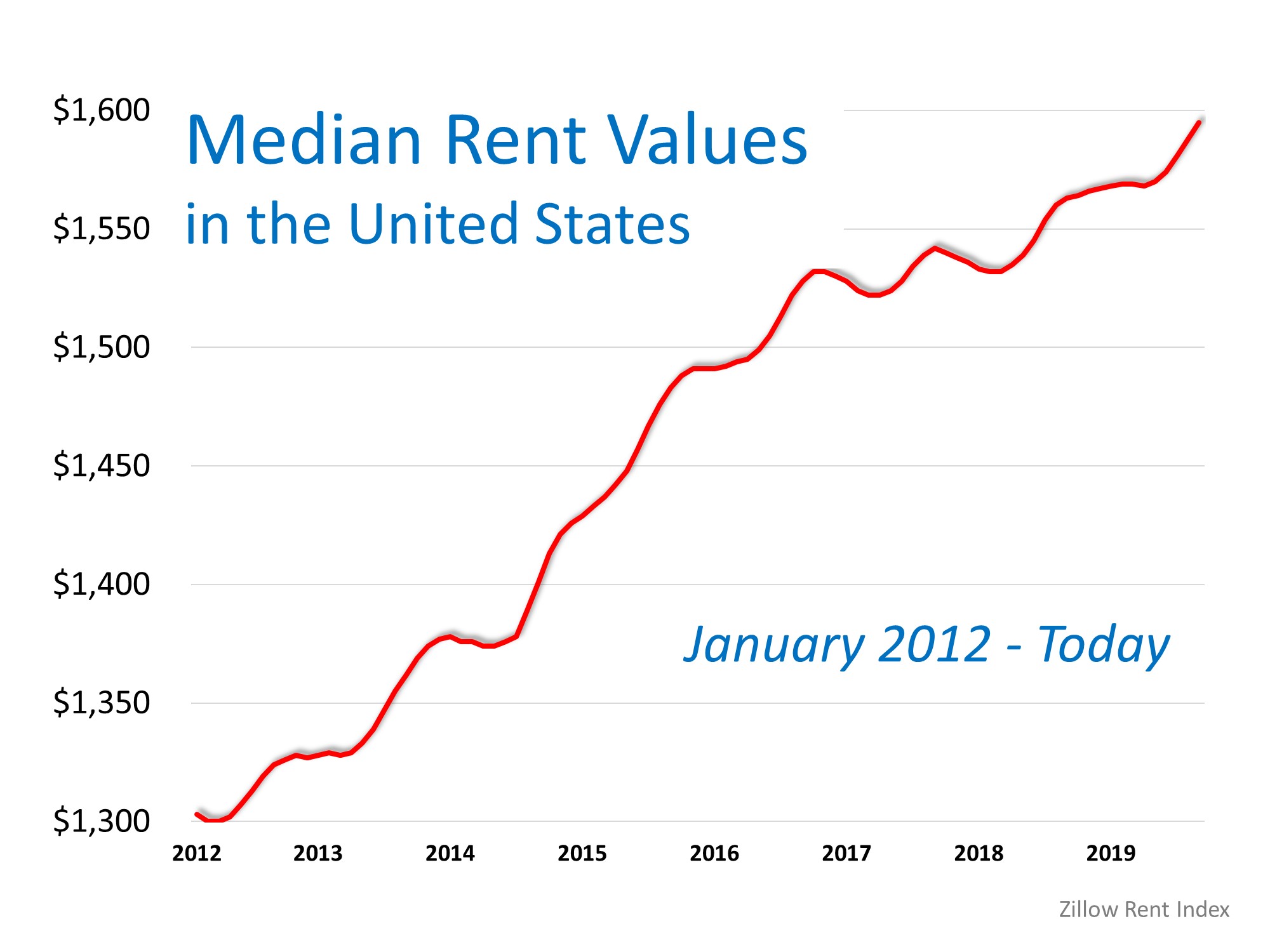
Much has been written about how residential real estate values have increased since the housing market started its recovery in 2012. However, little has been shared about what has taken place with residential rental prices. Let’s shed a little light on this subject.

In the most recent Apartment Rent Report, RentCafe explains how rents have continued to increase over the last twelve months because of a large demand and a limited supply.

“Continued interest in rental apartments and slowing construction keeps the national average rent on a strong upward trend.”

Zillow, in its latest Rent Index, agreed that rents are continuing on an “upward trend” across most of the country, and that the trend is accelerating:

“The median U.S. rent grew 2% year-over-year, to $1,595 per month. National rent growth is faster than a year ago, and while 46 of the 50 largest markets are showing deceleration in annual home value growth, annual rent growth is accelerating in 41 of the largest 50 markets.”

The Zillow report went on to detail rent increases since the beginning of the housing market recovery in 2012. Here is a graph showing the increases:


Bottom Line
It is true that home prices have risen over the past seven years, increasing the cost of owning a home. However, the cost of renting a home has also increased over that same time period.

Looking to Buy, Sell, or Invest? Contact:

David Demangos - Keller Williams Realty
Cell: 858.232.8410 | Realtor® DRE# 01905183
www.AwesomeSanDiegoRealEstate.com
Our Team Goes to Extremes to Fulfill Your Real Estate Dreams!

San Diego Real Estate Expert | Global Property Specialist
Certified Luxury Marketing Specialist | CLHMS Million Dollar Guild Agent
Green Specialist | Certified International Property Specialist
2016, 2017 & 2018 Recognition of Excellence Award Winner SDAR

Friday, August 24, 2018

What Does the Recent Rash of Price Reductions Mean to the Real Estate Market?

Last week, in a new report from Zillow, it was revealed that there has been a rash of price reductions across the country. According to the report:

There are more price cuts now than a year ago in over two-thirds of the nation’s largest metros. 


About 14% of all listings had a price cut in June.Since the beginning of the year, the share of listings with a price cut increased 1.2%
This is the greatest January-to-June increase ever reported, and more than double the January-to-June increase last year

Senior Economist Aaron Terrazas further explained:

“A rising share of on-market listings are seeing price cuts, though these price cuts are concentrated at the most expensive price-points and primarily in markets that have seen outsized price gains in recent years.”


What this DOESN’T MEAN for the real estate market…

This doesn’t mean home values have depreciated or are about to depreciate.

A seller may put a home worth $300,000 on the market for $325,000 hoping a bidding war will occur and an overanxious buyer will pay more than its actual value. That has happened often over the last few years. If the seller gets no offers and reduces the price to $300,000, it doesn’t mean the home dropped in value. It is still worth $300,000.

Home prices will continue to appreciate over the next 12 months. In this same report, Terrazas remarks:

“It’s far too soon to call this a buyer’s market, home values are still expected to appreciate at double their historic rate over the next 12 months, but the frenetic pace of the housing market over the past few years is starting to return toward a more normal trend.”
What this DOES MEAN for the real estate market…

This does mean that sellers should be more conservative when it comes to the price at which they list their homes – especially sellers in the upper end of each market.

Sellers have been listing their homes at inflated prices hoping a super-hot market will deliver a buyer willing to pay virtually any price to ensure they don’t lose the house. That strategy has worked somewhat successfully over the last two years. However, the time that strategy would have worked may have passed.

Again, quoting Aaron Terrazas in the report:

“The housing market has tilted sharply in favor of sellers over the past two years, but there are very early preliminary signs that the winds may be starting to shift ever-so-slightly.”

Bottom Line
Prices are not depreciating. However, if you want to sell your house quickly and with the least amount of hassles, pricing it correctly from the beginning makes the most sense.

Looking to Buy, Sell, or Invest? Contact:

David Demangos - Keller Williams Realty
Cell: 858.232.8410 | Realtor® BRE# 01905183
www.AwesomeSanDiegoRealEstate.com
Our Team Goes to Extremes to Fulfill Your Real Estate Dreams!

San Diego Real Estate Expert | Global Property Specialist
Certified Luxury Marketing Specialist | CLHMS Million Dollar Guild Agent
Green Specialist | Certified International Property Specialist
2016 & 2017 Recognition of Excellence Award Winner SDAR

Tuesday, August 14, 2018

The Wave of Millennial Homebuyers Continues to Swell

Many have written about the millennial generation and whether or not they, as a whole, believe in homeownership as a part of attaining their American Dream.

Comparatively speaking, millennials have taken longer to obtain traditional milestones (like getting married, having kids and buying a home) than generations before them, but that does not mean that they do not aspire to still achieve those things.

For older millennials (aged 25-34) who have established themselves in their career and are starting to build their families, homeownership is the next logical choice.

According to the Urban Institute’s State of Millennial Housing, the probability of a millennial becoming a homeowner increases by 17.9% if they are married, and by an additional 6.2% if they have children.

Last year, according to the US Census Bureau, the average age at first marriage was 30 for men and 27 for women, while the National Association of Realtors (NAR) reports that the average first-time homebuyer was 32 years old.

With most of this generation having yet to age into the ‘Responsibility Zone’ (the time in their lives when their responsibilities start to dictate their behaviors), there will be a steady wave of buyers for years to come!

Those who are currently out in the market searching for a home are being met with a strong, highly competitive seller’s market. NAR’s Chief Economist Lawrence Yun recently commented,

“Realtors® throughout the country continue to stress that there’s considerable pent-up demand for buying a home among the millennial households in their market.

Unfortunately, they’re just not making meaningful ground, and continue to be held back by too few choices in their price range, and thereby missing out on homeownership and wealth gains.”


Bottom Line

If you are currently renting and thinking about jumping into the real estate market this year, let’s get together to help you navigate our market.

Looking to Buy, Sell, or Invest? Contact:

David Demangos - Keller Williams Realty
Cell: 858.232.8410 | Realtor® BRE# 01905183
www.AwesomeSanDiegoRealEstate.com
Our Team Goes to Extremes to Fulfill Your Real Estate Dreams!

San Diego Real Estate Expert | Global Property Specialist
Certified Luxury Marketing Specialist | CLHMS Million Dollar Guild Agent
Green Specialist | Certified International Property Specialist
2016 & 2017 Recognition of Excellence Award Winner SDAR
Saturday, May 26, 2018

Access: An Important Factor in Getting Your House SOLD!

So, you’ve decided to sell your house. You’ve hired a real estate professional to help you through the entire process, and they have asked you what level of access you want to provide to your potential buyers.

There are four elements to a quality listing. At the top of the list is Access, followed by Condition, Financing, and Price. There are many levels of access that you can provide to your agent so that he or she can show your home.


Here are five levels of access that you can give to buyers, along with a brief description:

Lockbox on the Door – this allows buyers the ability to see the home as soon as they are aware of the listing, or at their convenience.

Providing a Key to the Home – although the buyer’s agent may need to stop by an office to pick up the key, there is little delay in being able to show the home.

Open Access with a Phone Call – the seller allows showings with just a phone call’s notice.

By Appointment Only
(example: 48-Hour Notice) – Many buyers who are relocating for a new career or promotion start working in that area prior to purchasing their home. They often like to take advantage of free time during business hours (such as their lunch break) to view potential homes. Because of this, they may not be able to plan their availability far in advance or may be unable to wait 48 hours to see the house.

Limited Access
(example: the home is only available on Mondays or Tuesdays at 2pm or for only a couple of hours a day) – This is the most difficult way to be able to show your house to potential buyers.

With May proving to be the best month to sell your home, access can make or break your ability to get the price you are looking for, or even sell your house at all.

Looking to Buy, Sell, or Invest? Contact:

David Demangos - Keller Williams Realty
Cell: 858.232.8410 | Realtor® BRE# 01905183
www.AwesomeSanDiegoRealEstate.com
Our Team Goes to Extremes to Fulfill Your Real Estate Dreams!

San Diego Real Estate Expert | Global Property Specialist
Certified Luxury Marketing Specialist | CLHMS Million Dollar Guild Agent
Green Specialist | Certified International Property Specialist
2016 & 2017 Recognition of Excellence Award Winner SDAR
Homeownership: “A Man Is Not a Complete Man, Unless He Owns a House”

The famous quote by Walt Whitman, “A man is not a whole and complete man, unless he owns a house and the ground it stands on,” can be used to describe homeownership in America today.


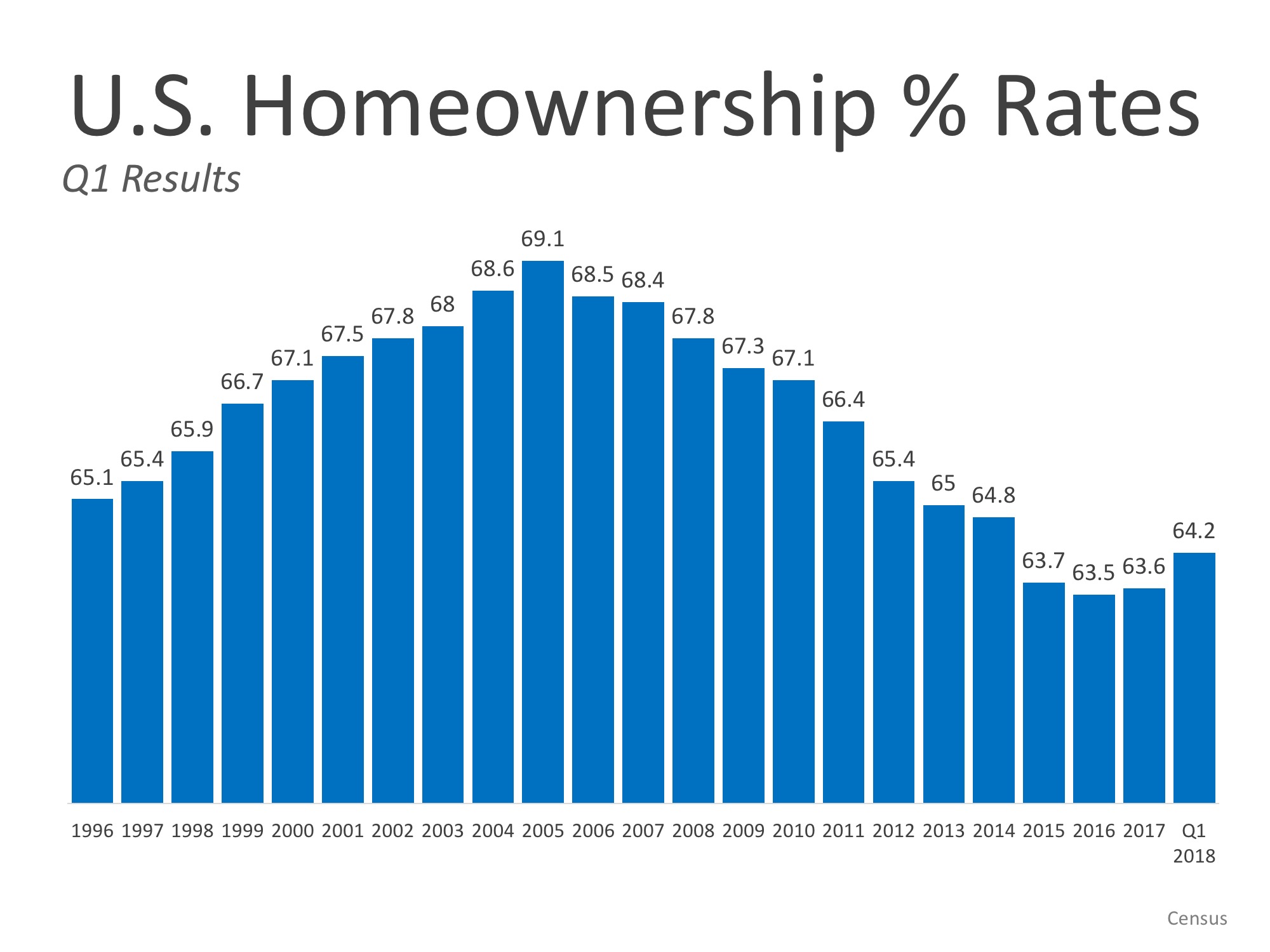
 The Census revealed that the percentage of homeowners in America has been steadily climbing back up since hitting a 50-year low in 2016. The homeownership rate in the first quarter of 2018 was 64.2%, higher than last year’s 63.6%.


Chief Economist, Dr. Ralph McLaughlin, in his VUE Blog gave these new homeownership numbers some context:

“The trend is clear: the homeownership rate has been ticking up for five consecutive quarters, and the number of new renter households has fallen for four consecutive quarters. Owner-occupied households grew by 1.345 million from a year ago, while the number of renters actually fell by 286,000 households.

The fact that we now have four consecutive quarters where owner households increased while renter households fell is a strong sign households are making a switch from renting to buying. This is a trend that multifamily builders, investors, and landlords should take note of.”

In a separate article comparing the rental population in America to the homeowner population, Realtor.com also concluded that the gap is now shrinking:

“The U.S. added 1.3 million owner households over the last year and lost 286,000 renter households, the fourth consecutive quarter in which the number of renter households declined from the same quarter a year earlier. That could pose challenges for apartment landlords, who are bracing this year for one of the largest infusions of new rental supply in three decades.”

America’s belief in homeownership was also evidenced in a survey conducted by Pew Research. They asked consumers “How important is homeownership to achieving the American Dream?”

The results:
43% said homeownership was essential to the American Dream
48% said homeownership was important to the American Dream
Only 9% said it was not important

Bottom Line

Homeownership has been, is, and always will be a crucial part of the American Dream.

Looking to Buy, Sell, or Invest? Contact:

David Demangos - Keller Williams Realty
Cell: 858.232.8410 | Realtor® BRE# 01905183
www.AwesomeSanDiegoRealEstate.com
Our Team Goes to Extremes to Fulfill Your Real Estate Dreams!

San Diego Real Estate Expert | Global Property Specialist
Certified Luxury Marketing Specialist | CLHMS Million Dollar Guild Agent
Green Specialist | Certified International Property Specialist
2016 & 2017 Recognition of Excellence Award Winner SDAR
Friday, May 25, 2018

How Current Interest Rates Can Have a High Impact on Your Purchasing Power

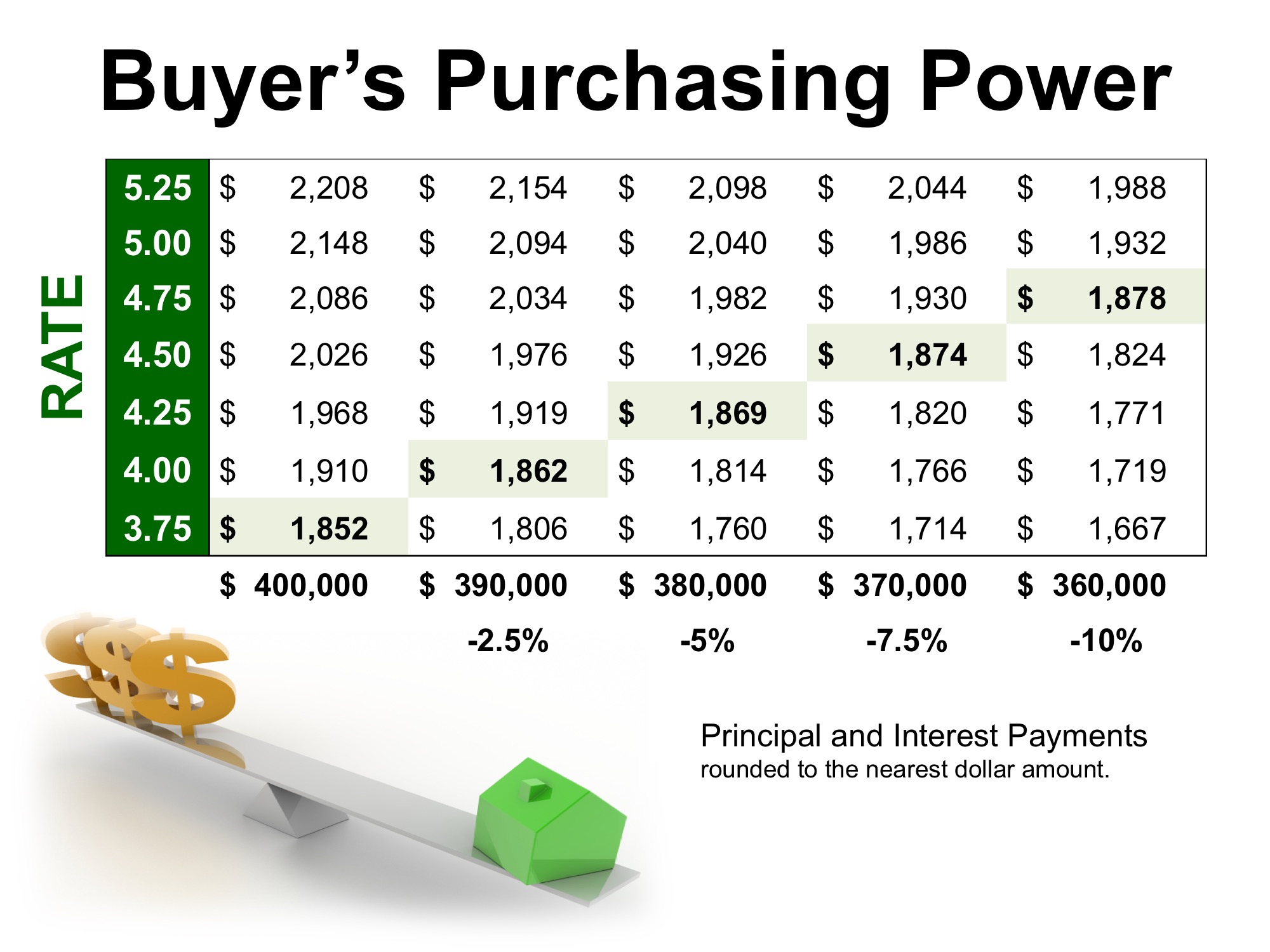
According to Freddie Mac’s latest Primary Mortgage Market Survey, interest rates for a 30-year fixed rate mortgage are currently at 4.61%, which is still near record lows in comparison to recent history!

The interest rate you secure when buying a home not only greatly impacts your monthly housing costs, but also impacts your purchasing power.

Purchasing power, simply put, is the amount of home you can afford to buy for the budget you have available to spend. As rates increase, the price of the house you can afford to buy will decrease if you plan to stay within a certain monthly housing budget.

The chart below shows the impact that rising interest rates would have if you planned to purchase a home within the national median price range while keeping your principal and interest payments between $1,850-$1,900 a month.


With each quarter of a percent increase in interest rate, the value of the home you can afford decreases by 2.5% (in this example, $10,000). Experts predict that mortgage rates will be closer to 5% by this time next year.

Act now to get the most house for your hard-earned money.

Looking to Buy, Sell, or Invest? Contact:

David Demangos - Keller Williams Realty
Cell: 858.232.8410 | Realtor® BRE# 01905183
www.AwesomeSanDiegoRealEstate.com
Our Team Goes to Extremes to Fulfill Your Real Estate Dreams!

San Diego Real Estate Expert | Global Property Specialist
Certified Luxury Marketing Specialist | CLHMS Million Dollar Guild Agent
Green Specialist | Certified International Property Specialist
2016 & 2017 Recognition of Excellence Award Winner SDAR
Wednesday, May 16, 2018

4 Reasons Why Today’s Housing Market is NOT 2006 All Over Again

With home prices rising again this year, some are concerned that we may be repeating the 2006 housing bubble that caused families so much pain when it collapsed. Today’s market is quite different than the bubble market of twelve years ago. There are four key metrics that explain why:

Home Prices
Mortgage Standards
Mortgage Debt
Housing Affordability

1. HOME PRICES

There is no doubt that home prices have reached 2006 levels in many markets across the country. However, after more than a decade, home prices should be much higher based on inflation alone.

Frank Nothaft is the Chief Economist for CoreLogic (which compiles some of the best data on past, current, and future home prices). Nothaft recently explained:

“Even though CoreLogic’s national home price index got to the same level it was at the prior peak in April of 2006, once you account for inflation over the ensuing 11.5 years, values are still about 18% below where they were.” (emphasis added)

2. MORTGAGE STANDARDS

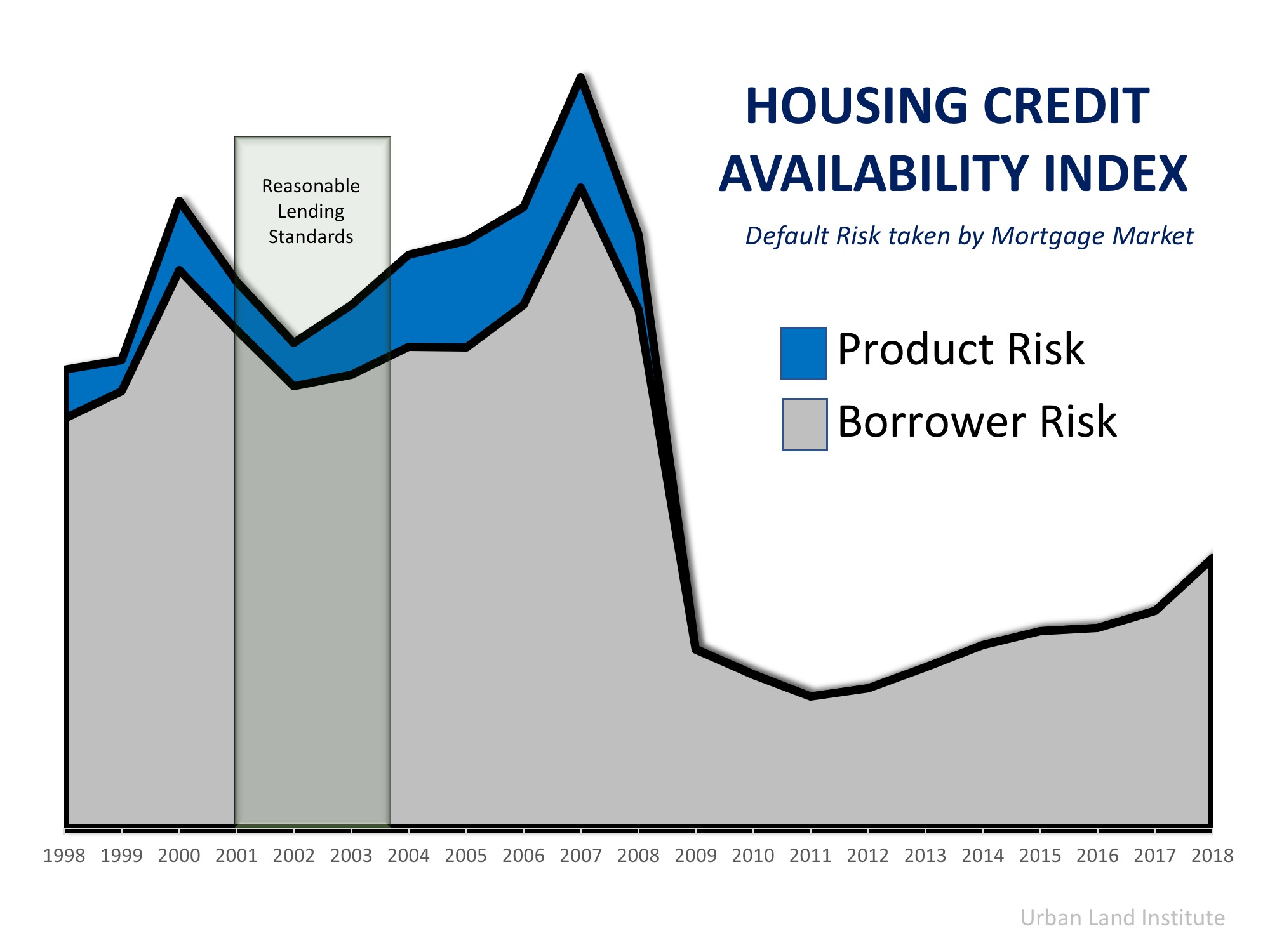
Some are concerned that banks are once again easing lending standards to a level similar to the one that helped create the last housing bubble. However, there is proof that today’s standards are nowhere near as lenient as they were leading up to the crash.

The Urban Institute’s Housing Finance Policy Center issues a Housing Credit Availability Index (HCAI). According to the Urban Institute:


“The HCAI measures the percentage of home purchase loans that are likely to default—that is, go unpaid for more than 90 days past their due date. A lower HCAI indicates that lenders are unwilling to tolerate defaults and are imposing tighter lending standards, making it harder to get a loan. A higher HCAI indicates that lenders are willing to tolerate defaults and are taking more risks, making it easier to get a loan.”

The graph below reveals that standards today are much tighter on a borrower’s credit situation and have all but eliminated the riskiest loan products.


3. MORTGAGE DEBT

Back in 2006, many homeowners mistakenly used their homes as ATMs by withdrawing their equity and spending it with no concern for the ramifications. They overloaded themselves with mortgage debt that they couldn’t (or wouldn’t) repay when prices crashed. That is not occurring today.

The best indicator of mortgage debt is the Federal Reserve Board’s household Debt Service Ratio for mortgages, which calculates mortgage debt as a percentage of disposable personal income.

At the height of the bubble market a decade ago, the ratio stood at 7.21%. That meant over 7% of disposable personal income was being spent on mortgage payments. Today, the ratio stands at 4.48% – the lowest level in 38 years!

4. HOUSING AFFORDABILITY

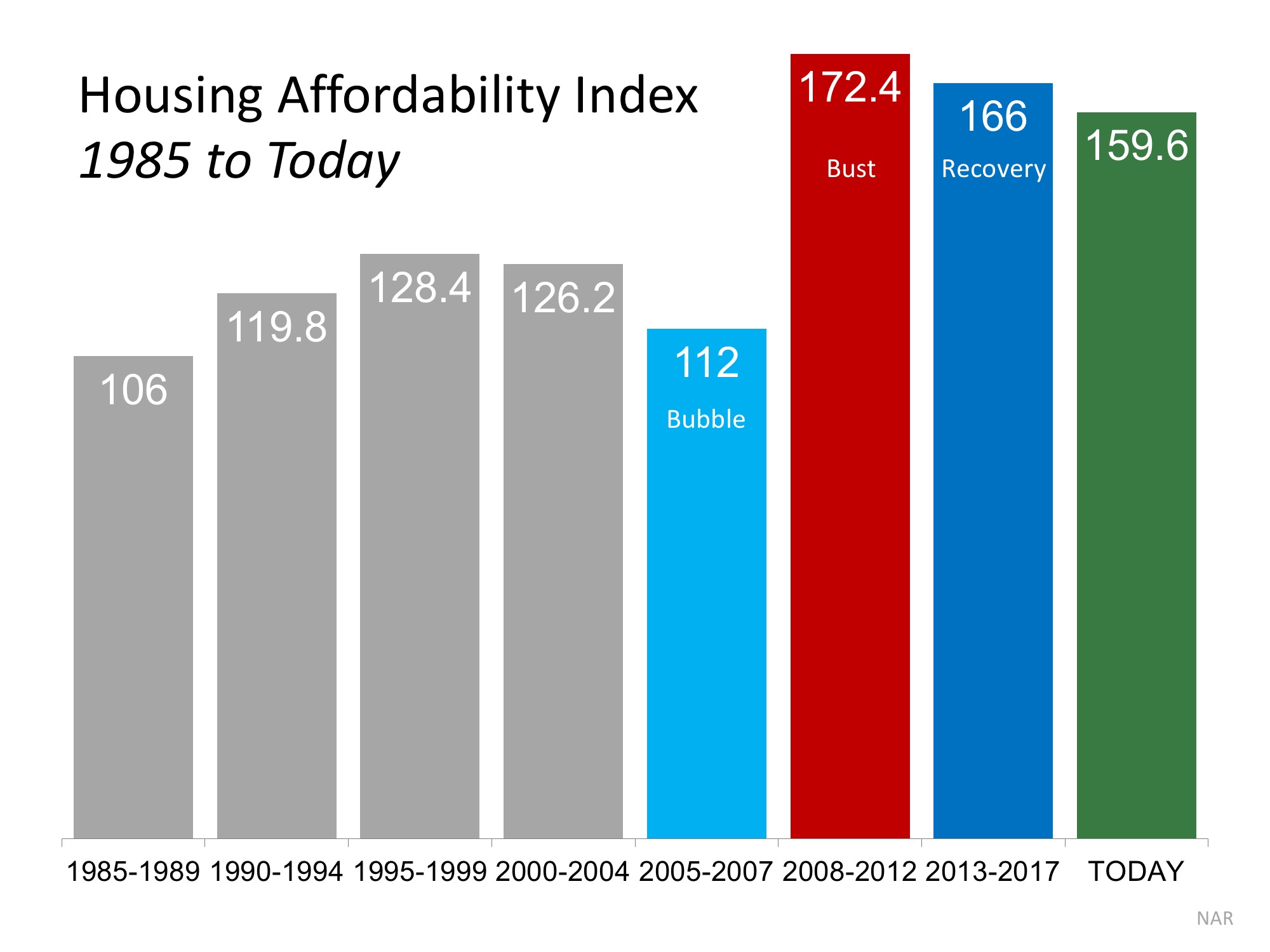
With both house prices and mortgage rates on the rise, there is concern that many buyers may no longer be able to afford a home. However, when we look at the Housing Affordability Index released by the National Association of Realtors, homes are more affordable now than at any other time since 1985 (except for when prices crashed after the bubble popped in 2008).


Bottom Line

After using four key housing metrics to compare today to 2006, we can see that the current market is not anything like the bubble market.

Looking to Buy, Sell, or Invest? Contact:

David Demangos - Keller Williams Realty
Cell: 858.232.8410 | Realtor® BRE# 01905183
www.AwesomeSanDiegoRealEstate.com
Our Team Goes to Extremes to Fulfill Your Real Estate Dreams!

San Diego Real Estate Expert | Global Property Specialist
Certified Luxury Marketing Specialist | CLHMS Million Dollar Guild Agent
Green Specialist | Certified International Property Specialist
2016 & 2017 Recognition of Excellence Award Winner SDAR
Sunday, May 13, 2018

What If I Wait Until Next Year to Buy a Home?

We recently shared that national home prices have increased by 6.7% year-over-year. Over that same time period, interest rates have remained historically low which has allowed many buyers to enter the market.

As a seller, you will likely be most concerned about ‘short-term price’ – where home values are headed over the next six months. As a buyer, however, you must not be concerned about price, but instead about the ‘long-term cost’ of the home.

The Mortgage Bankers Association (MBA), Freddie Mac, and Fannie Mae all project that mortgage interest rates will increase by this time next year. According to CoreLogic’s most recent Home Price Index Report, home prices will appreciate by 5.2% over the next 12 months.


What Does This Mean as a Buyer?

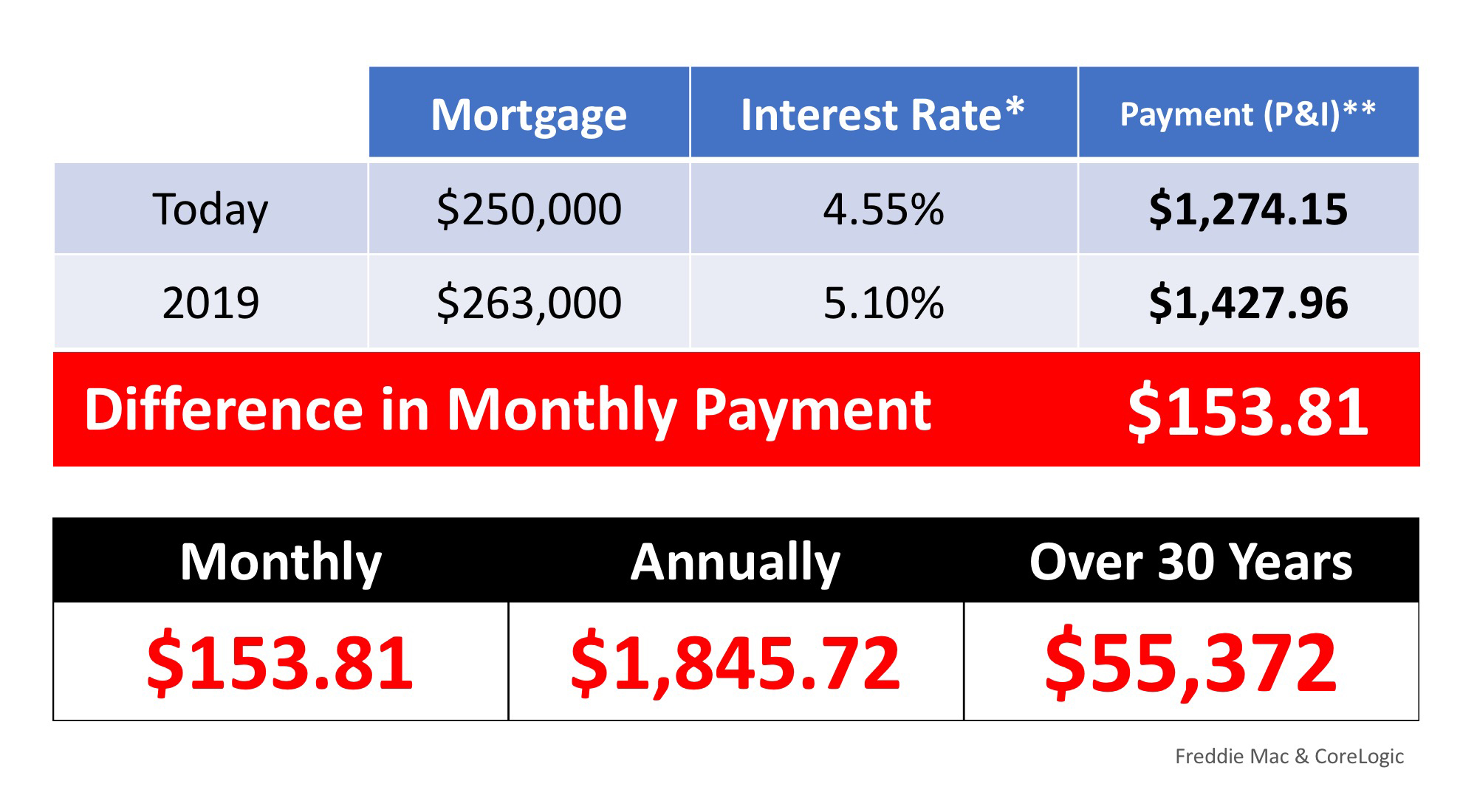
If home prices appreciate by 5.2% over the next twelve months as predicted by CoreLogic, here is a simple demonstration of the impact that an increase in interest rate would have on the mortgage payment of a home selling for approximately $250,000 today:


Bottom Line

If buying a home is in your plan for this year, doing it sooner rather than later could save you thousands of dollars over the terms of your loan.

Looking to Buy, Sell, or Invest? Contact:

David Demangos - Keller Williams Realty
Cell: 858.232.8410 | Realtor® BRE# 01905183
www.AwesomeSanDiegoRealEstate.com
Our Team Goes to Extremes to Fulfill Your Real Estate Dreams!

San Diego Real Estate Expert | Global Property Specialist
Certified Luxury Marketing Specialist | CLHMS Million Dollar Guild Agent
Green Specialist | Certified International Property Specialist
2016 & 2017 Recognition of Excellence Award Winner SDAR
Saturday, May 12, 2018

Why Home Prices Are Increasing

There are many unsubstantiated theories as to why home values are continuing to increase. From those who are worried that lending standards are again becoming too lenient (data shows this is untrue), to those who are concerned that prices are again approaching boom peaks because of “irrational exuberance” (this is also untrue as prices are not at peak levels when they are adjusted for inflation), there seems to be no shortage of opinion.

However, the increase in prices is easily explained by the theory of supply & demand. Whenever there is a limited supply of an item that is in high demand, prices increase.

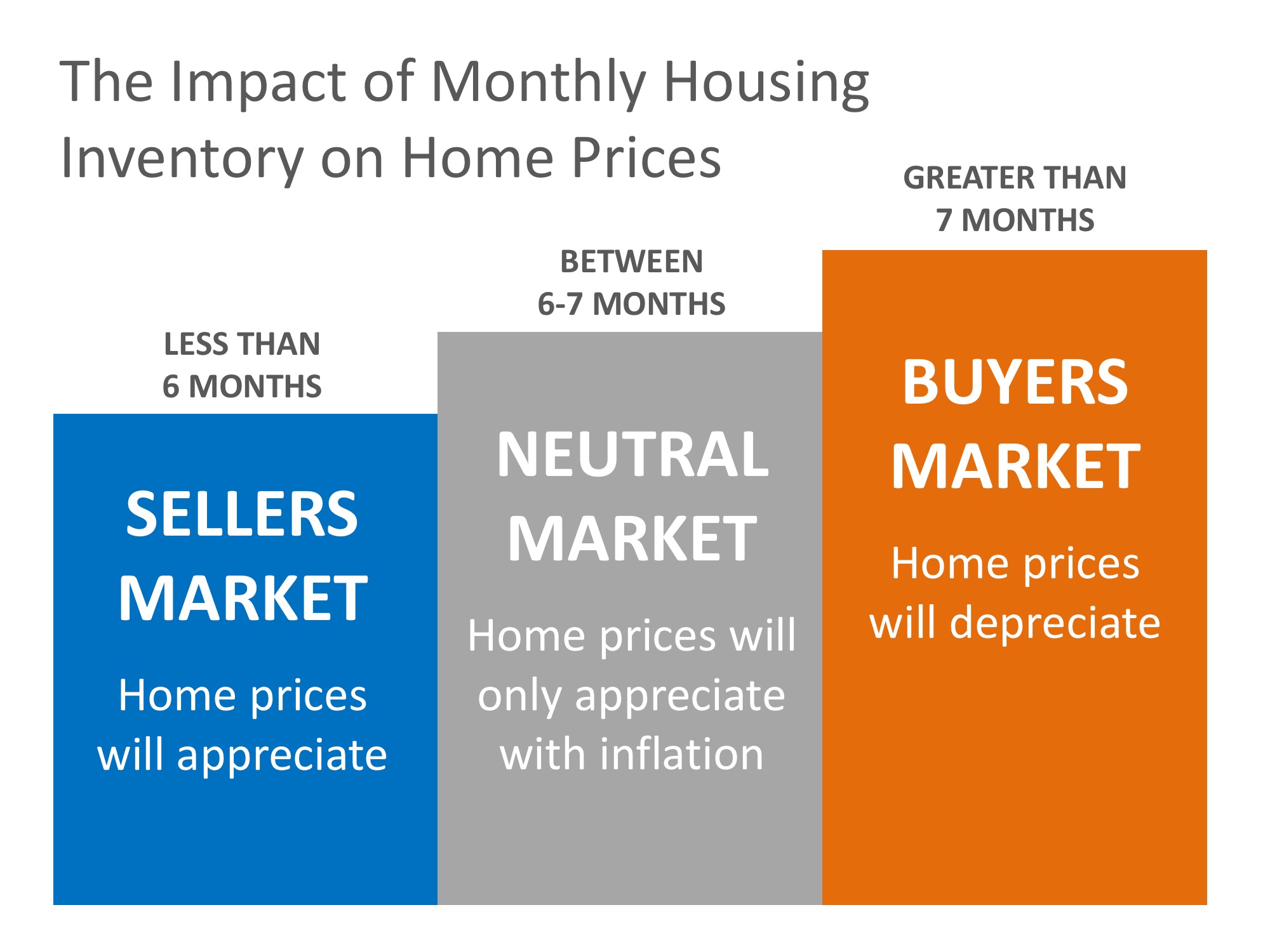
It is that simple. In real estate, it takes a six-month supply of existing salable inventory to maintain pricing stability. In most housing markets, anything less than six months will cause home values to appreciate and anything more than seven months will cause prices to depreciate (see chart below).


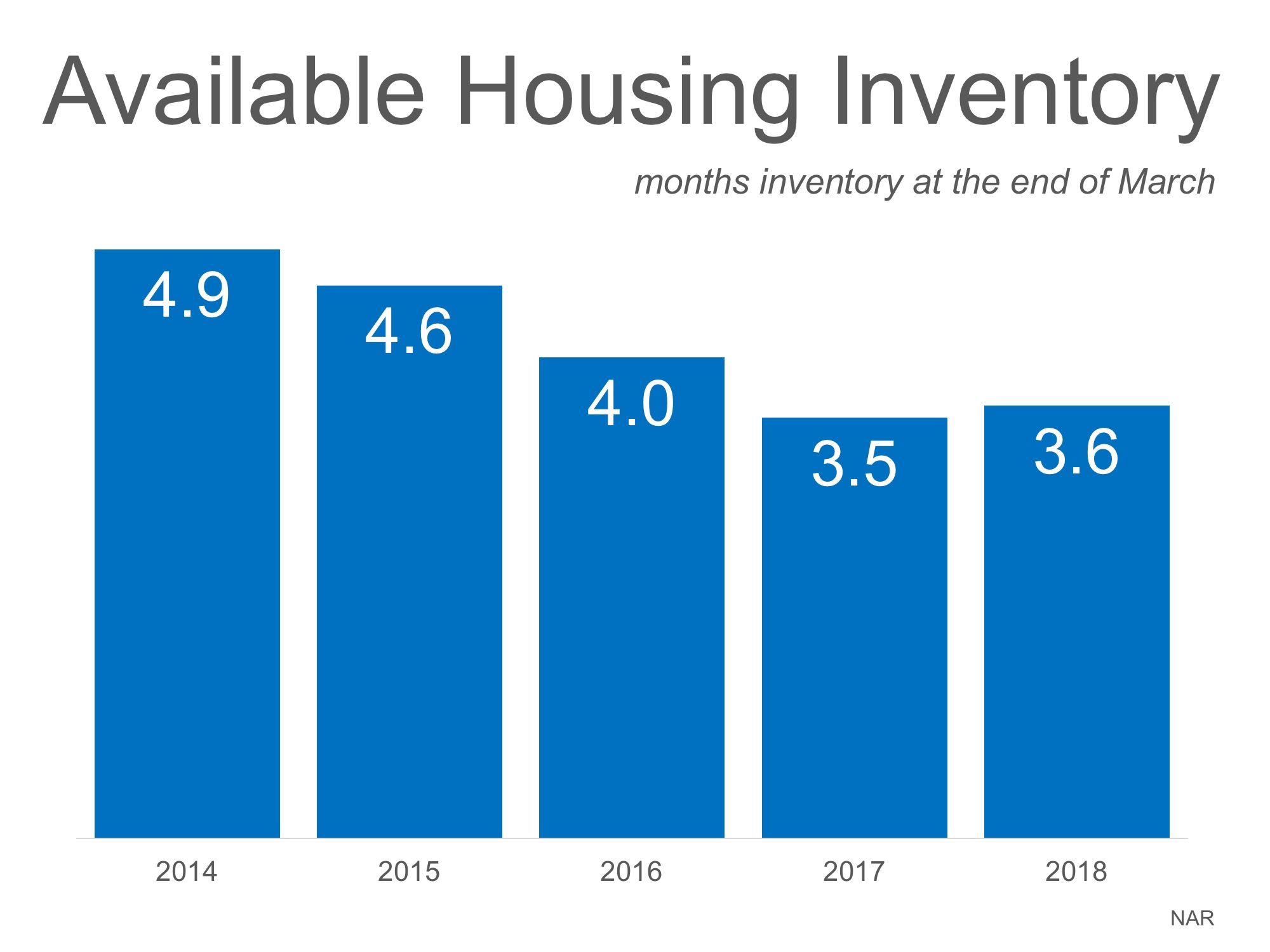
According to the Existing Home Sales Report from the National Association of Realtors (NAR), the monthly inventory of homes for sale has been below six months for the last five years (see chart below).


Bottom Line

If buyer demand continues to outpace the current supply of existing homes for sale, prices will continue to appreciate. Nothing nefarious is taking place. It is simply the theory of supply & demand working as it should.

Looking to Buy, Sell, or Invest? Contact:

David Demangos - Keller Williams Realty
Cell: 858.232.8410 | Realtor® BRE# 01905183
www.AwesomeSanDiegoRealEstate.com
Our Team Goes to Extremes to Fulfill Your Real Estate Dreams!

San Diego Real Estate Expert | Global Property Specialist
Certified Luxury Marketing Specialist | CLHMS Million Dollar Guild Agent
Green Specialist | Certified International Property Specialist
2016 & 2017 Recognition of Excellence Award Winner SDAR
Tuesday, May 8, 2018

This Just In: Data Says May is the Best Month to Sell Your Home

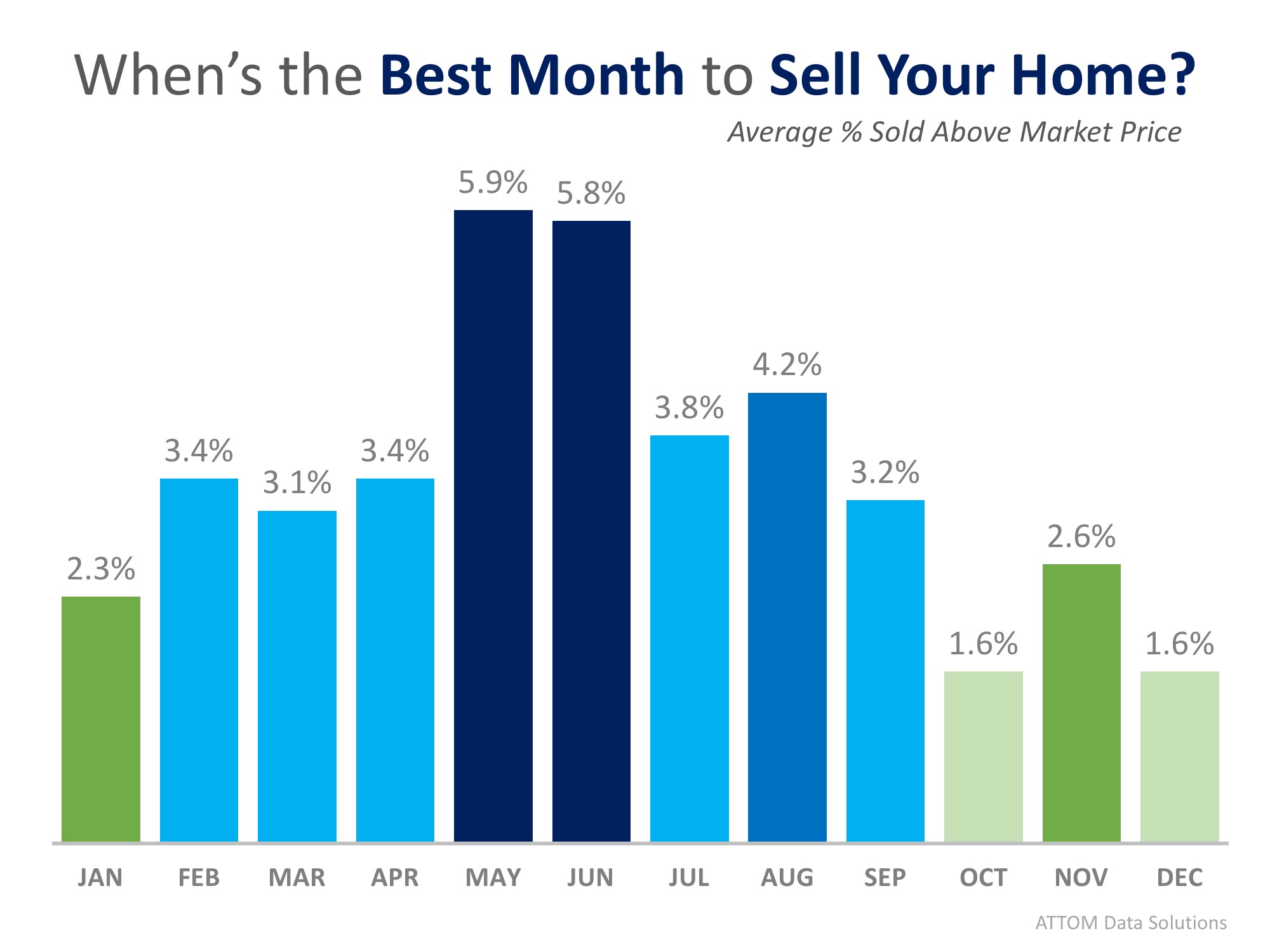
According to a newly released study by ATTOM Data Solutions, selling your home in the month of May will net you an average of 5.9% above estimated market value for your home.

For the study, ATTOM performed an “analysis of 14.7 million home sales from 2011 to 2017” and found the average seller premium achieved for each month of the year. Below is a breakdown by month:


ATTOM even went a step further and broke their results down by day.
Top 5 Days to Sell:


June 28th – 9.1% above market
February 15th – 9.0% above market
May 31st – 8.3% above market
May 29th – 8.2% above market
June 21st – 8.1% above market

It should come as no surprise that May and June dominate as the top months to sell and that 4 of the top 5 days to sell fall in those two months. The second quarter of the year (April, May, June) is referred to as the Spring Buyers Season, when competition is fierce to find a dream home, which often leads to bidding wars.

One caveat to mention though, is that when broken down by metro, ATTOM noticed that while warmer climates share in the overall trend, it turns out that they have different top months for sales. The best month to get the highest price in Miami, FL, for instance, was January, and Phoenix, AZ came in with November leading the charge.

If you’re thinking of selling your home this year, the time to list is NOW! According to the National Association of Realtors, homes sold in an average of just 30 days last month! If you list now, you’ll have a really good chance to sell in May or June, setting yourself up for getting the best price!


Bottom Line

Let’s get together to discuss the market conditions in our area and get you the most exposure to the buyers who are ready and willing to buy!

Looking to Buy, Sell, or Invest? Contact:

David Demangos - Keller Williams Realty
Cell: 858.232.8410 | Realtor® BRE# 01905183
www.AwesomeSanDiegoRealEstate.com
Our Team Goes to Extremes to Fulfill Your Real Estate Dreams!

San Diego Real Estate Expert | Global Property Specialist
Certified Luxury Marketing Specialist | CLHMS Million Dollar Guild Agent
Green Specialist | Certified International Property Specialist
2016 & 2017 Recognition of Excellence Award Winner SDAR
Home Inspections: What to Expect

So you made an offer, it was accepted, and now your next task is to have the home inspected prior to closing. Oftentimes, agents make your offer contingent on a clean home inspection.

This contingency allows you to renegotiate the price you paid for the home, ask the sellers to cover repairs, or even, in some cases, walk away. Your agent can advise you on the best course of action once the report is filed.


How to Choose an Inspector

Your agent will most likely have a short list of inspectors that they have worked with in the past that they can recommend to you. HGTV recommends that you consider the following 5 areas when choosing the right home inspector for you:

Qualifications – find out what’s included in your inspection and if the age or location of your home may warrant specific certifications or specialties.

Sample Reports
– ask for a sample inspection report so you can review how thoroughly they will be inspecting your dream home. The more detailed the report, the better in most cases.

References – do your homework – ask for phone numbers and names of past clients who you can call to ask about their experiences.

Memberships – Not all inspectors belong to a national or state association of home inspectors, and membership in one of these groups should not be the only way to evaluate your choice. Membership in one of these organizations often means that continued training and education are provided.

Errors & Omission Insurance
– Find out what the liability of the inspector or inspection company is once the inspection is over. The inspector is only human after all, and it is possible that they might miss something they should have seen.

Ask your inspector if it’s okay for you to tag along during the inspection, that way they can point out anything that should be addressed or fixed.

Don’t be surprised to see your inspector climbing on the roof or crawling around in the attic and on the floors. The job of the inspector is to protect your investment and find any issues with the home, including but not limited to: the roof, plumbing, electrical components, appliances, heating & air conditioning systems, ventilation, windows, the fireplace and chimney, the foundation, and so much more!

Bottom Line

They say ‘ignorance is bliss,’ but not when investing your hard-earned money into a home of your own. Work with a professional who you can trust to give you the most information possible about your new home so that you can make the most educated decision about your purchase.

Looking to Buy, Sell, or Invest? Contact:

David Demangos - Keller Williams Realty
Cell: 858.232.8410 | Realtor® BRE# 01905183
www.AwesomeSanDiegoRealEstate.com
Our Team Goes to Extremes to Fulfill Your Real Estate Dreams!

San Diego Real Estate Expert | Global Property Specialist
Certified Luxury Marketing Specialist | CLHMS Million Dollar Guild Agent
Green Specialist | Certified International Property Specialist
2016 & 2017 Recognition of Excellence Award Winner SDAR

Friday, May 8, 2015

Awesome San Diego Real Estate Sells Carmel Valley CA


Looking to Buy, Sell, or Invest in Carmel Valley, CA? Contact:

David Demangos
858.232.8410
Locally Known, Globally Connected
Luxury Home Marketing Specialist
Global Property Specialist

David@AwesomeSanDiegoRealEstate.com
www.AwesomeSanDiegoRealEstate.com
Our Team Goes to Extremes to Fulfill Your Real Estate Dreams!

Wednesday, April 1, 2015

Reasons to Live in Carmel Valley, CA 92130


Looking to Buy, Sell, or Invest in Carmel Valley, CA? Contact:

David Demangos
858.232.8410
Locally Known, Globally Connected
Luxury Home Marketing Specialist
Global Property Specialist

David@AwesomeSanDiegoRealEstate.com
www.AwesomeSanDiegoRealEstate.com
Our Team Goes to Extremes to Fulfill Your Real Estate Dreams!

Sunday, February 1, 2015

Good Idea for More Home Privacy

In close quarters with neighbors all around, you’ll want to create privacy from above as well as the side. This cozy patio area is sheltered by a Craftsman-style fence (check out those tapered columns) that supports an overhead pergola. The pergola rafters shield views from second-story windows in nearby houses.

Looking to Buy, Sell, or Invest? Contact:


David Demangos
858.232.8410
Locally Known, Globally Connected
Luxury Home Marketing Specialist
Global Property Specialist

David@AwesomeSanDiegoRealEstate.com

www.AwesomeSanDiegoRealEstate.com
Our Team Goes to Extremes to Fulfill Your Real Estate Dreams!

Wednesday, November 19, 2014

Real Estate and Money-Wise Kids

Kid Saving
Kids are never too young to learn the skills of saving, budgeting, and other basics for becoming a money-wise individual.

In fact, a recent survey conducted by T. Rowe Price found that 60 percent of kids whose parents frequently talk to them about budgeting feel they are smart about money, as opposed to just 34 percent of kids whose parents do not.

Financial experts agree that the sooner parents start imparting key money concepts, the more effective they will be in raising financially responsible adults. While it may seem like an involved topic, it's as simple as starting a conversation.

"There is a clear correlation between talking with kids about financial topics and their habits," said Judith Ward, a senior financial planner with T. Rowe Price. "Parents can invest in their kids by talking to them weekly about money matters."

The survey also found that parents are having more financial conversations with boys rather than girls.

"Boys and girls should have the same opportunities to learn about money matters at home so they can grow into financially savvy adults," Ward says. "By talking to kids of either gender about things like saving for college, parents can help kids get involved and excited about their future."

Wednesday, October 29, 2014

Tips to Sell Your Home in the Fall

If you are trying to sell your home this fall, consider making some home improvements to boost the chance of selling.
Check out these ways to keep your landscaping and exterior in top condition.
  • Rake leaves frequently; not only does it look better, but keeping loose debris from walkways creates a safer environment for potential buyers.
  • Mulch your garden beds. This will provide an added layer of protection for your plants as winter creeps in.
  • If your summer flowers are fading or wilting after a long season, create a welcoming experience by replacing them with fresh mums and other fall friendly colorful flowers.
  • Draw attention to your front entry by adding a fall wreath to your door.

Friday, October 3, 2014

Don’t Get Caught in the ‘Renter’s Trap’

Don’t Get Caught in the ‘Renter’s Trap’ | Keeping Current MattersIn a recent press release, Zillow stated that the affordability of the nation’s rental inventory is currently much worse than affordability of the country’s home sale inventory. The release revealed two things:
1.    Nationally, renters signing a lease at the end of the second quarter paid 29.5% of their income to rent
2.    U.S. home buyers at the end of the second quarter could expect to pay 15.3% of their incomes to a mortgage on the typical home
Furthermore, renters pay more than the average of 24.9% that was paid in the pre-bubble period while buyers actually pay far less than the 22.1% share homeowners devoted to mortgages in the pre-bubble days. One of my smart neighbors just sold his boat today, and is using the money for his downbpayment on a new home in Reno. (Smart move)

Don’t Become Trapped

If you are currently renting you could get caught up in a cycle where increasing rents continue to make it impossible for you to save for a necessary down payment. Zillow Chief Economist Dr. Stan Humphries explains:
"The affordability of for-sale homes remains strong, which is encouraging for those buyers that can save for a down payment and capitalize on low mortgage interest rates… As rents keep rising, along with interest rates and home values, saving for a down payment and attaining homeownership becomes that much more difficult for millions of current renters.”

 Know Your Options
Perhaps you already have saved enough to buy your first home. HousingWire recently reported that analysts at Nomura believe:
“It’s not that Millennials and other potential homebuyers aren’t qualified in terms of their credit scores or in how much they have saved for their down payment. 

It’s that they think they’re not qualified or they think that they don’t have a big enough down payment.” 


Wednesday, September 10, 2014

Buying a Home is 38% Less Expensive than Renting

In Trulia’s 2014 Rent vs Buy report, they explained that homeownership remains cheaper than renting throughout the 100 largest metro areas in the United States; ranging from an average of 5% in Honolulu, all the way to 66% in Detroit, and 38% Nationwide! The other interesting findings in the report include:
Even though prices increased sharply in many markets over the past year, low mortgage rates have kept homeownership from becoming more expensive than renting.

Some markets might tip in favor of renting later this year as prices continue to rise faster than rents and if – as most economists expect – mortgage rates rise, due both to the strengthening economy and Fed tapering.
Nationally, rates would have to rise to 10.6% for renting to be cheaper than buying – and rates haven’t been that high since 1989.

Bottom Line

Buying a home makes sense. Rental costs have historically increased at a higher rate of inflation. Lock in a mortgage payment now before home prices and mortgage rates rise as experts expect they will. 


David Demangos
Global Property Specialist
858.232.8410
David@AwesomeSanDiegoRealEstate.com
www.AwesomeSanDiegoRealEstate.com
Our Team Goes to Extremes to Fulfill Your Real Estate Dreams!

Monday, July 14, 2014

Should I Rent My House if I Can’t Sell It?


Should I Rent If I Can't Sell | The KCM Crew


Rents are skyrocketing and homes are still at great prices. These two situations are also causing some sellers to consider renting their home instead of selling it. After all, a homeowner can get great rental income now and perhaps wait until house values increase even further before selling.
This logic makes sense in some cases. There is a strong belief that residential real estate is a great investment right now. However, if you have no desire to actually become an educated investor in this sector, you may be headed for more trouble than you were looking for. You should answer the following questions to make sure this is the right course of action for you and your family.

10 Questions to ask BEFORE renting your home

1.   How will you respond if your tenant says they can’t afford to pay the rent this month because of more pressing obligations?
2.   Because of the economy, many homeowners cannot make their mortgage payment. What percentage of tenants do you think cannot afford to pay their rent?
3.   Have you interviewed experienced eviction attorneys in case a challenge does arise?
4.   Have you talked to your insurance company about a possible increase in premiums as liability is greater in a non-owner occupied home?
5.   Will you allow pets? Cats? Dogs? How big a dog?
6.   How will you actually collect the rent? By mail? In person?
7.   Repairs are part of being a landlord. Who will take tenant calls when necessary repairs come up?
8.   Do you have a list of craftspeople readily available to handle these repairs?
9.   How often will you do a physical inspection of the property?
10. Will you alert your current neighbors that you are renting the house?

Bottom Line

Again, renting out residential real estate is historically a great investment. However, it is not without its challenges. Make sure you have decided to rent the house because you want to be an investor, not because you are hoping to get a few extra dollars by postponing a sale.


Who do you know looking to buy or sell a home? Call David.

David Demangos
Keller Williams Realty
Cell: 858.232.8410
Realtor® BRE# 01905183

www.AwesomeSanDiegoRealEstate.com

San Diego Real Estate Elite - Global Property Specialist - Green Specialist
-ALC Committee - CIPS
Our Team Goes to Extremes to Fulfill Your Real Estate Dreams!

Download The #1 Real Estate Live Home Search App Below


Wednesday, June 4, 2014

Millionaires Use Real Estate Agents

Do as I Say… not as I Do

Confusion2

This adage could be no truer today after it has been reported, in a recent Herald Tribune article. That when it came to selling his Florida mansion, Al Bennati, the longtime chief executive of BuyOwner.com, has chosen to list his home with a local real estate agent. BuyOwner.com is one of many websites out there now that encourage home owners that they do not need to enlist the help of a professional agent to be able to sell their home. They go as far as to tell homeowners: 

"BuyOwner.com allows you to reach the most potential buyers in the shortest amount of time, in the most effective (the Internet) and most cost effective manner (no commission!) possible."
Let’s break down that statement:

Myth #1 – The internet is the most effective way to sell your home

Many have said that, with the introduction of home search on the internet, hiring an agent is no longer a necessity. When the time came to list his own home, Bennati went against his own advice saying:
"To sell a home of this magnitude, it needs to be done by a person and a company that reaches buyers of this caliber."

Myth #2 – FSBO’ing is the most cost effective solution

Without proper exposure to the “right kind of buyers” your home will not sell. Many real estate professionals have elaborate strategies to get your listing in front of exactly who needs to see it.
The most recent Home Sellers’ and Buyers’ Profile Report from the National Association of Realtors revealed that, though 92% of buyers search for a home on the internet, 90% still use a real estate professional.

Bottom Line

Two separate people made fortunes convincing others to sell their home through their FSBO sites. Yet, when it came to selling their own home, they recognized the value of using a real estate professional. There is a reason the real estate industry has been around for centuries: it performs a valuable service.

Who do you know looking to buy or sell a home? Call David!

David Demangos
Keller Williams Realty
Cell: 858.232.8410
Realtor® BRE# 01905183

www.AwesomeSanDiegoRealEstate.com

San Diego Real Estate Area Expert / Green Specialist / ALC Committee
Our Team Goes to Extremes to Fulfill Your Real Estate Dreams!

Download The #1 Real Estate Live Home Search App Below