Tuesday, February 10, 2026

Home Updates That Actually Pay You Back When You Sell

Planning to sell this spring? While you may be tempted to hold off until the first blooms or the spring showers hit, that's actually waiting too long to get started by today’s standards.

Buyers have more options than they did a few years ago. It's worth tackling repairs now to ensure your house is set up to stand out. Because you don’t want to be caught scrambling right before the spring rush. Or, running out of time to do the work your house really needs.

The key is focusing on updates that actually matter. And that’s exactly where return-on-investment (ROI) data comes in handy.
Which Projects Tend to Pay Off?

Every year, Zonda looks at which home improvements deliver the most bang for the buck when you go to sell the home. And the results are surprising.

The green in the chart below shows the updates where sellers have the biggest potential to add value based on that research:
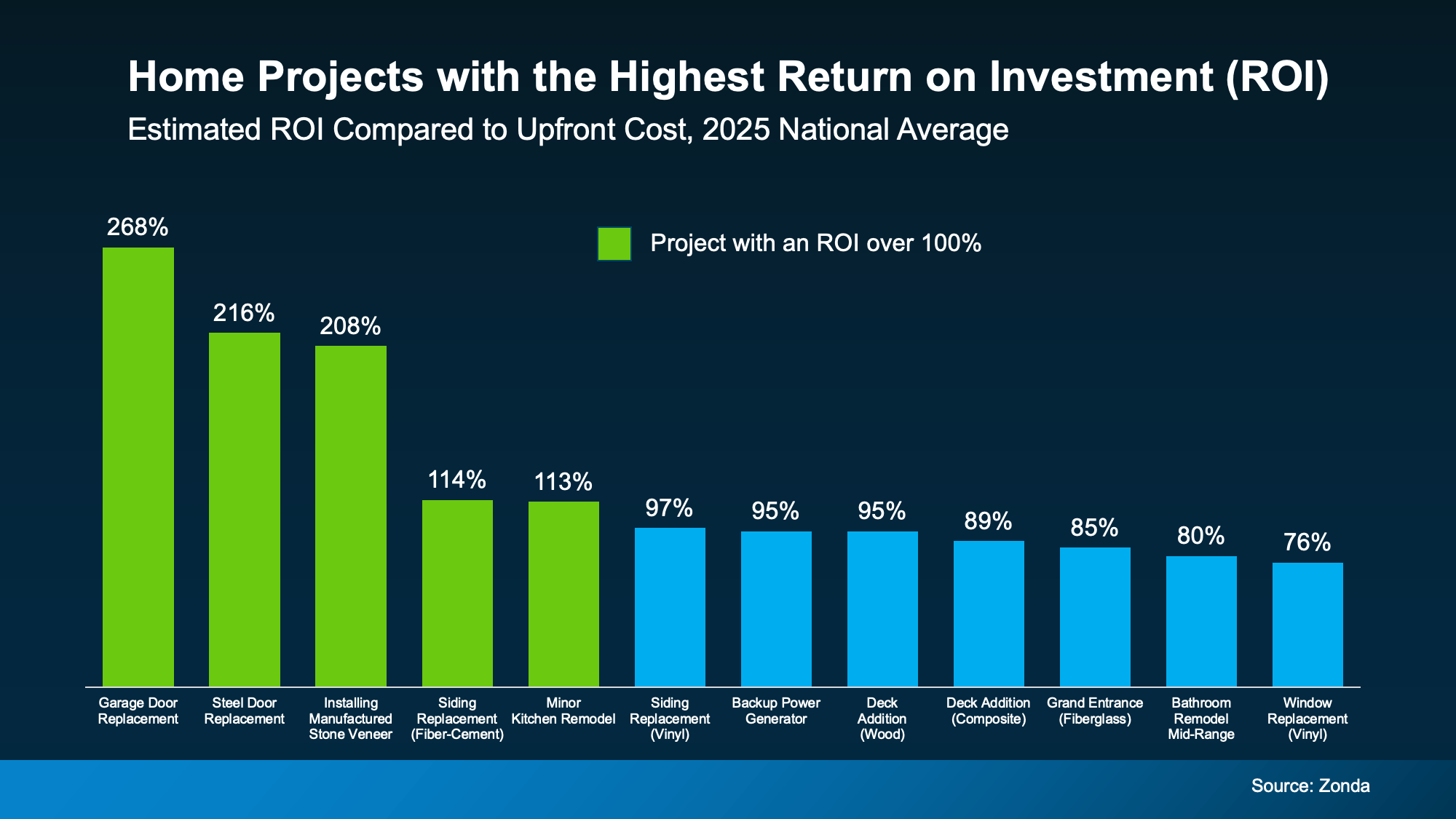

While there's a wide range of projects represented in this data, the cool part is that some of the top winners aren’t big to-dos. They’re just swapping out doors.
Small Updates, Big Visual Impact

This goes to show little projects can have a big impact. So, you don’t have to spend a fortune. And you don’t need to tackle everything on this list. But in today’s market, doing nothing can work against you.

Now that buyers have more homes to choose from, a lot of them are going to opt for what’s move-in ready.

The best advice? Focus on what your house needs, whether it’s listed here or not – like the repairs you’ve been putting off. A front door or shutters in need of a little TLC. Piles of leaves in the yard. Scuffed up paint where your kids play inside. Those details matter too.

Mallory Slesser, Interior designer and Home Stager, explains it to the National Association of Realtors (NAR) this way:
“If you’re looking for affordable updates that pack a punch, dollar for dollar, I would say painting; changing out light fixtures; changing out hardware; maybe new draperies or window treatments. Those are all cost-effective ways to make a big statement. It really changes the space.”

These seemingly small things help buyers focus on the home itself – not the work they think they’ll have to do after moving in. And that’s paying off for other sellers. Buyers are often willing to pay more for homes that are well cared for, updated, and move-in ready.
This Chart Is a Starting Point, Not a Strategy

Here’s the important thing to remember. National data like this is a guideline. Buyer preferences vary by location, price point, and even neighborhood. That means a project that boosts value in one area might be unnecessary (or even overkill) in yours.

That’s why the first step should always be to talk with a local real estate professional before you start.

An experienced agent can help you answer questions like:
Which updates do buyers in your market expect?
What can you skip without hurting your sale?
Where will a small investment make the biggest difference?
Is it better to update, or sell as-is?

That guidance helps you avoid over-improving and under-preparing.

Bottom Line:

If you’re looking to sell your San Diego home this spring, you still have time to make updates that help your home stand out – without taking on a full renovation.

If you’re not sure where to start, let’s talk through what makes sense for your house. A quick conversation can help you prioritize the updates that’ll pack the biggest punch.

What’s one upgrade you’ve been thinking about – and wondering if it’s worth it?

David Demangos - eXp Realty
Cell: 858.232.8410 | Realtor® DRE# 01905183
www.AwesomeSanDiegoRealEstate.com
We Go to Extremes to Fulfill Real Estate Dreams

Why So Many Homeowners Are Downsizing Right Now

For a growing number of homeowners, retirement isn’t some general idea anymore. It’s starting to feel very real.

According to Realtor.com and the Census, nearly 12,000 people will turn 65 every day for the next two years. And the latest data shows as many as 15% of those older Americans are planning to retire in 2026. And another 23% will do the same in 2027.

If you’re considering retiring soon, too, here’s what you should be thinking about.
Why Downsize?

Now's the perfect time to reflect on what you want your life to look like in retirement. Even though your finances will be going through a big change, you don’t necessarily want to feel like you’re living with less.

But odds are, what you do want is for life to feel easier.

Easier to enjoy.

Easier to manage.

Easier to maintain day-to-day.
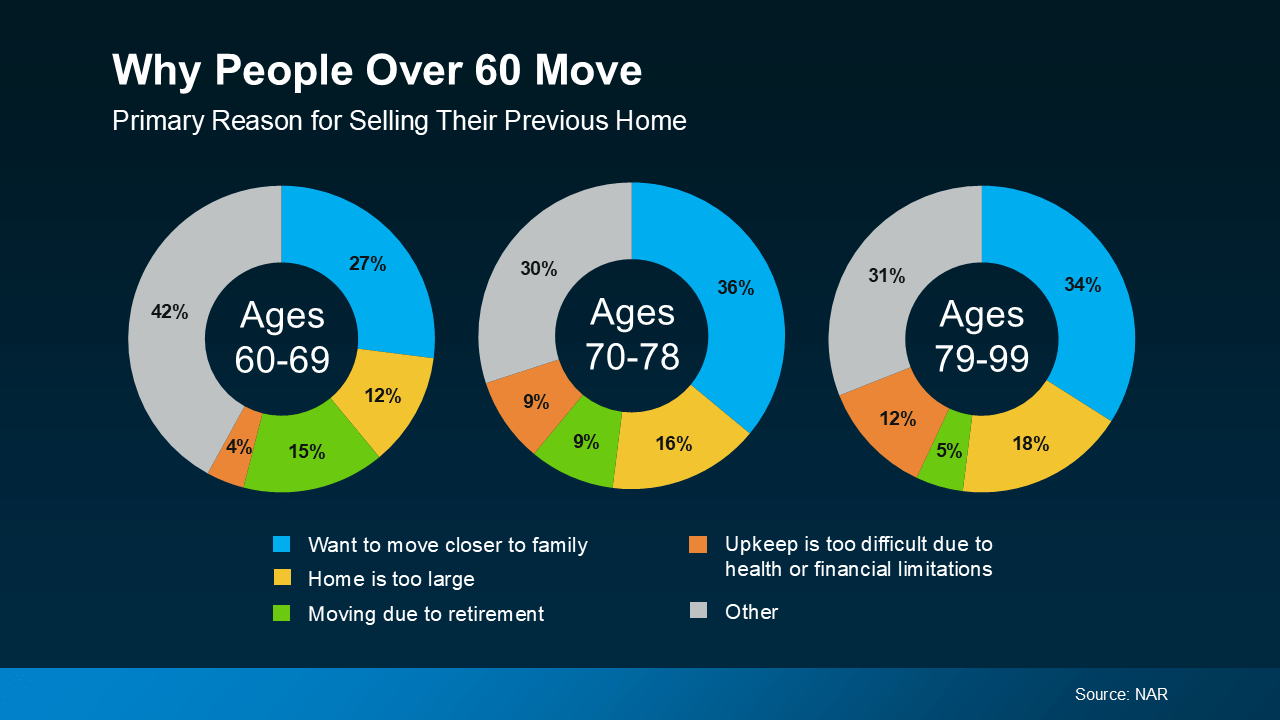
The Top Reasons People Over 60 Move

You can see these benefits show up in the data when you look at why people over 60 are moving. The National Association of Realtors (NAR) finds the top 4 reasons aren’t about timing the market or chasing top dollar. They’re about lifestyle:Being closer to children, grandchildren, or long-time friends so it’s easier to spend more time with the people who matter most
Wanting a smaller, more functional home with fewer stairs and easier upkeep
Retiring and no longer needing to live near the office, so it’s easier to move wherever you want
Opting for something smaller to reduce monthly expenses tied to utilities, insurance, and maintenance


No matter the reason, the theme is the same: downsizing isn’t about giving something up. It’s about gaining control and choosing simplicity. And it brings peace of mind to know your home fits the years ahead, not the years behind.

And the best part? It’s more financially feasible now than many homeowners would expect.
The #1 Thing Helping So Many Homeowners Downsize

Here’s the part that makes it possible. Thanks to how much home values have grown over the years, many longtime homeowners are realizing they’re in a stronger position than they thought to make that move.

According to Cotality, the average homeowner today has about $299,000 in home equity. And for older Americans, that number is often even higher – simply because they’ve lived in their homes longer.

When you stay in one place for years (or even decades), two things happen at the same time: Your home value has time to grow.
Your mortgage balance shrinks or disappears altogether.

That combination creates more options than you’d expect, even in today’s market.

So, whether you just retired or you're about to, it's not too soon to start thinking about what comes next. Sure, it can be hard to leave the house you made so many years of memories in, but maybe it’s time to close one chapter to open a new one that’s just as exciting.

Bottom Line:

Downsizing is about setting yourself up for what comes next – on your terms.

If retirement is on the horizon and you’ve started wondering what your current house (and your equity) could make possible, the first step isn’t selling. It’s understanding your options.

Let’s talk. A simple, no-pressure conversation can help you see what downsizing might look like – and whether it makes sense for you.

David Demangos - eXp Realty
Cell: 858.232.8410 | Realtor® DRE# 01905183
www.AwesomeSanDiegoRealEstate.com
We Go to Extremes to Fulfill Real Estate Dreams
Home Insurance Costs Are Rising: What Buyers Should Plan For

Buying a home is one of the biggest purchases you’ll ever make. And homeowner’s insurance is what protects that investment. Think of it as your safety net. NerdWallet explains it:


  • Covers Repairs and Rebuilding Costs: If your home is damaged by fire, storms, or other covered events, it helps pay for repairs and possibly even a full rebuild, if that’s deemed necessary.

  • Protects Your Belongings: It can also cover personal items like furniture, electronics, jewelry, and clothing if they’re stolen or damaged.

  • Provides Liability Coverage: And, if someone gets injured on your property, your policy can help cover medical bills or legal expenses.

But that peace of mind comes at a cost, and lately those costs have been rising.


Why Home Insurance Premiums Are Going Up


Several factors are driving insurance premiums higher today. But, in the simplest sense, here’s what’s driving prices up, according to the Insurance Research Council (IRC).


Severe weather events and natural disasters are occurring more frequently, resulting in more claims. At the same time, homebuilding materials and labor are more expensive. So, when it comes time to work on those claims, insurers have to manage higher costs to repair or rebuild the affected homes.


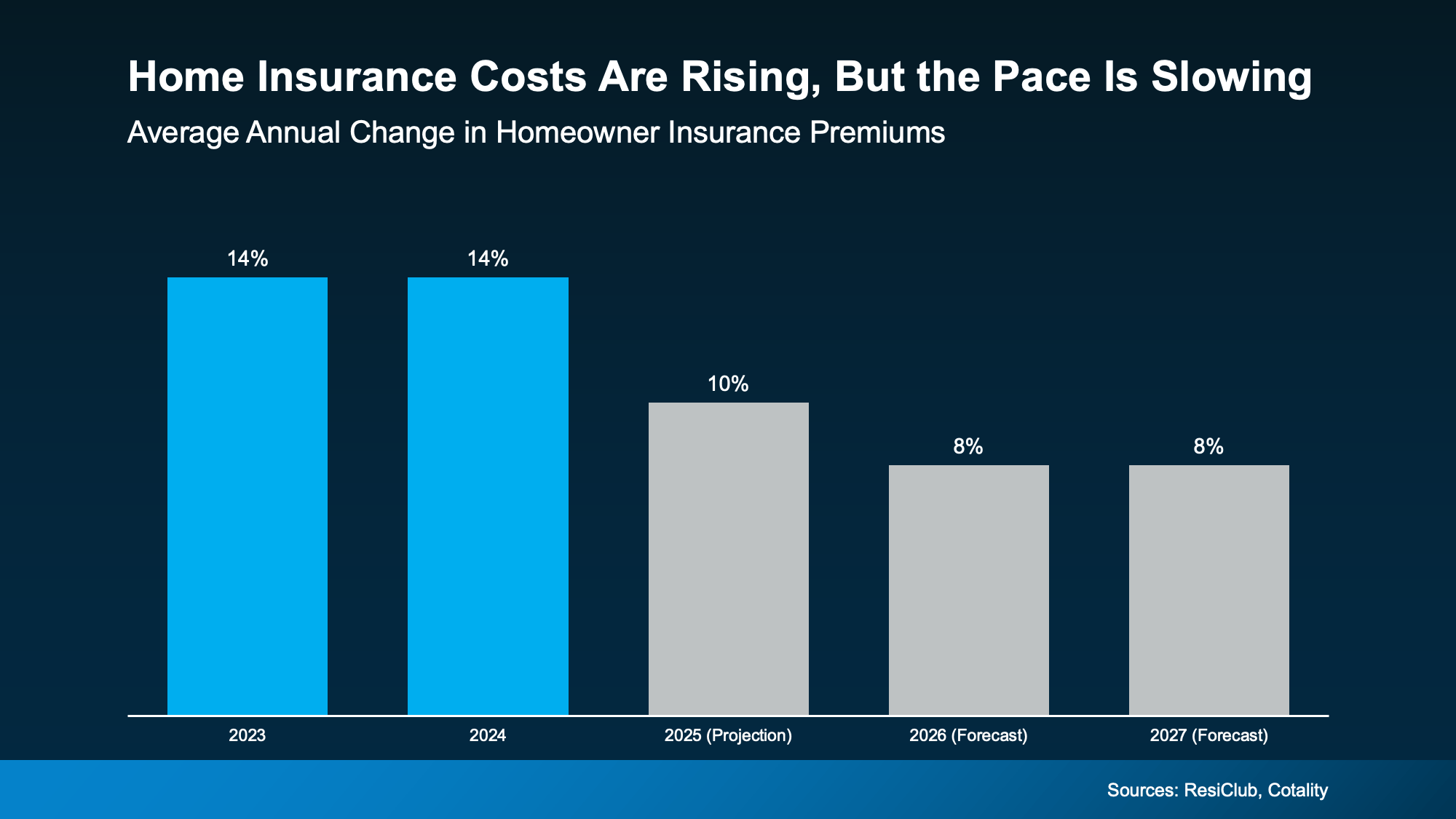
That combination results in higher premiums. You can see how it’s climbed recently in the graph below. Each bar marks the percentage increase in insurance costs for that calendar year.


a graph of a graph showing the cost of homeowner insurance

The good news is that the annual pace of growth may be starting to ease, according to ResiClub and Cotality. By their count:


  • In 2023 and 2024, insurance costs increased by 14% per year.
  • In 2025, they rose about 10%.

  • And in 2026 and 2027, it’s expected to go up about 8% each year.

That’s still an increase, but at least the pace is slowing down. And here's another silver lining.


While insurance costs are rising, mortgage rates are falling. And that can help offset some of this expense. As Michael Gaines, Senior VP of Capital Markets, Cardinal Financial, explains:

Rising taxes and insurance do create pressure, but they don’t erase the benefits of a lower rate . . . A small rate improvement, paired with the right loan program and smart planning, can still make homeownership possible . . . It’s less about one factor canceling another out, and more about helping buyers layer the right solutions together.”

Costs Are Going To Be Different Depending on Where You Buy


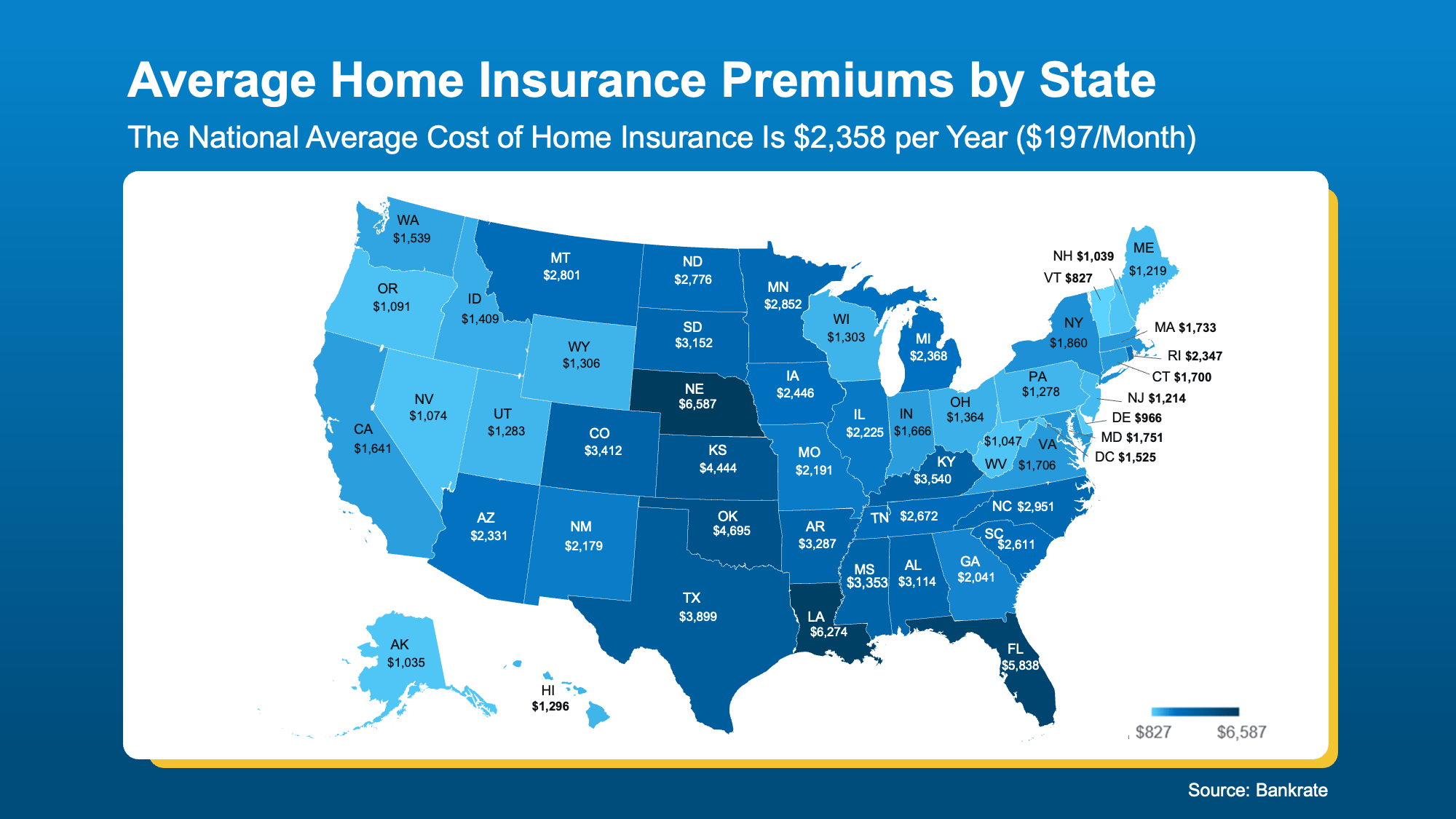
So, how much do you need to budget for this? It depends on the house's price point and location, the coverage you need, and other factors. As with everything else in real estate, costs vary by area.


You can get a rough idea of your state’s typical premiums in the map below:


So, What Can You Do About It?


Generally speaking, your first insurance payment will be wrapped into your closing costs. But after that, it’ll become a recurring expense. That’s why knowing these premiums are rising is so important. It helps you factor that into your budget, so you go in with a full picture of what you can comfortably afford.


If you’re crunching the numbers and trying to find other ways to save, here are a few tips from Insurify and NerdWallet that can help you get the best insurance price possible:


  • Shop Around – Compare quotes from multiple companies.
  • Bundle Policies – Combine home and auto for discounts.
  • Ask About Discounts – Don’t miss out on savings you may qualify for.
  • Highlight Upgrades – Features such as a new roof or storm windows can reduce costs.
  • Improve Your Credit – A stronger credit score can mean better premiums.

Bottom Line

If you’re thinking about buying a home, don’t forget to plan ahead for your homeowner’s insurance.

While costs are rising, knowing what to expect and how to shop around can make a big difference as you’re budgeting for your purchase. Because this isn’t coverage you’ll want to skimp on. It’s your best protection for what’s likely your biggest investment.


David Demangos - eXp Realty
Cell: 858.232.8410 | Realtor® DRE# 01905183
www.AwesomeSanDiegoRealEstate.com
We Go to Extremes to Fulfill Real Estate Dreams
Friday, January 2, 2026

Reasons To Be Optimistic About the 2026 Housing Market

If a move is on your radar for 2026, there’s a lot more working in your favor than there has been in a while.

After a stretch where many people felt stuck, 2026 is shaping up to be a year with more balance, more options, and more clarity for people who want to make a move. Not because the market is suddenly “easy,” but because several key conditions are shifting.

Here’s what the experts are saying you have to look forward to.

Danielle Hale, Chief Economist at Realtor.com:

“After a challenging period for buyers, sellers and renters, 2026 should offer a welcome, if modest, step toward a healthier housing market.

The National Association of Realtors (NAR):

Top economists have one word to sum up the housing market for 2026: opportunity. Lower mortgage rates and a rising supply of homes are expected to open up the housing market . . . something the real estate industry and potential home buyers and sellers have been waiting for, following three years of stagnation.”

Mark Fleming, Chief Economist at First American:

“. . . for the first time in several years, the underlying forces are finally aligned toward gradual improvement. Mortgage rates may drift down only slowly, but income growth exceeding house price appreciation will provide a boost to house-buying power — even in a higher-rate world. Affordability won’t snap back overnight, but like a ship finally catching a steady tailwind, it’s now sailing in the right direction.

Mischa Fisher, Chief Economist at Zillow:

“Buyers are benefiting from more inventory and improved affordability, while sellers are seeing price stability and more consistent demand. Each group should have a bit more breathing room in 2026.

Why Local Insight Matters More Than Ever

Just remember, while the national outlook is improving, conditions will still vary by location. Some markets will move faster than others. Some will see stronger price growth. Others will remain flat. As Lisa Sturtevant, Chief Economist at Bright MLS, explains:

Market performance will hinge on local economic conditions, making 2026 one of the most geographically divided markets we’ve seen in years.”

That’s why understanding what’s happening in your specific area is key. The national trends set the stage, but local dynamics determine how they play out for you. And that's why you need an agent.

Bottom Line

If you want to discuss what’s expected in our local market and which trends you’ll want to leverage, let’s connect.

David Demangos - eXp Realty
Cell: 858.232.8410 | Realtor® DRE# 01905183
www.AwesomeSanDiegoRealEstate.com
We Go to Extremes to Fulfill Real Estate Dreams

Thursday, January 1, 2026

Thinking About a Move in 2026? Ask Yourself These Questions First

The end of the year tends to slow everything down.

And for a lot of people, that creates space for a question that’s been sitting in the background for a while:

“Should we make a move next year… or stay put?”

If that thought has crossed your mind—even casually—you don’t need to decide anything right now. But asking the right questions can give you clarity without pressure.

Below are seven simple questions to walk through before making any real estate decision in 2026.

1. What’s Actually Driving the Thought of Moving?

Most people don’t think about moving “randomly.” Something usually triggers it.

Ask yourself:

  • Are we reacting to a lifestyle change (space, location, family needs)?

  • Is this more about finances or monthly costs?

  • Are we feeling stuck or just curious about options?

One of the most important distinctions is whether this thought is coming from discomfort or opportunity. Those lead to very different decisions, timelines, and outcomes.

2. Is This a Timing Question… or a Readiness Question?

Many people frame their decision as “Should we wait?”
A better question is “What would need to feel clearer before we move?”

Consider:

  • Are the timing parameters about the market or about uncertainty in our own situation?

  • Are we waiting for a specific milestone (job change, school year, savings goal)?

  • If nothing changed for another year, how would that feel?

The goal here isn’t urgency. It’s understanding what’s actually missing.

3. What Are We Most Afraid Might Go Wrong?

Uncertainty often hides behind vague hesitation.

Try naming it:

  • What worries us explicitly about moving?

  • Is it financial risk, regret, disruption, or the unknown?

  • If we knew how to protect against that risk, would this feel different?

Most hesitation isn’t about the market. It’s about unanswered questions.

4. If We Wait, What Are We Hoping Will Change?

Waiting feels safe, but it’s still a decision.

Ask yourself:

  • Are we waiting for rates, prices, or confidence?

  • If those things don’t change the way we expect, how long would we keep waiting?

  • What’s the tradeoff of staying exactly where we are for another year?

There’s no right or wrong answer here, only awareness.

5. What Outcome Matters More to Us?

Whether buying or selling, every move comes down to priorities.

Ask yourself:

  • Are we more focused on monthly comfort or long-term equity?

  • Is flexibility more critical than maximizing price?

  • Are we trying to minimize stress, optimize opportunity, or something else?

There’s no universally “right” answer. But clarity here makes every future decision easier and less emotional.

6. What Would Make This Feel Like a Smart Decision in Hindsight?

Instead of predicting the market, try flipping the question.

Imagine it’s late 2026 and you’re looking back. What would make you say, “I’m glad we handled it that way”?

Ask yourself:

  • What would make us feel confident in how we handled this?

  • Would we regret rushing—or regret not preparing?

  • What version of this decision would feel intentional instead of reactive?

Most good outcomes come from preparation, not perfect timing.

7. What Information Would Reduce Guesswork Right Now?

You don’t need all the answers to move forward. You just need fewer unknowns.

Helpful clarity often comes from:

  • Understanding your real buying or selling range

  • Knowing what options actually exist (not just headlines)

  • Having a rough plan, even if it’s a year out

Final Thought

You don’t need to commit to anything before you’re ready

But if a move is even loosely on your 2026 radar, the smartest first step isn’t browsing listings or watching headlines; it’s getting clear on what actually matters to you.

And if you ever want help talking through those questions with real numbers and no pressure, that’s a conversation worth having.

David Demangos - eXp Realty
Cell: 858.232.8410 | Realtor® DRE# 01905183
www.AwesomeSanDiegoRealEstate.com
We Go to Extremes to Fulfill Real Estate Dreams

Wednesday, December 24, 2025

Moving to San Diego in 2026: Everything You Need to Know

San Diego has always been a coveted destination, and 2026 is no exception. Whether you're drawn by the beautiful beaches, the vibrant culture, or the booming job market, here’s a comprehensive guide to help you settle in.

1. Cost of Living
San Diego is known for its relatively high cost of living. Housing, in particular, tends to be the largest expense. While prices can vary depending on the neighborhood, you can expect higher-than-average rent and home prices compared to other U.S. cities.

2. Housing Market
The San Diego real estate market remains competitive. In 2026, you’ll find a mix of modern condos, charming bungalows, and spacious family homes. It’s essential to work with a local realtor to navigate the market effectively and find a property that fits your budget and lifestyle.

3. Job Market
San Diego’s economy is diverse, with strong sectors in biotechnology, telecommunications, defense, and tourism. The city also has a growing startup scene, making it an attractive destination for young professionals and entrepreneurs.

4. Lifestyle and Culture
From its world-famous beaches like La Jolla and Pacific Beach to its thriving arts scene, San Diego offers a laid-back yet vibrant lifestyle. There are plenty of outdoor activities, including hiking, surfing, and biking, as well as a rich culinary scene featuring fresh seafood and innovative cuisine.

5. Transportation
San Diego boasts a well-connected public transit system, including trolleys and buses, but many residents prefer driving. With ongoing infrastructure improvements, commuting is becoming more convenient.

6. Education and Schools
For families, San Diego offers a range of highly rated public and private schools, as well as prestigious universities such as UC San Diego. Education options are plentiful and cater to a diverse population.

7. Weather
One of San Diego’s biggest draws is its mild, Mediterranean climate. Expect plenty of sunshine and comfortable temperatures year-round, making it perfect for outdoor enthusiasts.

Moving to San Diego in 2026 promises a blend of opportunities and a high quality of life. With careful planning and a bit of local insight, you’ll find yourself right at home in this dynamic coastal city.

Ready to Make the Move?
If you’re considering relocating to San Diego or need assistance with buying or selling property, feel free to reach out to me:

David Demangos - eXp Realty
Cell: 858.232.8410 | Realtor® DRE# 01905183
www.AwesomeSanDiegoRealEstate.com
We Go to Extremes to Fulfill Real Estate Dreams

San Diego Real Estate Trends in 2025: A Comprehensive Review

As we wrap up 2025, San Diego's real estate market has shown some fascinating trends. Throughout the year, we've observed shifts in pricing, inventory levels, and interest rates that have impacted both buyers and sellers.

Pricing Trends:
In 2025, San Diego saw a modest increase in median home prices, driven by strong demand and limited housing supply. Many neighborhoods appreciated, though at a slightly slower pace than in previous years.

Inventory Changes:
Inventory remained tight throughout the year, with a low number of homes for sale relative to the high demand. This led to more competitive bidding and, in some cases, above-asking-price offers becoming more common.

Interest Rates:
Interest rates remained relatively stable in 2025, with slight fluctuations driven by economic conditions. This stability helped maintain affordability for many buyers, though rising prices still posed challenges.

Notable Shifts:
We also saw increased interest in suburban and outlying areas as buyers sought more space and affordability. The demand for homes with dedicated office spaces and outdoor amenities also grew.

David Demangos - eXp Realty
Cell: 858.232.8410 | Realtor® DRE# 01905183
www.AwesomeSanDiegoRealEstate.com
We Go to Extremes to Fulfill Real Estate Dreams