Sunday, December 4, 2016

Winter Is Coming, 5 Reasons to Sell Now!


People across the country are beginning to think about what their life will look like next year. It happens every fall; we ponder whether we should relocate to a different part of the country to find better year-round weather, or perhaps move across the state for better job opportunities. Homeowners in this situation must consider whether they should sell their house now or wait.

If you are one of these potential sellers, here are five important reasons to sell now instead of in the dead of winter.

1. Demand Is Strong

The latest Realtors’ Confidence Index from the National Association of Realtors (NAR) shows that buyer demand remains very strong throughout the vast majority of the country. These buyers are ready, willing and able to purchase… and are in the market right now!
Take advantage of the buyer activity currently in the market.

2. There Is Less Competition Now

According to NAR’s latest Existing Home Sales Report, the supply of homes for sale is still under the 6-month supply that is needed for a normal housing market (which is 4.5-months).
This means, in most areas, there are not enough homes for sale to satisfy the number of buyers in that market. This is good news for home prices. However, additional inventory is about to come to market.
There is a pent-up desire for many homeowners to move, as they were unable to sell over the last few years because of a negative equity situation. Homeowners are now seeing a return to positive equity as real estate values have increased over the last two years. Many of these homes will be coming to the market soon.
Also, as builders regain confidence in the market, new construction of single-family homes is projected to continue to increase, reaching historic levels in 2017. Last month’s new home sales numbers show that many buyers who have not been able to find their dream homes within the existing inventory have turned to new construction to fulfill their needs.
The choices buyers have will continue to increase. Don’t wait until all this other inventory of homes comes to market before you sell.

3. The Process Will Be Quicker

Fannie Mae announced that they anticipate an acceleration in home sales that will surpass 2007's pace. As the market heats up, banks will be inundated with loan inquiries causing closing timelines to lengthen. Selling now will make the process quicker & simpler. 

4. There Will Never Be a Better Time to Move Up

If you are moving up to a larger, more expensive home, consider doing it now. Prices are projected to appreciate by 5.2% over the next year, according to CoreLogic. If you are moving to a higher-priced home, it will wind up costing you more in raw dollars (both in down payment and mortgage payment) if you wait.
According to Freddie Mac’s latest report, you can also lock-in your 30-year housing expense with an interest rate around 3.57% right now. Interest rates are projected to increase moderately over the next 12 months. Even a small increase in rate will have a big impact on your housing cost.

5. It’s Time to Move On with Your Life

Look at the reason you decided to sell in the first place and determine whether it is worth waiting. Is money more important than being with family? Is money more important than your health? Is money more important than having the freedom to go on with your life the way you think you should?
Only you know the answers to the questions above. You have the power to take control of the situation by putting your home on the market. Perhaps the time has come for you and your family to move on and start living the life you desire.  

That is what is truly important.


Looking to Buy, Sell, or Invest? Contact:

David Demangos
Cell: 858.232.8410
www.AwesomeSanDiegoRealEstate.com
David@AwesomeSanDiegoRealEstate.com
Our Team Goes to Extremes to Fulfill Your Real Estate Dreams!


Saturday, December 3, 2016

Is Getting a Home Mortgage Still Too Difficult?


There is no doubt that mortgage credit availability is expanding, meaning it is easier to finance a home today than it was last year. However, the mortgage market is still much tighter than it was prior to the housing boom and bust experienced between 2003 - 2006.
The Housing Financing Policy Center at the Urban Institute just released data revealing two reasons for the current exceptionally high credit standards:
  1. Additional restrictions lenders put on borrowing because of concerns that they will be forced to repurchase failed loans from the government-sponsored enterprises or Federal Housing Administration (FHA).
  2. The concern about potential litigation for imperfect loans.

What has been the result of these concerns?

6.3 Million Less Mortgages

The Policy Center report went on to say:
“It was so hard to get a mortgage in 2015 that lenders failed to make about 1.1 million mortgages that they would have made if reasonable lending standards had been in place. From 2009 to 2014, lenders failed to make about 5.2 million mortgages thanks to overly tight credit. In total, lenders would have issued 6.3 million additional mortgages between 2009 and 2015 if lending standards had been more reasonable.”
In an interview with DSNews, Laurie Goodman and Alanna McCargo of the Policy Center further explained:
“Our Housing Credit Availability Index (HCAI)* measures the probability that mortgage borrowers will become delinquent on that mortgage for 90 or more days, which we refer to as the default risk. This measure indicates that the probability of default rose from 12 percent in 2001 to a peak of 16.5 percent at the end of 2005/beginning of 2006, before declining to the current level of 5 percent. Stated differently, lenders are currently taking less than half the credit risk they were taking in 2001, a period of reasonable credit standards.”

The cost to the economy if we’re writing fewer loans…

Goodman and McCargo put it best:
“…fewer households will become homeowners at exactly the point in the economic cycle when it is most advantageous to do so… [They] will continue to miss this wealth-building opportunity. The median family wealth for homeowners is $195,400, with their home the most valuable asset for most; the median family wealth for renters is $5,400… Fewer potential homebuyers means the housing market will continue to recover more slowly. At the same time, fewer buyers create a strain on other benefits to the economy which homebuying brings such as spending on home goods and an increase in construction jobs.”

Bottom Line

The housing market boom and bust caused many mortgage providers and lenders to tighten their lending standards in an effort not to repeat the recent past. This paired with many homebuyers disqualifying themselves before they even apply for a loan, due to the fear of rejection, has led to many households not yet becoming homeowners.
*The HCAI measures the percentage of home purchase loans that are likely to default—that is, go unpaid for more than 90 days past their due date. A lower HCAI indicates that lenders are unwilling to tolerate defaults and are imposing tighter lending standards, making it harder to get a loan. A higher HCAI indicates that lenders are willing to tolerate defaults and are taking more risks, making it easier to get a loan.


Looking to Buy, Sell, or Invest? Contact:

David Demangos
Cell: 858.232.8410
www.AwesomeSanDiegoRealEstate.com
David@AwesomeSanDiegoRealEstate.com
Our Team Goes to Extremes to Fulfill Your Real Estate Dreams!
Friday, December 2, 2016

Mortgage Interest Rates Just Went Up, Should I Wait to Buy?


Mortgage interest rates, as reported by Freddie Mac, have increased over the last several weeks. Along with Freddie Mac, Fannie Mae, the Mortgage Bankers Association and the National Association of Realtors are all calling for mortgage rates to continue to rise over the next four quarters.
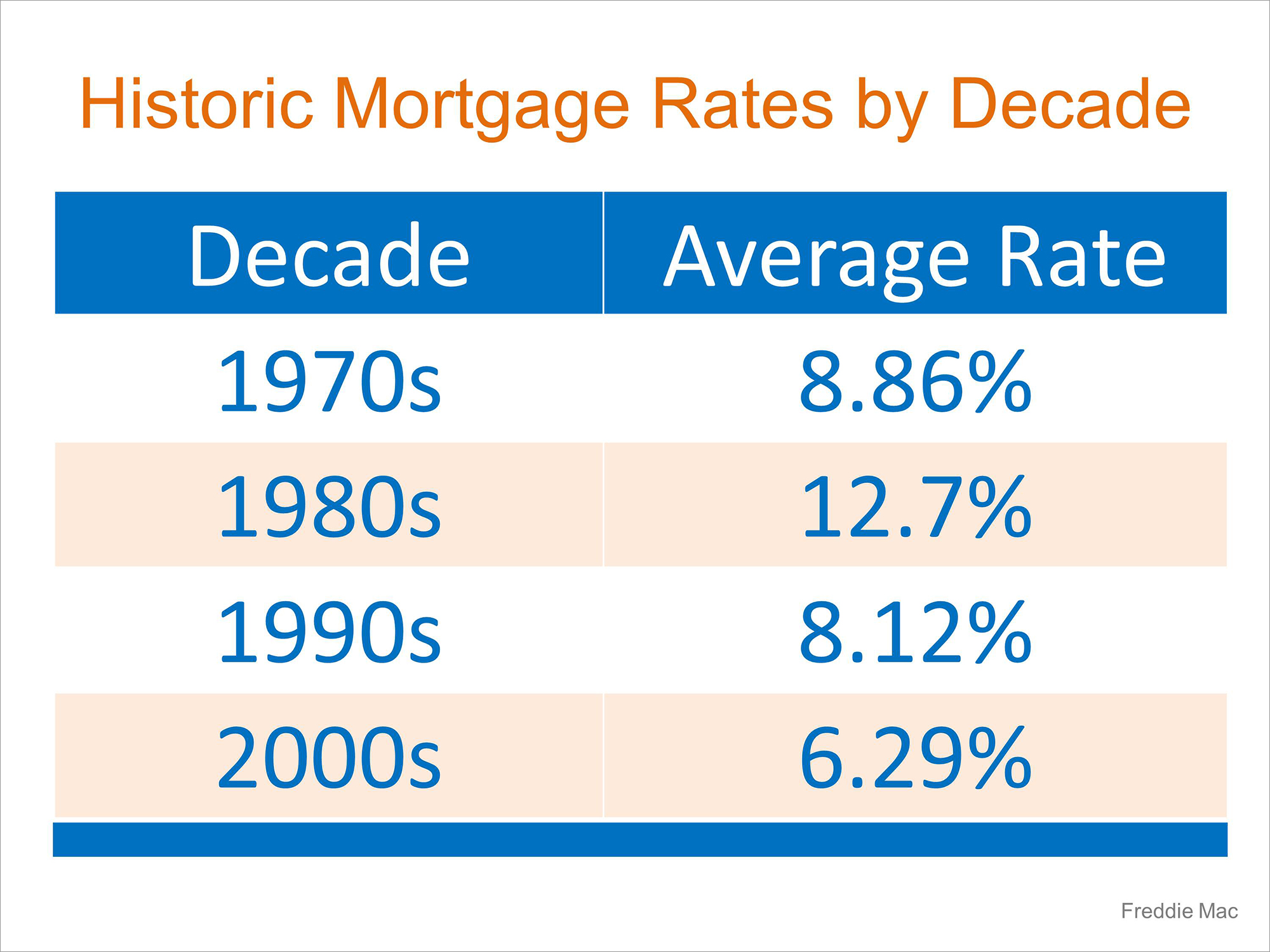
This has caused some purchasers to lament the fact they may no longer be able to get a rate less than 4%. However, we must realize that current rates are still at historic lows.
Here is a chart showing the average mortgage interest rate over the last several decades.
Mortgage Interest Rates Just Went Up… Should I Wait to Buy? | MyKCM
Bottom Line
Though you may have missed getting the lowest mortgage rate ever offered, you can still get a better interest rate than your older brother or sister did ten years ago; a lower rate than your parents did twenty years ago and a better rate than your grandparents did forty years ago.

Looking to Buy, Sell, or Invest? Contact:

David Demangos
Cell: 858.232.8410
www.AwesomeSanDiegoRealEstate.com
David@AwesomeSanDiegoRealEstate.com
Our Team Goes to Extremes to Fulfill Your Real Estate Dreams!

Sunday, November 27, 2016

Homes Across the Country Are Selling Fast!

Homes Across the Country Are Selling Fast! [INFOGRAPHIC] | MyKCM

Some Highlights:

  • The National Association of REALTORS® surveyed their members for the release of their Confidence Index.
  • The REALTORS® Confidence Index is a key indicator of housing market strength based on a monthly survey sent to over 50,000 real estate practitioners. Practitioners are asked about their expectations for home sales, prices and market conditions.
  • Homes sold in 60 days or less in 42 out of 50 states, and Washington D.C.
  • Homes sold in 30 days or less in 17 states.

Looking to Buy, Sell, or Invest? Contact:

David Demangos
Cell: 858.232.8410
www.AwesomeSanDiegoRealEstate.com
David@AwesomeSanDiegoRealEstate.com
Our Team Goes to Extremes to Fulfill Your Real Estate Dreams!

Saturday, November 26, 2016

You Can Never Have TMI about PMI


When it comes to buying a home, whether it is your first time or your fifth, it is always important to know all the facts. With the large number of mortgage programs available that allow buyers to purchase a home with a down payment below 20%, you can never have Too Much Information (TMI) about Private Mortgage Insurance (PMI).

What is Private Mortgage Insurance (PMI)?

Freddie Mac defines PMI as:
“An insurance policy that protects the lender if you are unable to pay your mortgage. It's a monthly fee, rolled into your mortgage payment, that is required for all conforming, conventional loans that have down payments less than 20%.
Once you've built equity of 20% in your home, you can cancel your PMI and remove that expense from your mortgage payment.”
As the borrower, you pay the monthly premiums for the insurance policy, and the lender is the beneficiary. Freddie Mac goes on to explain that:
“The cost of PMI varies based on your loan-to-value ratio – the amount you owe on your mortgage compared to its value – and credit score, but you can expect to pay between $30 and $70 per month for every $100,000 borrowed.” 
According to the National Association of Realtors, the average down payment for all buyers last year was 10%. For first-time buyers, that number dropped to 6%, while repeat buyers put down 14% (no doubt aided by the sale of their home). This just goes to show that for a large number of buyers last year, PMI did not stop them from buying their dream homes.
Here’s an example of the cost of a mortgage on a $200,000 home with a 5% down payment & PMI, compared to a 20% down payment without PMI:
You Can Never Have TMI about PMI | MyKCM

The larger the down payment you can make, the lower your monthly housing cost will be, but Freddie Mac urges you to remember:
“It's no doubt an added cost, but it's enabling you to buy now and begin building equity versus waiting 5 to 10 years to build enough savings for a 20% down payment.”

Bottom Line

If you have questions about whether you should buy now or wait until you’ve saved a larger down payment, let’s get together to discuss our market’s conditions and to help you make the best decision for you and your family.


Looking to Buy, Sell, or Invest? Contact:

David Demangos
Cell: 858.232.8410
www.AwesomeSanDiegoRealEstate.com
David@AwesomeSanDiegoRealEstate.com
Our Team Goes to Extremes to Fulfill Your Real Estate Dreams!

Sunday, November 20, 2016

From Empty Nest to Full House, Multigenerational Families Are Back!


Multi-generational homes are coming back in a big way! In the 1950s, about 21%, or 32.2 million Americans shared a roof with their grown children or parents. According to a recent Pew Research Center report, the number of multi-generational homes dropped to as low as 12% in 1980 but has shot back up to 19%, roughly 60.6 million people, as recently as 2014.
Multi-generational households typically occur when adult children (over the age of 25) either choose to, or need to, remain living in their parent’s home, and then have children of their own. These households also occur when grandparents join their adult children and grandchildren in their home.
According to the National Association of Realtors’ (NAR) 2016 Profile of Home Buyers and Sellers, 11% of home buyers purchased multi-generational homes last year. The top 3 reasons for purchasing this type of home were:
  • To take care of aging parents (19%)
  • Cost savings (18%, up from 15% last year)
  • Children over the age of 18 moving back home (14%, up from 11% last year)
Donna Butts, Executive Director of Generations United, points out that,
“As the face of America is changing, so are family structures. It shouldn’t be a taboo or looked down upon if grown children are living with their families or older adults are living with their grown children.”
For a long time, nuclear families (a couple and their dependent children) became the accepted norm, but John Graham, co-author of “Together Again: A Creative Guide to Successful Multi-generational Living,” says, “We’re getting back to the way human beings have always lived in – extended families.”
This shift can be attributed to several social changes over the decades. Growing racial and ethnic diversity in the U.S. population helps explain some of the rise in multi-generational living. The Asian and Hispanic populations are more likely to live in multi-generational family households and these two groups are growing rapidly.
Additionally, women are a bit more likely to live in multi generational conditions than are their male counterparts (20% vs. 18%, respectively). Last but not least, basic economics.
Carmen Multhauf, co-author of the book “Generational Housing: Myth or Mastery for Real Estate,” brings to light the fact that rents and home prices have been skyrocketing in recent years. She says that, “The younger generations have not been able to save,” and often struggle to get good-paying jobs.

Bottom Line

Multigenerational households are making a comeback. While it is a shift from the more common nuclear home, these households might be the answer that many families are looking for as home prices continue to rise in response to a lack of housing inventory.

Looking to Buy, Sell, or Invest? Contact:

David Demangos
Cell: 858.232.8410
www.AwesomeSanDiegoRealEstate.com
David@AwesomeSanDiegoRealEstate.com
Our Team Goes to Extremes to Fulfill Your Real Estate Dreams!

Why Waiting Until After the Holidays to Sell Isn't a Smart Decision


Why Waiting Until After the Holidays to Sell Isn’t a Smart Decision | Keeping Current Matters
Every year at this time, many homeowners decide to wait until after the holidays to put their homes on the market for the first time, while others who already have their homes on the market decide to take them off until after the holidays. Here are six great reasons not to wait:
  1. Relocation buyers are out there. Companies are not concerned with holiday time and if the buyers have kids, they want them to get into school after the holidays. 
  1. Purchasers that are looking for a home during the holidays are serious buyers and are ready to buy.
  1. You can restrict the showings on your home to the times you want it shown. You will remain in control.
  1. Homes show better when decorated for the holidays. 
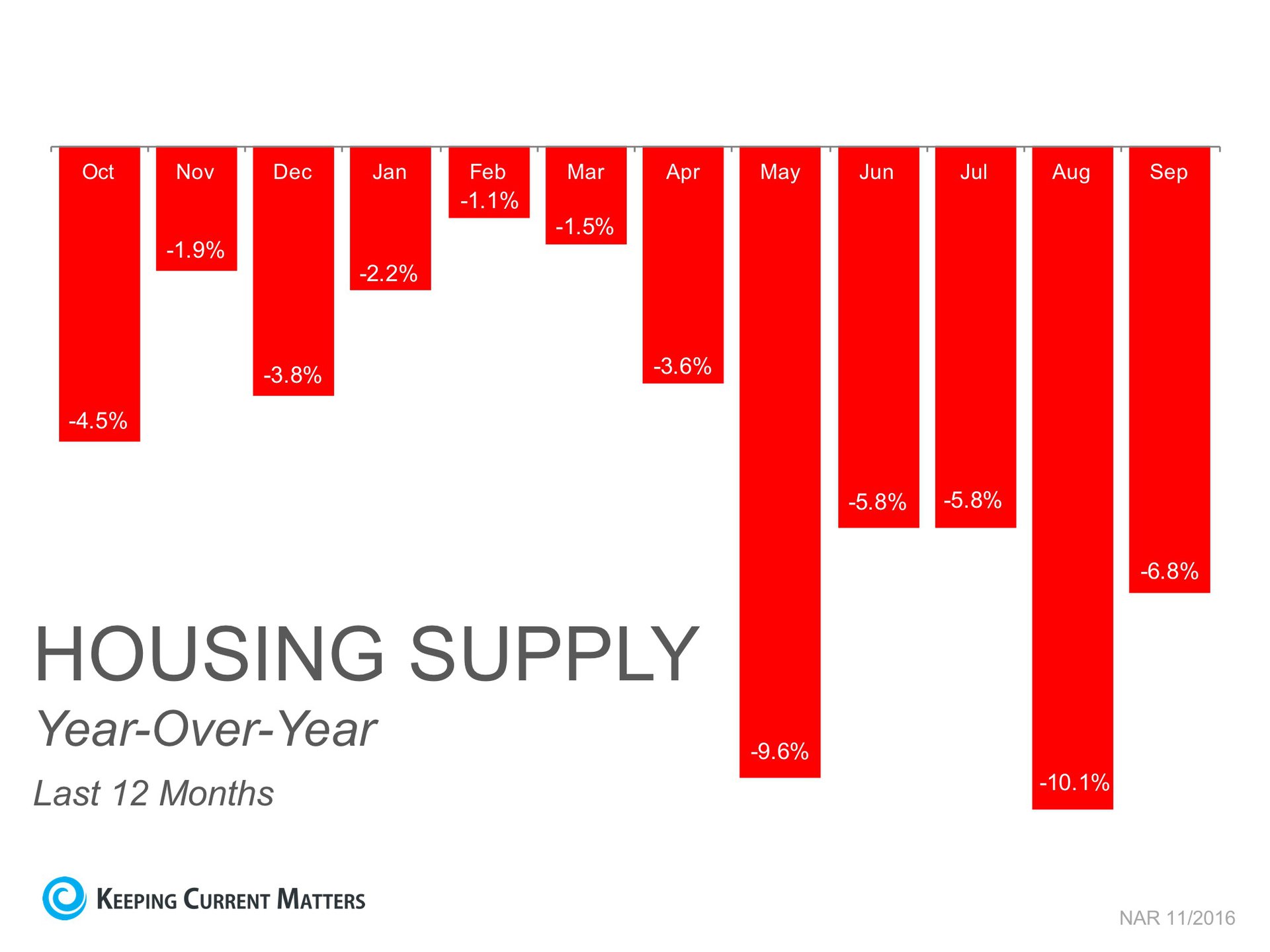
  1. There is less competition for you as a seller right now. Let’s take a look at listing inventory as compared to the same time last year.
  2. The supply of listings increases substantially after the holidays. Also, in many parts of the country, new construction will continue to surge reaching new heights in 2017, which will lessen the demand for your house.
Why Waiting Until After the Holidays to Sell Isn’t a Smart Decision | Keeping Current Matters

Bottom Line

Waiting until after the holidays to sell your home probably doesn't make sense.

Looking to Buy, Sell, or Invest? Contact:

David Demangos
Cell: 858.232.8410
www.AwesomeSanDiegoRealEstate.com
David@AwesomeSanDiegoRealEstate.com
Our Team Goes to Extremes to Fulfill Your Real Estate Dreams!