Showing posts with label credit score. Show all posts

Saturday, March 23, 2019

What Credit Score Do You Need To Buy A House?

There are many misconceptions about the credit score needed to buy a house. Recently, it was reported that 24% of renters believe they need a 780-800 credit score to be considered for a mortgage. The reality is they are misinformed!

Only 25% of the Americans have a FICO® Score between 740 and 800. Here is the breakdown according to Experian:
16% Very Poor (300-579)
18% Fair (580-669)
21% Good (670-739)
25% Very Good (740-799)
20% Exceptional (800-850)

Randy Hopper, Senior Vice President of Mortgage Lending for Navy Federal Credit Union said,

“Just because you have a low credit score doesn’t mean you can’t purchase a home. There are a lot of options out there for consumers with low FICO® scores,”

There are many programs available with low or no credit score requirement. The Federal Housing Administration (FHA) now requires a minimum FICO® score of 580 if you want to qualify for the low down payment advantage. The US Department of Agriculture (USDA) does not set a minimum credit score requirement, but most lenders require a score of at least 640. Veterans Affairs (VA) loans have no credit scorerequirement.
As you can see, none of them are above 700!

It is true that the average FICO® score for all closed loans in January was 726, but there are plenty of people taking advantage of the low credit score requirements. Here is the average FICO® Score of closed FHA Loans since April 2012 according to Ellie Mae:
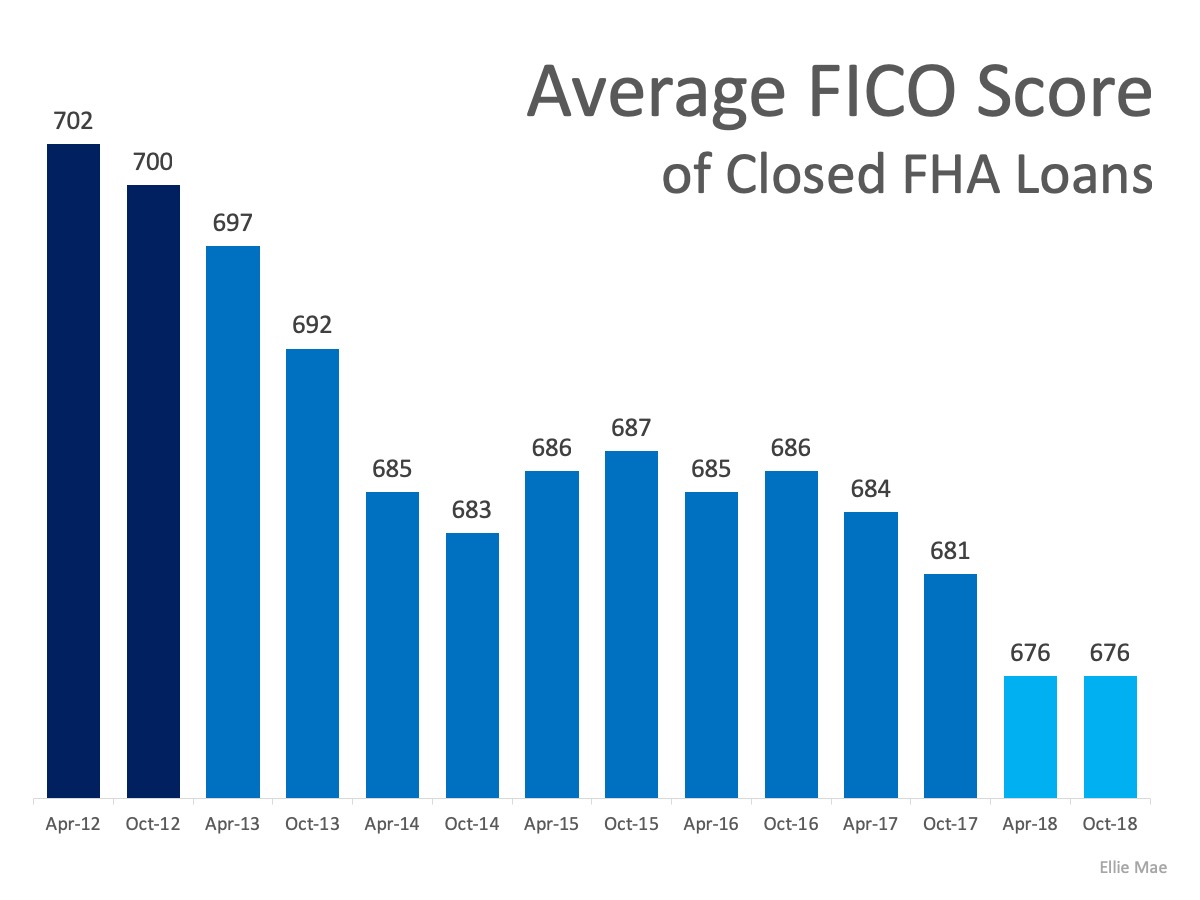
As you can see, that number has been dropping for the last seven years. As a matter of fact, the average FHA Purchase FICO® Score reported in January 2019 was 675!

One of the challenges is that Americans are unsure about their credit score. They just assume that it is too low to qualify and do not double check. Credit.com confirmed that only 57% of individuals sought out their credit score at least once last year.

FICO® reported,

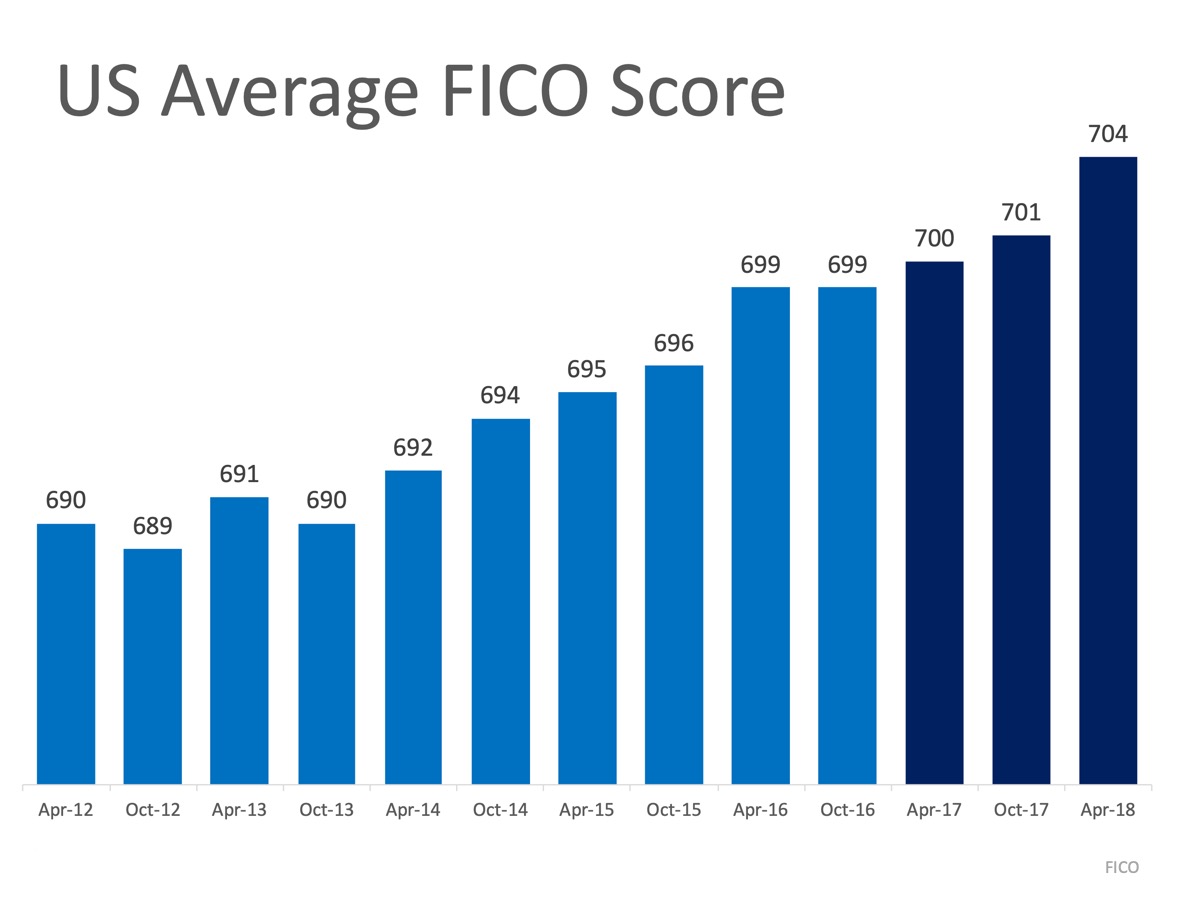
“Since October 2009, the average year-over-year FICO®Score has steadily and consistently increased, from a low of 686 in 2009 to the latest high of 704 as of 2018.”

Here is the increase in the average US FICO® Score over the same period of time as the graph earlier.

Bottom Line

At least 84% of Americans have a score that will allow them to buy a house. If you are unsure what your score is or would like to improve your score in order to become a homeowner, let’s get together to help you set a path to reach your dream!

Looking to Buy, Sell, or Invest? Contact:

David Demangos - Keller Williams Realty
Cell: 858.232.8410 | Realtor® BRE# 01905183
www.AwesomeSanDiegoRealEstate.com
Our Team Goes to Extremes to Fulfill Your Real Estate Dreams!

San Diego Real Estate Expert | Global Property Specialist
Certified Luxury Marketing Specialist | CLHMS Million Dollar Guild Agent
Green Specialist | Certified International Property Specialist
2016, 2017 & 2018 Recognition of Excellence Award Winner SDAR

Thursday, November 2, 2017

Thinking About Buying? Know Your Credit Score

Knowing your credit score or getting a recent copy of your credit report is one of the first steps that you can take toward knowing how ready you are to start the home buying process. 

Make sure all the information listed on your report is accurate and work to correct any mistakes. The higher your credit score, the more likely you will be to receive a better interest rate for your mortgage, which will translate into more ‘home for your money.'

Many potential buyers believe that they need a 750 FICO® Score or higher to be able to purchase a home. The truth is that according to Ellie Mae’s Origination Report, over 53% of loans were approved with a FICO® score under 750 last month!


Here are some tips for improving your credit score:

Make payments, including rent, credit cards, and car loans, on time.
Keep your spending to no more than 30% of your limit on credit cards.
Pay down high-balance credit cards to lower balances, and consider balance transfers to free up credit.


Check for errors on your credit report and work toward fixing them.
Shop for mortgage rates within a 30-day period — too many spread-out inquiries can lower your score.

Work with a credit counselor or a lender to improve your score.

Once you know your score, your next step will be finding a lender and getting pre-approved for a mortgage. Doing this will ensure that you know your budget before you start looking for your dream home.

Looking to Buy, Sell, or Invest? Contact:

David Demangos - Keller Williams Realty
Cell: 858.232.8410 | Realtor® BRE# 01905183
www.AwesomeSanDiegoRealEstate.com
Our Team Goes to Extremes to Fulfill Your Real Estate Dreams!

San Diego Real Estate Expert | Global Property Specialist
Certified Luxury Marketing Specialist | CLHMS Million Dollar Guild Agent
Green Specialist | Certified International Property Specialist
2016 Recognition of Excellence Award Winner SDAR

Wednesday, August 31, 2016

4 Stats That PROVE This Is NOT 2005 All over Again

Recent research by realtor.com examined certain red flags that caused the housing crisis in 2005, and then compared them to today’s real estate market. Today, we want to concentrate on four of those red flags.

  • Price to Rent Ratio
  • Price to Income Ratio
  • Mortgage Transactions
  • House Flipping

All four categories were outside historical norms in 2005. Home prices were way above normal ratios when compared to both rents and incomes at the time.

They explained that mortgage transactions as a percentage of all home sales were also at a higher percentage:

“Loose credit was one of the main culprits of the housing crisis. Mortgage lending expanded dramatically as unhealthy housing speculation reached its peak and was met by the highest level of credit availability as measured by the Mortgage Bankers Association. The index measures the overall mortgage credit condition by the share of home sales financed by mortgages. This metric does not capture credit quality, but it does set a view of the importance of financing in supporting the housing market.”

House flipping was rampant in 2005.
As realtor.com's research points out:

“Heightened flipping activity is a clear indication of speculation in the real estate market. A property is considered as a speculative flip if the property is sold twice within 12 months and with positive profit. Flipping is a normal part of a healthy housing market. In an inflated housing market, expectations about short-term profit from pure price appreciation are very high; therefore, the level of flipping activity would show evidence of being heightened.”

Here are the categories with percentages reflecting the unrealistic ratios & numbers of 2005 as compared to the current market. Remember, a negative percentage reflects a positive gain for the market.


Bottom Line
They say hindsight is 20/20… Today, experts are keeping a close watch on the potential red flags that went unnoticed in 2005.

Looking to Buy, Sell, or Invest? Contact:

David Demangos
858.232.8410
Locally Known, Globally Connected
Luxury Home Marketing Specialist
Global Property Specialist

David@AwesomeSanDiegoRealEstate.com
Our Team Goes to Extremes to Fulfill Your Real Estate Dreams!

Saturday, July 4, 2015

Do I Need Perfect Credit to Buy a Home?


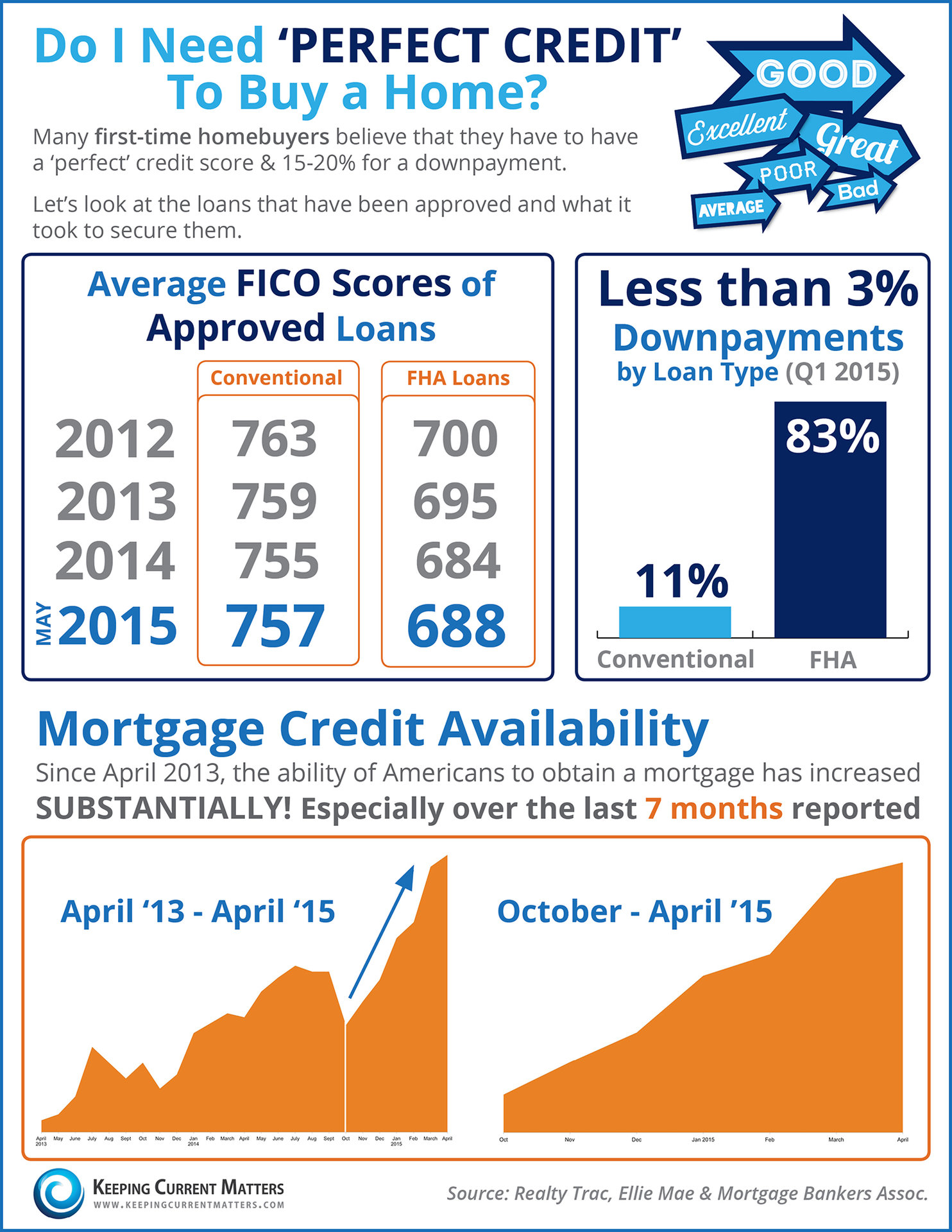
Do I Need Perfect Credit To Buy A Home? | Keeping Current Matters

Some Highlights:

- The average FICO score of Approved Conventional Loans was 757 in May
- The average FICO score of Approved FHA Loans was 688 in May
- Since April 2013, the ability of Americans to obtain a mortgage has increased substantially! 

Looking to Buy, Sell, or Invest? Contact:

David Demangos
858.232.8410
Locally Known, Globally Connected
Luxury Home Marketing Specialist
Global Property Specialist

David@AwesomeSanDiegoRealEstate.com
Our Team Goes to Extremes to Fulfill Your Real Estate Dreams!

Wednesday, September 24, 2014

Could Your Credit Score be Hurting You?

Informed consumers considering a home purchase today want to do the right thing and plan ahead. Many do not seek immediate professional guidance from a Realtor or a mortgage loan officer. Instead, they hunt for hours online, looking at numerous websites for available homes for sale. They also consult websites to find the best interest rate and terms for future monthly mortgage payments. Many consumers feel betrayed, cheated and at times embarrassed to learn that the credit scores they counted on, to get that specific interest rate for their loan, are not used by mortgage lenders. When shopping for a good mortgage interest rate, consumers also need to know their credit score, and utilize an online mortgage calculator to compute future monthly mortgage payments. Consumers accept the provider’s terms and conditions to get a free credit score. Terrific! Unaware that in exchange they just received a meaningless credit score that lenders never use. They also handed over their Non-Public Personal Information (NPPI) to that credit score provider for life. Look at available credit scoring products available to consumers today: 

- FICO credit score from Fair Isaac Corporation/myfico.com, range 300 to 850

- Plus Score from Experian, range 320 to 830

- Trans Risk Score from TransUnion, range 300 to 850

- Equifax Credit Score from Equifax, range 300 to 850

- Vantage Score from all three bureaus, two ranges, 300 to 850 and 501-990

What is a FICO Score?
In 1958, Bill Fair and Earl Isaac, a mathematician and engineer, formed a company in San Rafael, California. They created tools to help risk managers make a better decision when taking financial risk. Today, 90 percent of all lenders use the FICO score, first created in 1989 by Fair Isaac, and it’s the only score Fannie Mae and Freddie Mac, the Federal Housing Agency and Veterans Affairs will accept in underwriting loans they guarantee. 

What is a Consumer Score?
The three credit bureaus, in their understanding of the credit scoring model created by FICO, decided to create their own scoring models, and in 2004 – 2006 they unveiled the “consumer” scores: Plus Score, Trans Risk Score, Equifax Credit Score, and Vantage Score. However, these are not genuine FICO scores, and mortgage lenders don’t use them. Consider this comparison: Would you buy a watch that gives the approximate time of day? The three credit bureaus work with major financial institutions, professional organizations, comparison sites, personal finance businesses, clubs such as Costco, AAA, Sam’s Club, and many data-mining brokers to bombard consumers in the race of the free credit score mania, all with the enticement of a “consumer” score that is not used by lenders, in hopes of obtaining subscriptions or fees from consumers. Fees that are totally unnecessary!
Know Your Score

Gaining access to one’s own credit report and credit score prior to loan approval with no strings attached could be helpful, and at all times beneficial. With little effort, inaccuracy of information can be instantly corrected at the credit bureau level, and with a few simple steps, credit scores could be enhanced. For example, paying down revolving account balances before a creditor’s statement-ending date (the creditor later updates account information with the credit bureaus), thus reducing revolving account balances at a particular point in time, will positively add more points to a score. It’s priceless. 

More Information

Consumers have a legal right to access their annual credit report at no charge once a year from annualcreditreport.com, a site sponsored by the three major credit bureaus: Experian, Equifax and TransUnion. These reports provide all the basic consumer data, but do not reveal a credit score. If you have a need for the FICO credit score that is actually used by mortgage lenders, myfico.com is the website to visit. For $19.95 per bureau, consumers can purchase a customized credit report with a genuine FICO score. Additional websites to visit: the Federal Trade Commission (ftc.gov) and the Consumer Financial Protection Bureau (cfpb.gov) for true answers to questions about any financial concepts, financial products, dispute and complaint submissions, and much more.

For assistance with credit, feel free to reach out to me...


David Demangos
Global Property Specialist
858.232.8410
David@AwesomeSanDiegoRealEstate.com
www.AwesomeSanDiegoRealEstate.com
Our Team Goes to Extremes to Fulfill Your Real Estate Dreams!

Monday, February 3, 2014

Is Credit Restoration Legal?

You may be wondering, is credit restoration legal? Absolutely. The Fair Credit Reporting Act allows anyone to dispute inaccurate items on their credit reports. Individuals can restore their credit on their own but this can take time and a lot of knowledge when it comes to the credit laws. That's why FES (Financial Education Services) is here to help since they have the experience and knowledge to get you the positive results.

Did you know your interest rate is affected when?:
  • You are trying to qualify for a home loan/re-finance
  • You are looking to rent a home
  • You buy a car, boat, motorcycle etc.
  • An employer is looking to hire you
  • Homeowners insurance
  • And, so much more..
Nearly 80% of credit reports contain inaccuracies or erroneous accounts. There is no room for error, yet 8 out of 10 people are losing out on their hard earned money because of these mistakes.

I have found a restoration company that is 10 years old and has an A+ Rating with the BBB (Better Business Bureau) and have partnered with them to help people restore their score. (because they deserve it) Who do you know with bad credit? I can help them! Contact:

David Demangos
Keller Williams Realty
Cell:  858.232.8410
Realtor® BRE# 01905183

San Diego Real Estate Area Expert / Green Specialist / ALC Committee
Our Team Goes to Extremes to Fulfill Your Real Estate Dreams!

Download The #1 Real Estate Live Home Search App Below
Live Home Search App