Every year, Gallup surveys Americans to determine their choice for the best long-term investment. Respondents are given a choice between real estate, stocks/mutual funds, gold, savings accounts/CDs, or bonds.
For the fifth year in a row, real estate has come out on top as the best long-term investment!
This year’s results showed that 34% of Americans chose real estate, followed by stocks at 26%. The full results are shown in the chart below.
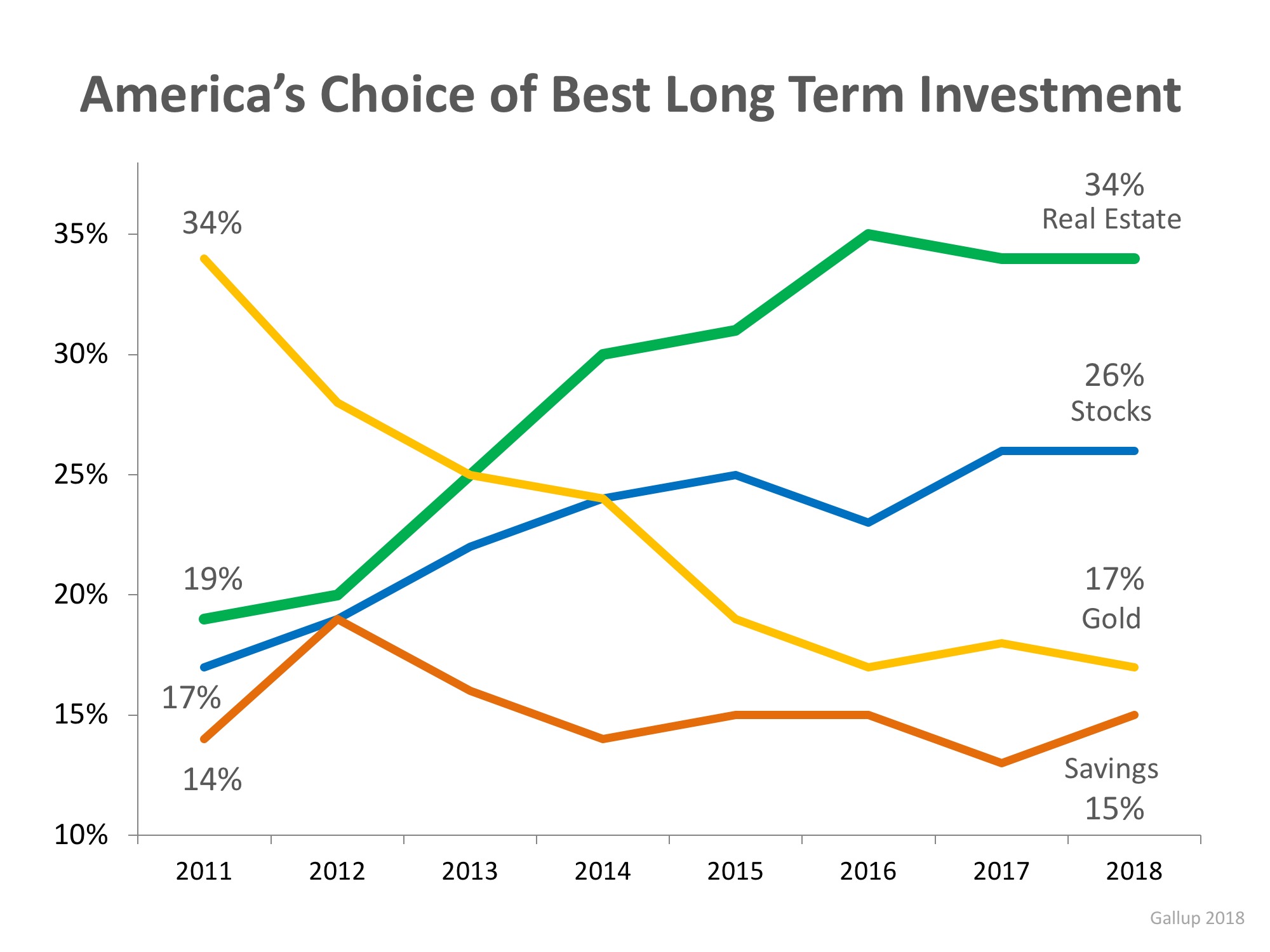
The study makes it a point to draw attention to the contrast in the sentiment over the last five years compared to that of 2011-2012, when gold took the top slot with 34% of the votes. Real estate and stocks took second and third place, respectively, while still in recovery from the Great Recession.
Bottom Line
As the real estate market has recovered, so has the belief of the American people in the stability of housing as a long-term investment.
Looking to Buy, Sell, or Invest? Contact:
David Demangos - Keller Williams Realty
Cell: 858.232.8410 | Realtor® BRE# 01905183
www.AwesomeSanDiegoRealEstate.com
Our Team Goes to Extremes to Fulfill Your Real Estate Dreams!
San Diego Real Estate Expert | Global Property Specialist
Certified Luxury Marketing Specialist | CLHMS Million Dollar Guild Agent
Green Specialist | Certified International Property Specialist
2016 & 2017 Recognition of Excellence Award Winner SDAR
Last week, the National Association of Realtors (NAR) released their most recent Existing Home Sales Report. According to the report:
“The median existing-home price for all housing types in January was $240,500, up 5.8 percent from January 2017 ($227,300). January’s price increase marks the 71st straight month of year-over-year gains.”
Seventy-one consecutive months of price increases may have some concerned that current home values may be overinflated.
However, at the same time, Zillow issued a press release which revealed:
“If the housing bubble and bust had not happened, and home values had instead appreciated at a steady pace, the median home value would be higher than its current value.”
Here are two graphs that help show why home prices are exactly where they should be.
The first graph shows actual median home sales prices from 2000 through 2017.
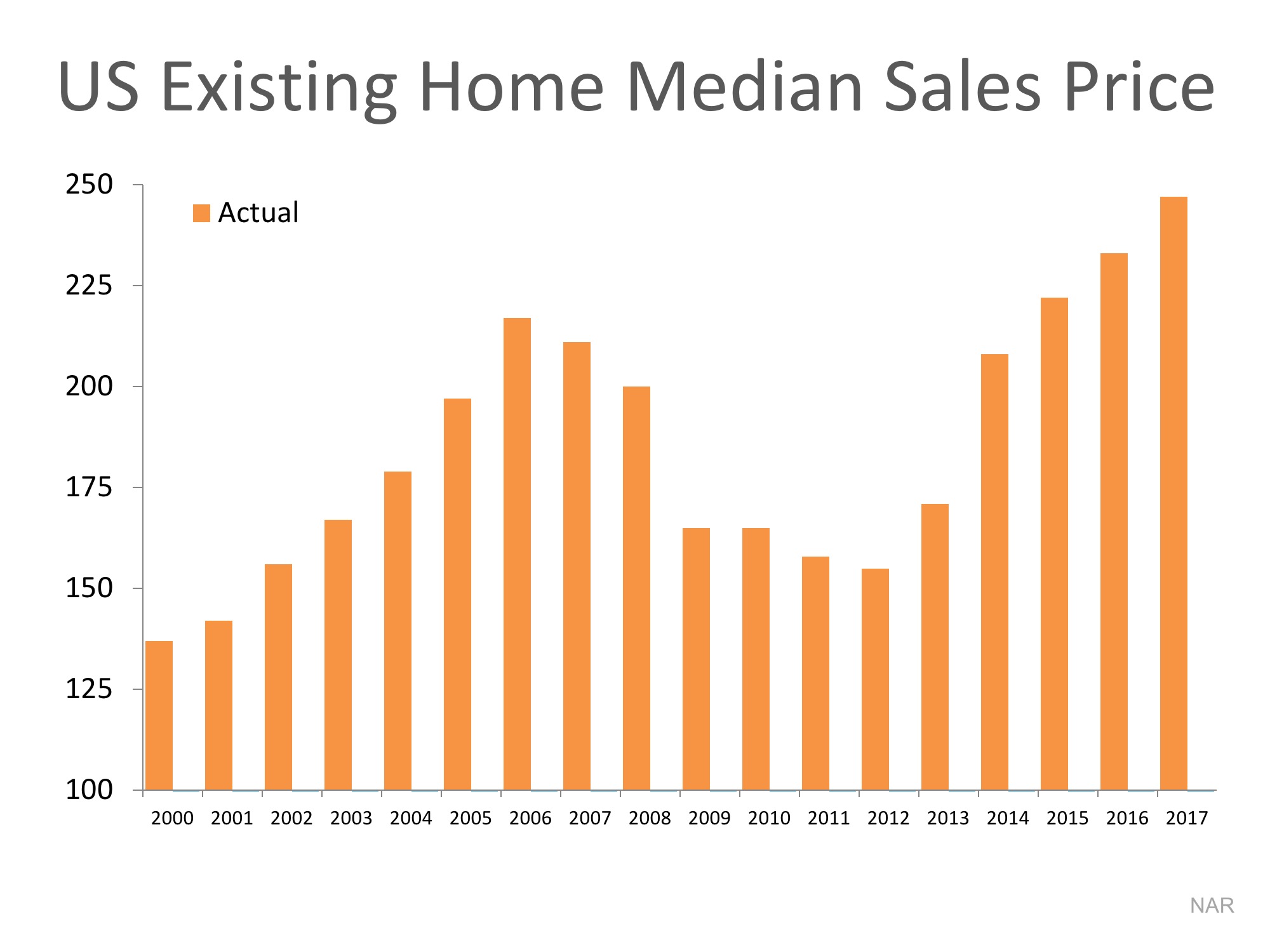
By itself, this graph could heighten concerns as it shows home values rose in the early 2000s, came tumbling down and are now headed up again. It gives the feel of a rollercoaster ride that is about to take another turn downward.
However, if we also include where prices would naturally be, had there not been a boom & bust, we see a different story.
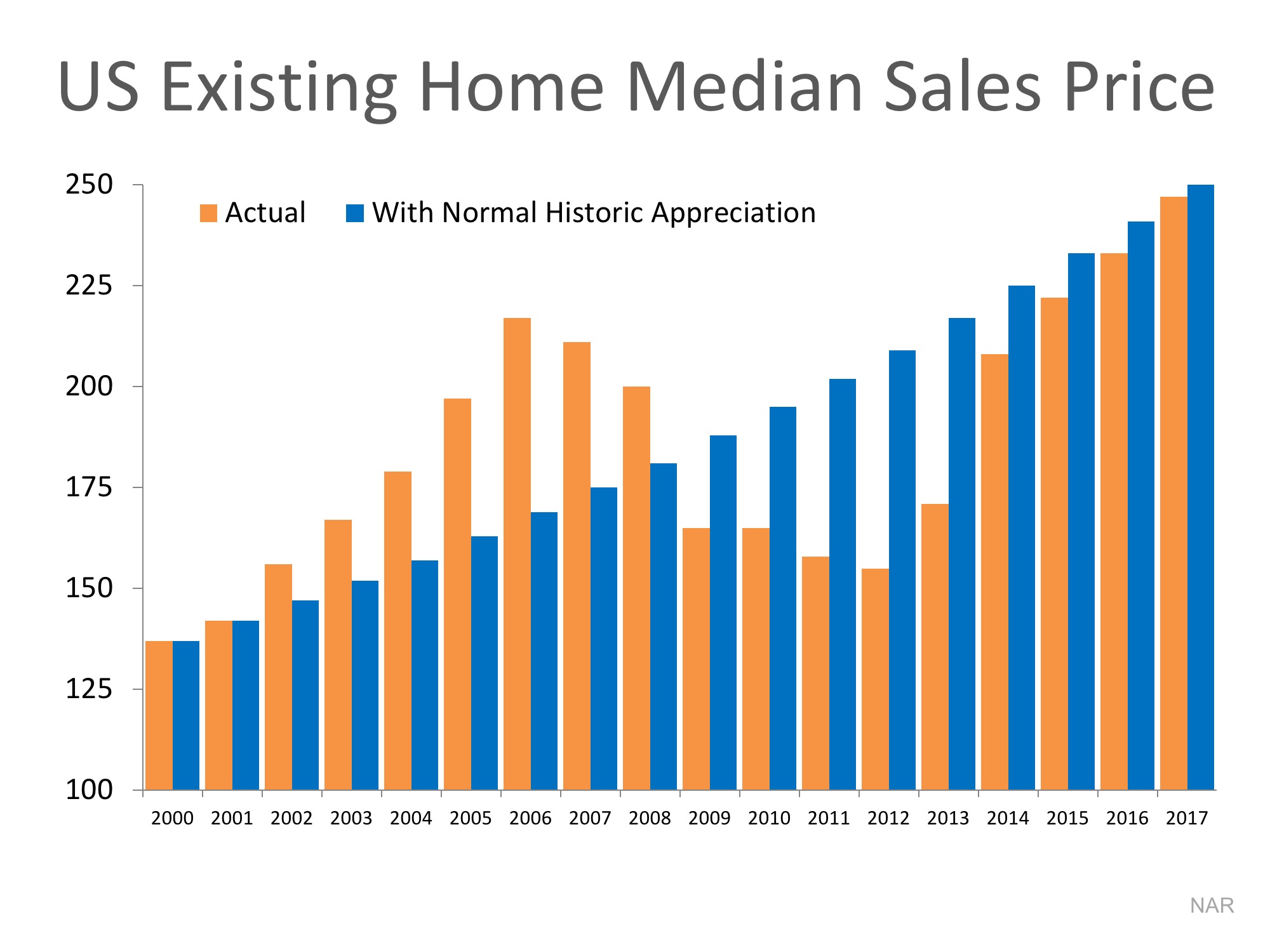
The blue bars on this graph represent where prices would be if they had increased by the normal annual appreciation rate (3.6%). By adding 3.6% to the actual 2000 price and repeating that for each subsequent year, we can see that prices were overvalued during the boom, undervalued during the bust, and a little bit LOWER than where they should be right now.
Bottom Line
Based on historic appreciation levels, we should be very comfortable that current home values are not overinflated.
Looking to Buy, Sell, or Invest? Contact:
David Demangos - Keller Williams Realty
Cell: 858.232.8410 | Realtor® BRE# 01905183
www.AwesomeSanDiegoRealEstate.com
Our Team Goes to Extremes to Fulfill Your Real Estate Dreams!
San Diego Real Estate Expert | Global Property Specialist
Certified Luxury Marketing Specialist | CLHMS Million Dollar Guild Agent
Green Specialist | Certified International Property Specialist
2016 & 2017 Recognition of Excellence Award Winner SDAR
Many real estate economists have called on new home builders to ramp up production to help relieve the shortage of inventory of homes for sale throughout the United States. The added inventory would no doubt aid buyers in their search to secure their dream home, while also helping to ease price increases throughout the country.
Unfortunately for builders, there are many forces that are making it difficult for them to do just that!
Last week at the National Association of Real Estate Editors 51st Annual Conference, CoreLogic’s Chief Economist Frank Nothaft broke down the 4 ‘L’s of New Home Construction: Lots, Labor, Lumber, and Lending.
The concept of supply and demand is ripe in the new home construction industry. The four ‘L’s of new home construction are each suffering a supply problem, and with that comes added costs. Let’s break it down!
Lots – There is a shortage of land near metros at an affordable price, causing builders to move farther and farther away from cities to keep costs down. This isn’t always an attractive option for those who want to stay close to work.
Labor – The Great Recession forced many skilled construction and trade workers to find other sources of income once their jobs were lost at the time of the crash. Even though the overall housing market has recovered, these workers have not returned. Those who remain are starting to age out and retire, causing even more of a shortage and additional costs.
Lumber – The cost to build a new home is directly tied to the cost of the lot and the cost of the supplies needed to build the home. Lumber costs continue to escalate due to policies restricting the importation of Canadian lumber, making larger luxury homes an attractive option to recoup costs when selling, rather than building smaller single-family homes and making less profit.
Below is a graph showing the increase in cost of 1,000 board feet of framing lumber.

Year-over-year, lumber costs are up 13% after reaching a high of $433 in the second week of April.
Lending – During the Great Recession, many small community banks were forced to close their doors. These banks were a great source of capital and lending for builders looking to borrow money at a low interest rate in the community in which they were building. Tougher lending standards have made borrowing funds more expensive and more difficult for builders.
Bottom Line
Additional costs across all 4 ‘L’s have made building luxury properties more attractive to builders as they are able to make a larger margin with the higher sales price. The move to scale down to starter and trade up homes to help with supply will mean any additional costs are absorbed by the builders unless the supply of the 4 ‘L’s can increase!
Looking to Buy, Sell, or Invest? Contact:
David Demangos - Keller Williams Realty
Cell: 858.232.8410 | Realtor® BRE# 01905183
www.AwesomeSanDiegoRealEstate.com
Our Team Goes to Extremes to Fulfill Your Real Estate Dreams!
San Diego Real Estate Expert | Global Property Specialist
Certified Luxury Marketing Specialist | CLHMS Million Dollar Guild Agent
Green Specialist | Certified International Property Specialist
2016 Recognition of Excellence Award Winner SDAR