Wednesday, December 24, 2025

Moving to San Diego in 2026: Everything You Need to Know

San Diego has always been a coveted destination, and 2026 is no exception. Whether you're drawn by the beautiful beaches, the vibrant culture, or the booming job market, here’s a comprehensive guide to help you settle in.

1. Cost of Living
San Diego is known for its relatively high cost of living. Housing, in particular, tends to be the largest expense. While prices can vary depending on the neighborhood, you can expect higher-than-average rent and home prices compared to other U.S. cities.

2. Housing Market
The San Diego real estate market remains competitive. In 2026, you’ll find a mix of modern condos, charming bungalows, and spacious family homes. It’s essential to work with a local realtor to navigate the market effectively and find a property that fits your budget and lifestyle.

3. Job Market
San Diego’s economy is diverse, with strong sectors in biotechnology, telecommunications, defense, and tourism. The city also has a growing startup scene, making it an attractive destination for young professionals and entrepreneurs.

4. Lifestyle and Culture
From its world-famous beaches like La Jolla and Pacific Beach to its thriving arts scene, San Diego offers a laid-back yet vibrant lifestyle. There are plenty of outdoor activities, including hiking, surfing, and biking, as well as a rich culinary scene featuring fresh seafood and innovative cuisine.

5. Transportation
San Diego boasts a well-connected public transit system, including trolleys and buses, but many residents prefer driving. With ongoing infrastructure improvements, commuting is becoming more convenient.

6. Education and Schools
For families, San Diego offers a range of highly rated public and private schools, as well as prestigious universities such as UC San Diego. Education options are plentiful and cater to a diverse population.

7. Weather
One of San Diego’s biggest draws is its mild, Mediterranean climate. Expect plenty of sunshine and comfortable temperatures year-round, making it perfect for outdoor enthusiasts.

Moving to San Diego in 2026 promises a blend of opportunities and a high quality of life. With careful planning and a bit of local insight, you’ll find yourself right at home in this dynamic coastal city.

Ready to Make the Move?
If you’re considering relocating to San Diego or need assistance with buying or selling property, feel free to reach out to me:

David Demangos - eXp Realty
Cell: 858.232.8410 | Realtor® DRE# 01905183
www.AwesomeSanDiegoRealEstate.com
We Go to Extremes to Fulfill Real Estate Dreams

San Diego Real Estate Trends in 2025: A Comprehensive Review

As we wrap up 2025, San Diego's real estate market has shown some fascinating trends. Throughout the year, we've observed shifts in pricing, inventory levels, and interest rates that have impacted both buyers and sellers.

Pricing Trends:
In 2025, San Diego saw a modest increase in median home prices, driven by strong demand and limited housing supply. Many neighborhoods appreciated, though at a slightly slower pace than in previous years.

Inventory Changes:
Inventory remained tight throughout the year, with a low number of homes for sale relative to the high demand. This led to more competitive bidding and, in some cases, above-asking-price offers becoming more common.

Interest Rates:
Interest rates remained relatively stable in 2025, with slight fluctuations driven by economic conditions. This stability helped maintain affordability for many buyers, though rising prices still posed challenges.

Notable Shifts:
We also saw increased interest in suburban and outlying areas as buyers sought more space and affordability. The demand for homes with dedicated office spaces and outdoor amenities also grew.

David Demangos - eXp Realty
Cell: 858.232.8410 | Realtor® DRE# 01905183
www.AwesomeSanDiegoRealEstate.com
We Go to Extremes to Fulfill Real Estate Dreams 
Tuesday, December 23, 2025

Is January the Best Time to Buy a Home?

You may not want to put your home-buying plans on hold this winter. While many people assume spring is the ideal time to buy a house, new data shows January is the best time of year for budget-conscious buyers. 

It's surprising, right? Here’s why January deserves a serious look

1. Prices Tend To Be Lower This Time of Year

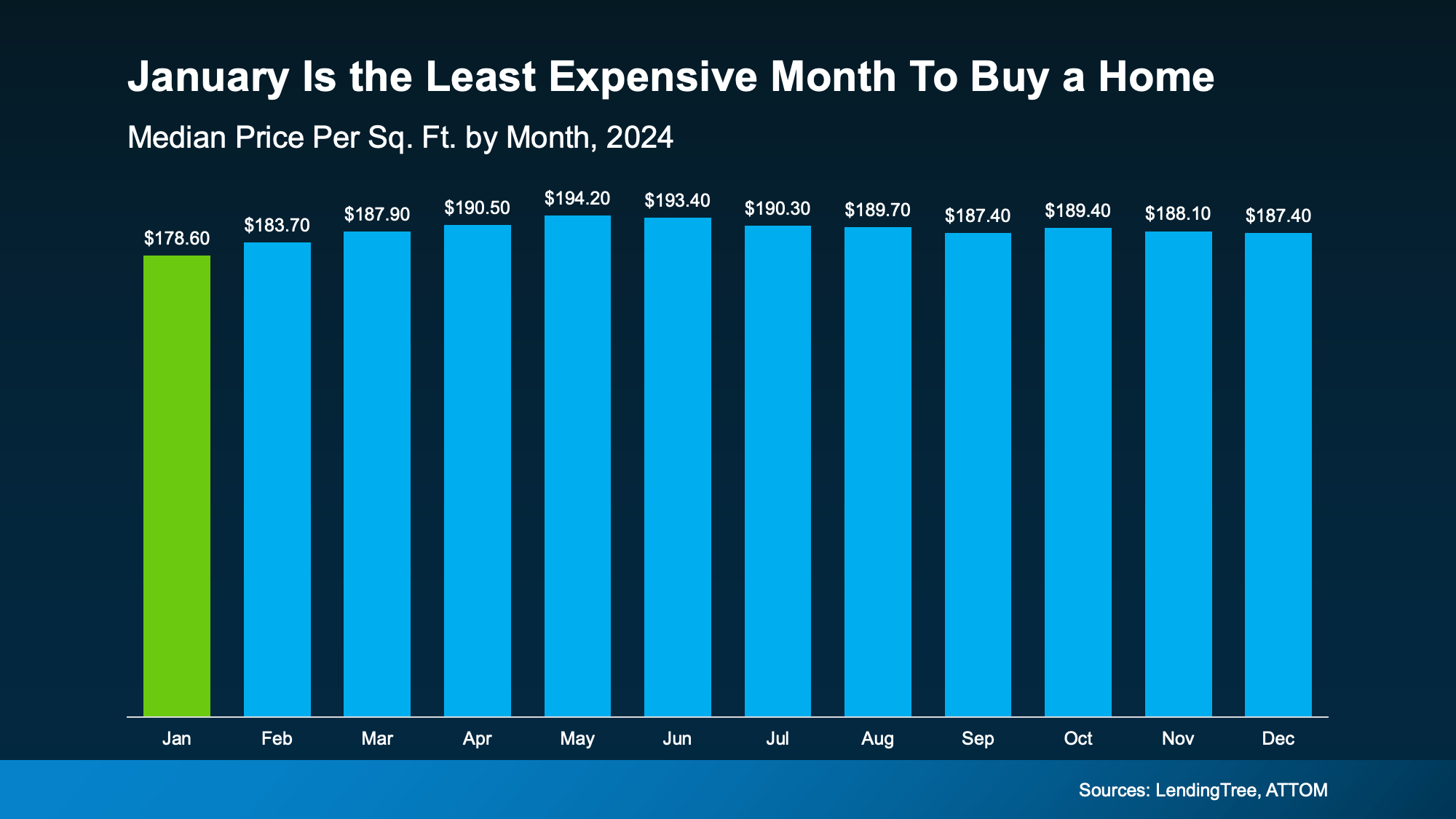
Lending Tree says January is the least expensive month to buy a home. And there’s something to that. January has historically offered one of the lowest price-per-square-foot points of the entire year. But the spring? That’s when demand (and prices) usually peak. And that’s not speculation – it's a well-known trend based on years of market data.

a graph of a number of blue bars
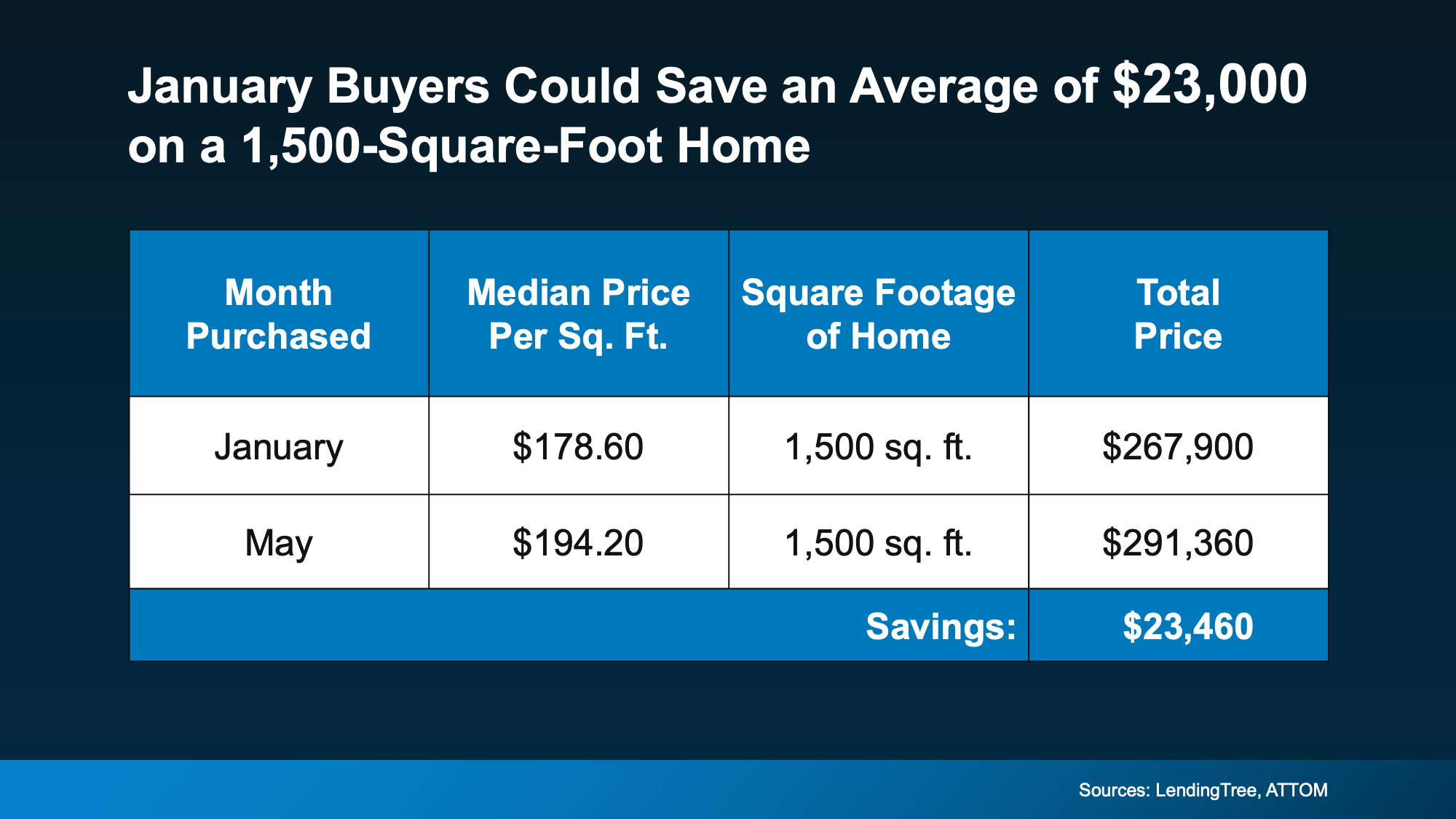
So, how much less are we talking? Here’s a look at the numbers. According to the last full year of data, for the typical 1,500 square foot house, buyers who closed on their home in January paid around $23,000 less compared to those who bought in May. And that general trend typically holds true each year (see chart below):

a blue and white table with white text
Now, your number is going to depend on the price, size, and type of the home you’re buying. But the trend is clear. For today’s buyers, it's meaningful savings, especially when affordability is still tight for so many households.

2. Fewer Buyers and More Motivated Sellers 

And why do buyers typically save in the winter? It’s simple. Winter is one of the slowest times in the housing market each year. Both buyers and sellers tend to pull back, thinking it’s better to wait until spring. And that means:

  • You face less competition
  • You’re less likely to get into a multiple offer scenario
  • Sellers are more willing to negotiate (since there aren’t as many buyers)

With fewer buyers in the market, you can take your time browsing.

But winter doesn’t just thin out the pool of buyers, it also reveals which sellers truly need to sell. Because fewer people are house hunting during the colder months, sellers who really need to move tend to be more open to negotiating. As Realtor.com explains:

“Less competition means fewer bidding wars and more power to negotiate the extras that add up: closing cost credits, home warranties, even repair concessions. . . these concessions can end up knocking thousands of dollars off the price of a home.”

This can include everything from price cuts to covering closing costs, adjusting timelines, and more. It doesn’t mean you’ll automatically get discounts on every home. But it does mean you’re more likely to be taken seriously and given room to negotiate.

Should You Wait for Spring?

Here’s the real takeaway. When you remove the pressure and frenzy that comes with the busy spring season, it becomes much easier to get the home you want at a price that fits your budget.

But if you wait until spring, more buyers will be in the market. So, waiting could actually mean you spend more and you’d have to deal with more stress.

Now, only you can decide the right timing for your life, but don't assume you should wait for warmer weather before you move.

Buying in January gives you: less competitionpotentially lower prices, and more motivated sellers. And those are three perks you’re not going to see if you wait until spring.

Bottom Line

If you’ve been thinking about taking the next step, this season might give you more opportunity than you think.

Curious what buying in January could look like for you? Let’s take a closer look at your numbers and the homes that are available in our area.

David Demangos - eXp Realty
Cell: 858.232.8410 | Realtor® DRE# 01905183
www.AwesomeSanDiegoRealEstate.com
We Go to Extremes to Fulfill Real Estate Dreams
Thursday, December 11, 2025

Why Buying a Home Still Pays Off in the Long Run

Renting can feel much less expensive and much simpler than buying a home, especially right now. No repairs, no property taxes, no worrying about mortgage rates – you just pay the bill and move on with your life.


But here’s the part people don’t talk about enough: renting doesn’t help you build your financial future. Meanwhile, homeowners grow their net worth just by owning a home.

So, if you’ve been wondering whether buying is still worth it, the long-term math is clearer than you might think.


Renting vs. Owning: How the Costs Really Compare


Let’s break down one of the key differences between renting and buying. When you rent, your payment goes to your landlord, and then it’s gone. When you own, part of your payment comes back to you in the form of equity (the wealth you build as the value of your home increases, and you pay down your home loan).


So, while renting may seem more affordable now, you have to remember it comes at a long-term cost: you’re not building your wealth. And it turns out, that’s a bigger miss than you may expect.


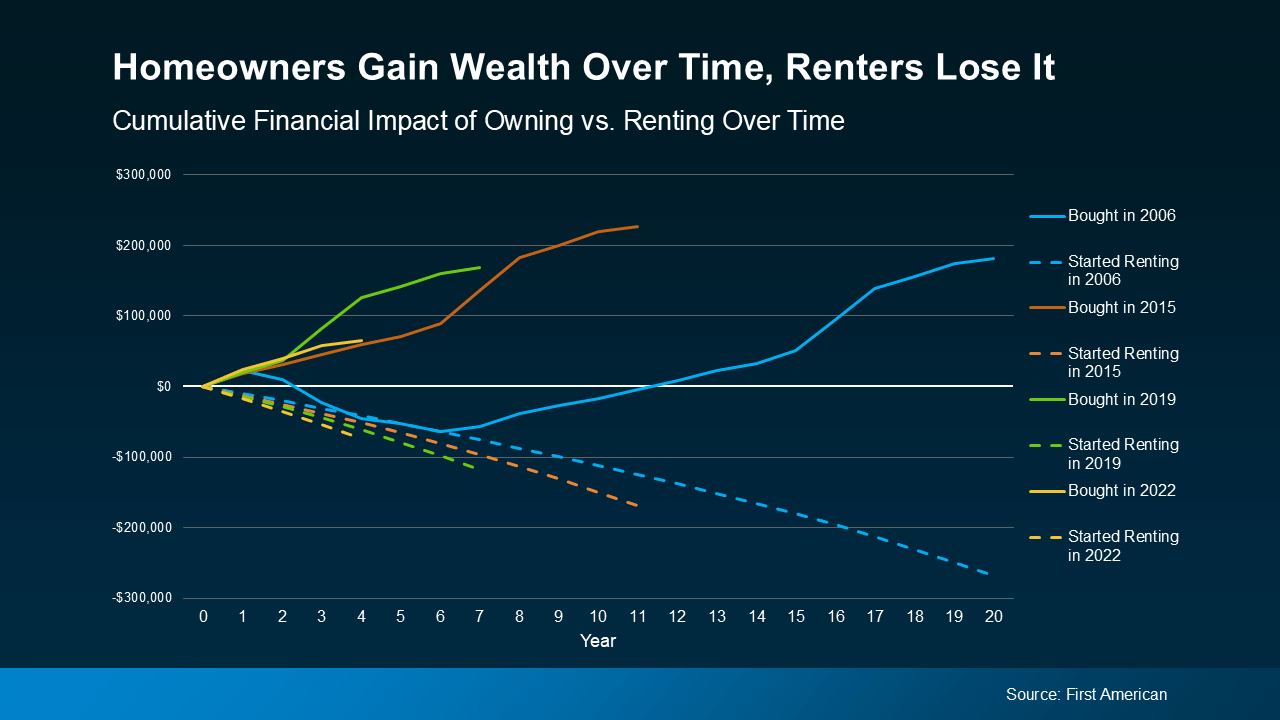
First American recently analyzed the long-term financial impact of renting versus owning a home. They compared mortgage payments, property tax, insurance, repairs, and maintenance against the equity gained through home price appreciation and paying down the mortgage. And they did that during several different time frames to see if it tells a consistent story:


  • 2006: the start of the housing bubble
  • 2015: 10 years ago
  • 2019: just before the pandemic (the last normal years in the market)
  • 2022: when mortgage rates jumped

In each time frame, two things were true: renters ended up losing money over time. And homeowners gained it.


Here’s some data so you can see this play out. Each color represents one of the key time frames. The solid lines show the buyer’s investment over time and how their net worth actually grew the longer they lived in their home. The dashed line represents the renter’s investment. In the end, they sank more and more cash into renting without gaining any financial benefit.


a graph of a graph showing the impact of owning vs renters loss

The takeaway is simple: time in a home builds wealth. Time renting doesn’t.

Basically, homeowners come out ahead. And the analysis shows that’s even after you factor in the other expenses that come with homeownership, like insurance, repairs, and property taxes. And that's the case for every time frame First American looked into.


On the flip side, renters spent money on their rent, but didn’t gain any long-term financial benefit. That’s true no matter what window of time you look at in the study.


Now, that doesn’t mean buying always beats renting in the short term. But the longer you own, the wider the wealth gap becomes.


Affordability Is Starting To Improve


You might still be thinking, “Okay, but buying feels out of reach for me right now.” Fair.

The past few years haven’t been easy for buyers. But things are starting to shift. Mortgage rates have come down this year, home prices are softening, and incomes have been rising. And according to Zillow, typical monthly payments have gotten a little easier compared to this time last year. Not by a lot, but enough to make a difference.


No, buying isn’t suddenly easy. But it is easier than it was just a few months ago. And in the long run, history shows it’s worth it. 

Bottom Line

Renting may feel less expensive today, but owning is what builds real wealth over time. And with affordability starting to improve, the path to homeownership may be opening up more than you think.


If you’re curious what buying could look like for you, let’s connect. We can figure out your next move, pressure-free.

David Demangos - eXp Realty
Cell: 858.232.8410 | Realtor® DRE# 01905183
www.AwesomeSanDiegoRealEstate.com
We Go to Extremes to Fulfill Real Estate Dreams

Monday, December 8, 2025

The 3 Housing Market Questions Coming Up at Every Gathering This Season

Whether it’s at a family gathering, your company party, or catching up with friends over the holidays, the housing market always finds its way into the conversation.

Here are the top three questions on a lot of people’s minds this season, and straightforward answers to help you feel more confident about the market.


1. “Will I even be able to find a home if I want to move?”


Yes, more than you could a year or two ago.


The number of homes for sale has been rising over the past few years. According to data from Realtor.com, there have been more than one million homes on the market for six straight months, something that hasn’t happened since 2019 (see graph below):


a graph of a number of homes

That means two things:


  • Buyers have more options.

  • Sellers have more places they can move to next.

Many homeowners who held off are realizing the shelves aren’t bare anymore. So, if you hit pause on your home search last year because nothing fit your needs, it may be worth another look. With more homes on the market now, you’re not competing for the same handful of listings like you were a couple of years ago.


And because there’s a bit more to choose from, homes aren’t disappearing the minute they hit the market. That gives buyers more space to breathe, more options to compare, and a little more time to make a confident decision.


2. “Will I ever be able to afford a house?”


Affordability is starting to improve. Finally.


It’s been a tough few years for buyers. But this year brought some much-needed good news:

  • Mortgage rates have been easing.

  • Home price growth has been moderating.

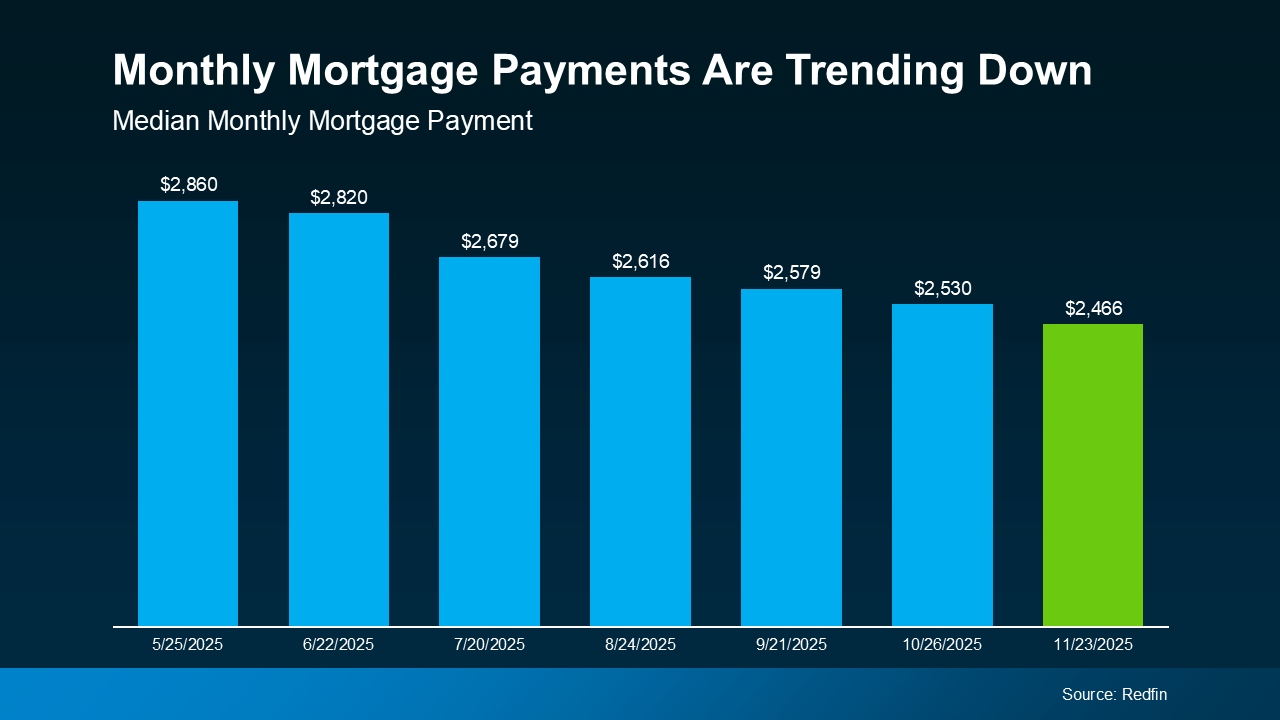
That adds up to a monthly mortgage payment that’s hundreds of dollars lower than it would have been just a few months ago (see graph below):


a graph of blue rectangular bars

Buying still isn’t easy, but the numbers are starting to improve. For a lot of people, that means buying a home is becoming a more realistic goal again.


3. “Should I wait for prices to come down?”


A lot of people worry that the housing market is about to crash, but the data doesn’t point in that direction. Yes, the number of homes for sale has been rising, but it’s still nowhere near the level needed for prices to fall significantly on a national scale. On top of that, homeowners today have a lot of equity and are in a much stronger financial position than they were back in 2008.


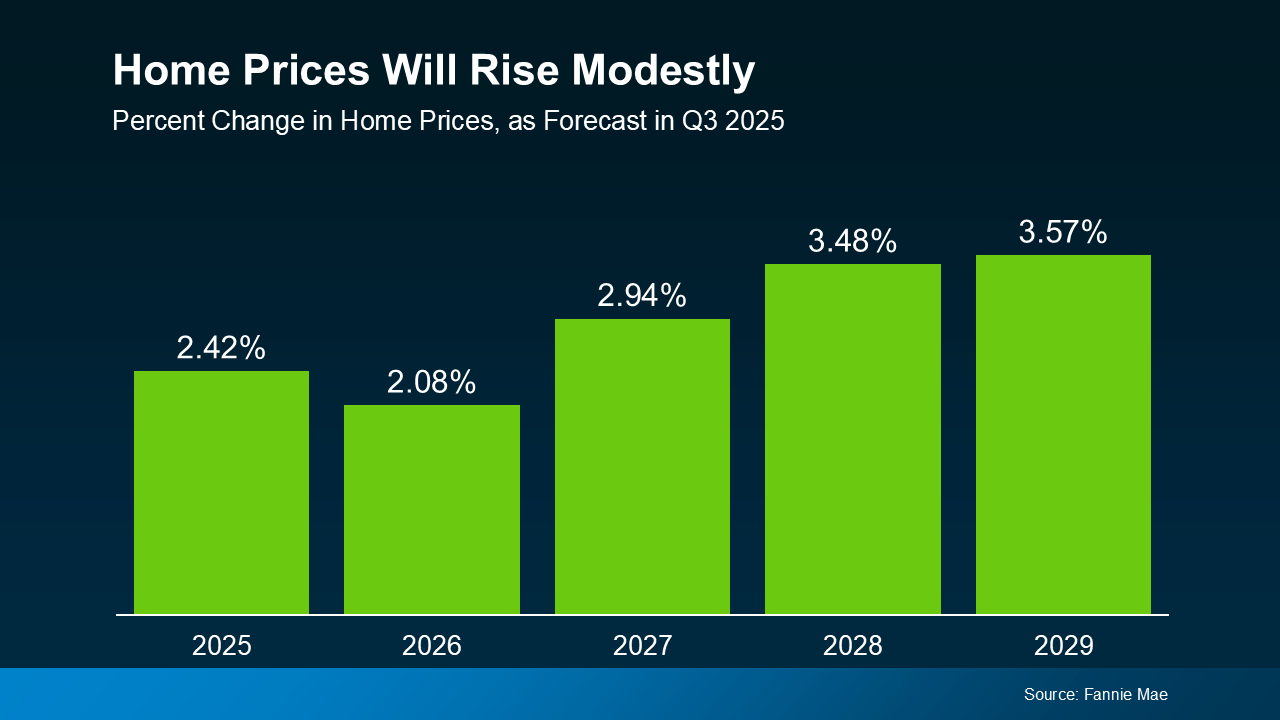
Of course, every local market is a little different. Some areas are still seeing prices climb, while others that saw huge spikes a few years ago are leveling off or seeing small corrections. But overall, the national picture is clear: experts surveyed by Fannie Mae project home prices will keep rising, just at a slower, more normal pace (see graph below):


a graph of green rectangles

That’s why waiting for a major price drop to get a deal isn’t a very strategic plan. History shows the same thing over and over: people who spend time in the market tend to build the most long-term wealth, not the people who try to time the market perfectly.

Bottom Line

Talk about the housing market can feel loud and confusing, especially when you’re hearing so many different takes. If you want to understand what these trends mean for your goals, let’s connect and walk through it together.

David Demangos - eXp Realty
Cell: 858.232.8410 | Realtor® DRE# 01905183
www.AwesomeSanDiegoRealEstate.com
We Go to Extremes to Fulfill Real Estate Dreams