Wednesday, October 25, 2017

Millennials Flock Towards Low Down Payment Programs

A report released by Down Payment Resource shows that 61% of first-time homebuyers purchased their homes with a down payment of 6% or less.

The trend continued among all buyers with a mortgage, as 73% made a down payment of less than 20%.

An article by Chase points to a new wave of millennial homebuyers:

“We teamed up with Google to help us better understand what customers are searching for and how the home buying landscape is evolving. We found that millennials and first-time homebuyers are making a big splash in the market, and affordability remains top of mind.”

Among millennials who purchased homes, David Norris, Loan Depot’s Head of Retail Lending, said:

“It’s clear from the survey results that Millennials have a lot of anxiety built up about the home buying process.

There is good news, however, as there’s more flexibility than most Millennials think regarding how to qualify for a loan and what’s needed for a down payment.”


Bottom Line

If you are one of the many millennials who is debating a home purchase this year, let’s get together to help you understand your options and set you on the path to preapproval.

Looking to Buy, Sell, or Invest? Contact:

David Demangos - Keller Williams Realty
Cell: 858.232.8410 | Realtor® BRE# 01905183
www.AwesomeSanDiegoRealEstate.com
Our Team Goes to Extremes to Fulfill Your Real Estate Dreams!

San Diego Real Estate Expert | Global Property Specialist
Certified Luxury Marketing Specialist | CLHMS Million Dollar Guild Agent
Green Specialist | Certified International Property Specialist
2016 Recognition of Excellence Award Winner SDAR

Wednesday, October 18, 2017

No… You Do Not Need 20% Down to Buy NOW!

The Aspiring Home Buyers Profile from the National Association of Realtors (NAR) found that the American public is still somewhat confused about what is required to qualify for a home mortgage loan in today’s housing market. The results of the survey show that non-homeowners cite the main reason for not currently owning a home, as not being able to afford one.

This brings us to two major misconceptions that we want to address today.


1. Down Payment

NAR’s survey revealed that consumers overestimate the down payment funds needed to qualify for a home loan. According to the report, 39% of non-homeowners say they believe they need more than 20% for a down payment on a home purchase. In actuality, there are many loans written with a down payment of 3% or less.

Many renters may actually be able to enter the housing market sooner than they ever imagined with new programs that have emerged allowing less cash out of pocket.

2. FICO® Scores

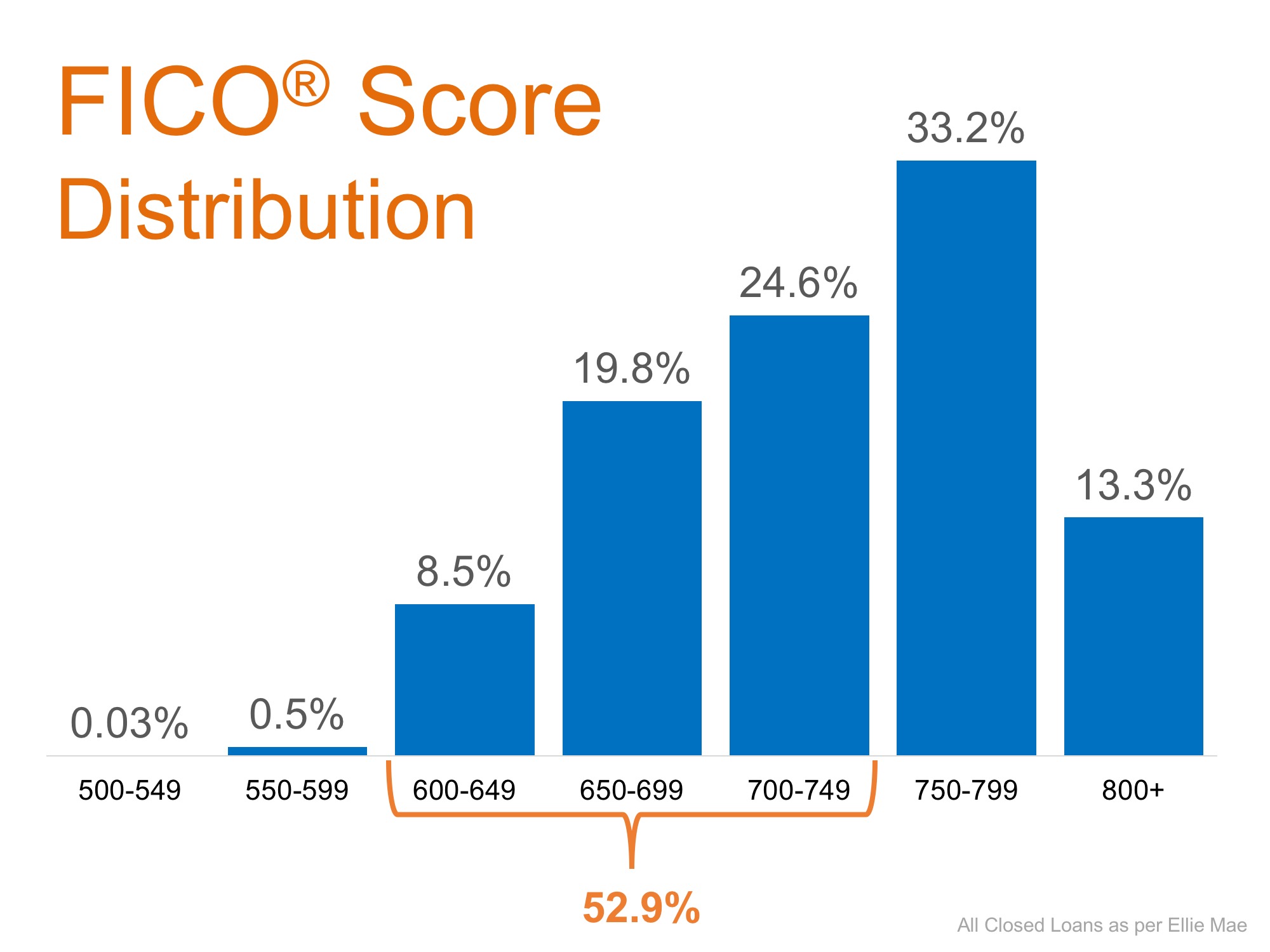
An Ipson survey revealed that 62% of respondents believe they need excellent credit to buy a home, with 43% thinking a “good credit score” is over 780. In actuality, the average FICO® scores of approved conventional and FHA mortgages are much lower.

The average conventional loan closed in August had a credit score of 752, while FHA mortgages closed with a score of 683. The average across all loans closed in August was 724. The chart below shows the distribution of FICO® Scores for all loans approved in August.


Bottom Line

If you are a prospective buyer who is ‘ready’ and ‘willing’ to act now, but are not sure if you are ‘able’ to, let’s sit down to help you understand your true options.


Looking to Buy, Sell, or Invest? Contact:
David Demangos - Keller Williams Realty
Cell: 858.232.8410 | Realtor® BRE# 01905183
www.AwesomeSanDiegoRealEstate.com
Our Team Goes to Extremes to Fulfill Your Real Estate Dreams!

San Diego Real Estate Expert | Global Property Specialist
Certified Luxury Marketing Specialist | CLHMS Million Dollar Guild Agent
Green Specialist | Certified International Property Specialist
2016 Recognition of Excellence Award Winner SDAR
Sunday, October 15, 2017

A Tale of Two Markets: A 6-Month Update

Six months ago, we reported that the mismatch between the type of inventory of homes for sale and the demand of buyers in the US was causing the formation of two markets.

In the starter and trade-up home categories, there were significantly more buyers than there were homes for sale, causing a seller’s market. In the premium, or luxury, home categories, the opposite was true as there was a surplus of these homes compared to the buyers that were out searching for their dream homes, which created a buyer’s market.

According to the National Association of Realtors latest Existing Home Sales Report, the inventory of existing homes for sale in today’s market is at a 4.2-month supply. Inventory is now 6.5% lower than this time last year, marking the 27th consecutive month of year-over-year decreases.

Looking at the latest report from Trulia, we can see that not much has changed, and in fact, recent natural disasters across the country have made inventory conditions even more dire.

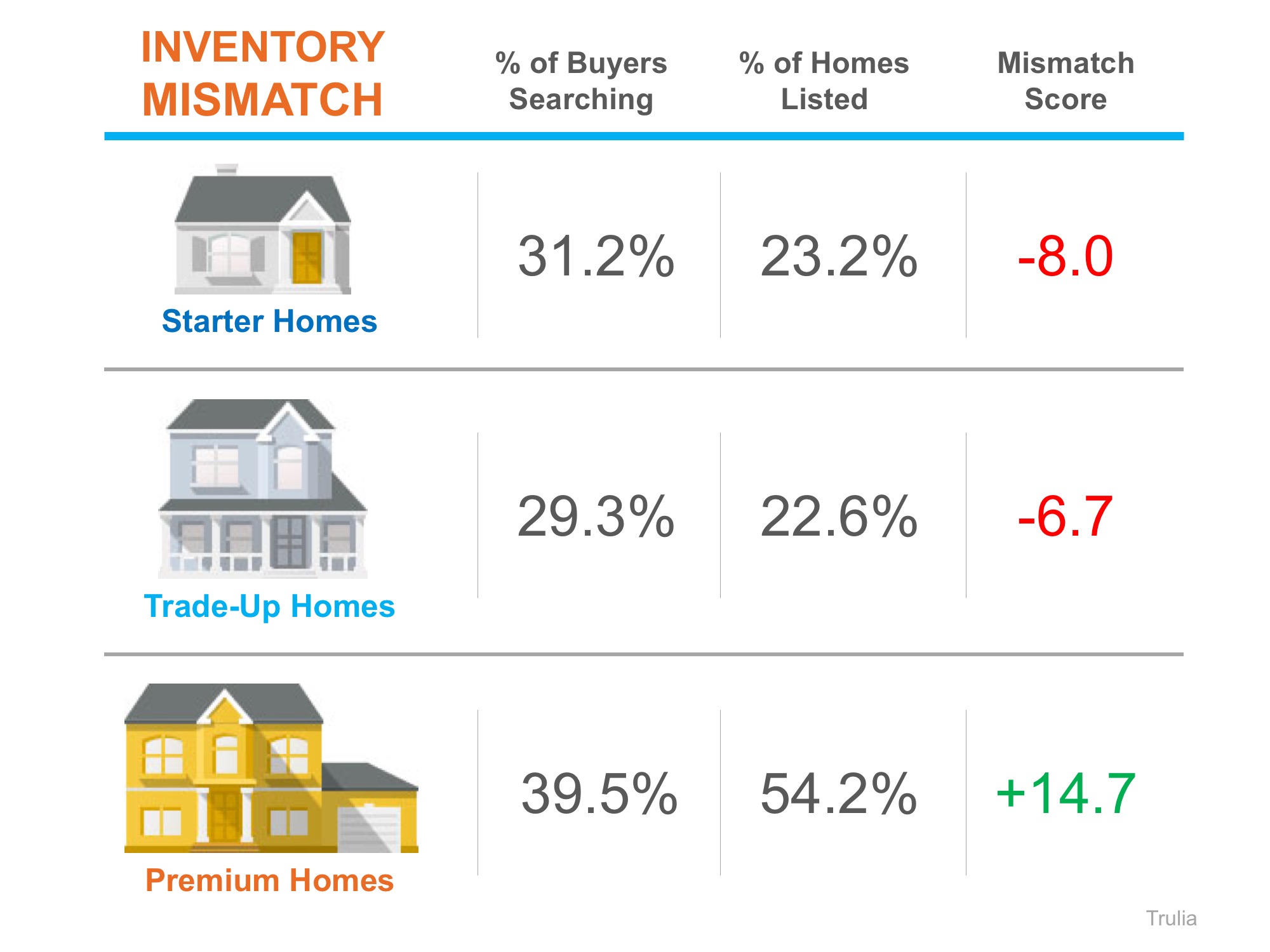
Trulia’s market mismatch score measures the search interest of buyers against the category of homes that are available on the market. For example: “if 60% of buyers are searching for starter homes but only 40% of listings are starter homes, [the] market mismatch score for starter homes would be 20.”

The results of their latest analysis are detailed in the chart below.


Nationally, buyers are searching for starter and trade-up homes and are coming up short with the listings available, which is leading to a highly competitive seller’s market in these categories.

Premium homebuyers, on the other hand, have the best chance of less competition and more inventory of listings in their price range with a 14.7-point surplus, which is creating more of a buyer’s market.

Bottom Line

Real estate is local. If you are thinking about buying OR selling this fall, let’s get together to discuss the exact market conditions in your area.

Looking to Buy, Sell, or Invest? Contact:

David Demangos - Keller Williams Realty
Cell: 858.232.8410 | Realtor® BRE# 01905183
www.AwesomeSanDiegoRealEstate.com
Our Team Goes to Extremes to Fulfill Your Real Estate Dreams!

San Diego Real Estate Expert | Global Property Specialist
Certified Luxury Marketing Specialist | CLHMS Million Dollar Guild Agent
Green Specialist | Certified International Property Specialist
2016 Recognition of Excellence Award Winner SDAR
Saturday, October 14, 2017

Which Homes Have Increased in Value the Most?

Home values have risen dramatically over the last twelve months. The latest Existing Home Sales Report from the National Association of Realtors puts the annual increase in the median existing-home price at 5.6%. CoreLogic, in their most recent Home Price Index Report, revealed that national home prices have increased by 6.7% year-over-year.

CoreLogic broke appreciation down ever further into four price ranges which gives a more detailed view than simply looking at the year-over-year increases of the national median home price.

The chart below shows the four tiers and each one’s growth from July 2016 to July 2017 (the latest data available).


It is important to pay attention to how prices are changing in your local market. The location of your home is not the only factor in determining how much it has appreciated over the course of the last year. Lower priced homes have appreciated at greater rates than homes at the upper ends of the spectrum, due to demand from first-time home buyers and baby boomers looking to downsize.

Bottom Line
If you are planning on listing your home for sale in today’s market, let’s get together to go over exactly what’s going on in your area and your price range.

Looking to Buy, Sell, or Invest? Contact:

David Demangos - Keller Williams Realty
Cell: 858.232.8410 | Realtor® BRE# 01905183
www.AwesomeSanDiegoRealEstate.com
Our Team Goes to Extremes to Fulfill Your Real Estate Dreams!

San Diego Real Estate Expert | Global Property Specialist
Certified Luxury Marketing Specialist | CLHMS Million Dollar Guild Agent
Green Specialist | Certified International Property Specialist
2016 Recognition of Excellence Award Winner SDAR

Wednesday, October 11, 2017

The Truth About Homeowner Equity

A recent article from a reputable news source was titled: Here's why some homeowners still can't sell. In the opening bullets of the article, the author claimed, “Negative equity is one of the main reasons why there are so few homes for sale.” The article then goes on to soften that stance but we want to bring better clarity to the equity situation.

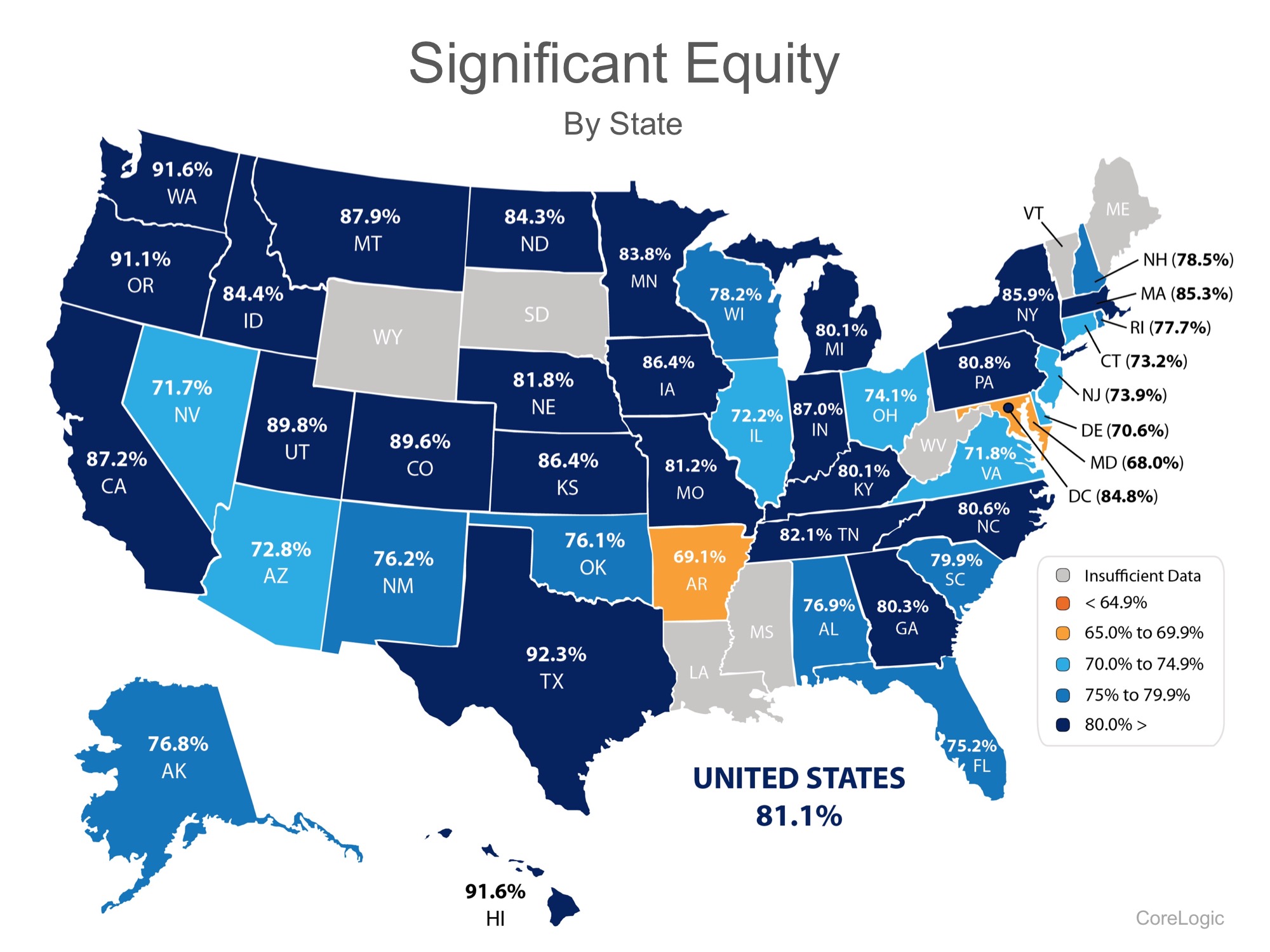
A recent report from CoreLogic (which was quoted in the article) revealed that over 80% of all homes now have “significant equity,” which means the home has over 20% equity. That level of equity allows the homeowner to sell their home if they so desire. (There was no reference to significant equity in the article.)

If eight out of ten homeowners now have significant equity in their homes, it is hard to make the claim that lack of equity is “one of the main reasons why there are so few homes for sale.”

Here is a map showing the percentage of homes in each state which currently have significant equity:


Bottom Line

If you are one of many homeowners who is debating selling your home and are wondering how much equity you have accumulated, let’s get together to determine if now is the time to list.

Looking to Buy, Sell, or Invest? Contact:


David Demangos - Keller Williams Realty
Cell: 858.232.8410 | Realtor® BRE# 01905183
www.AwesomeSanDiegoRealEstate.com
Our Team Goes to Extremes to Fulfill Your Real Estate Dreams!

San Diego Real Estate Expert | Global Property Specialist
Certified Luxury Marketing Specialist | CLHMS Million Dollar Guild Agent
Green Specialist | Certified International Property Specialist
2016 Recognition of Excellence Award Winner SDAR
Wednesday, October 4, 2017

How to Get the Most Money from the Sale of Your Home

Every homeowner wants to make sure they maximize their financial reward when selling their home. But how do you guarantee that you receive maximum value for your house? Here are two keys to ensure that you get the highest price possible.

1. Price it a LITTLE LOW

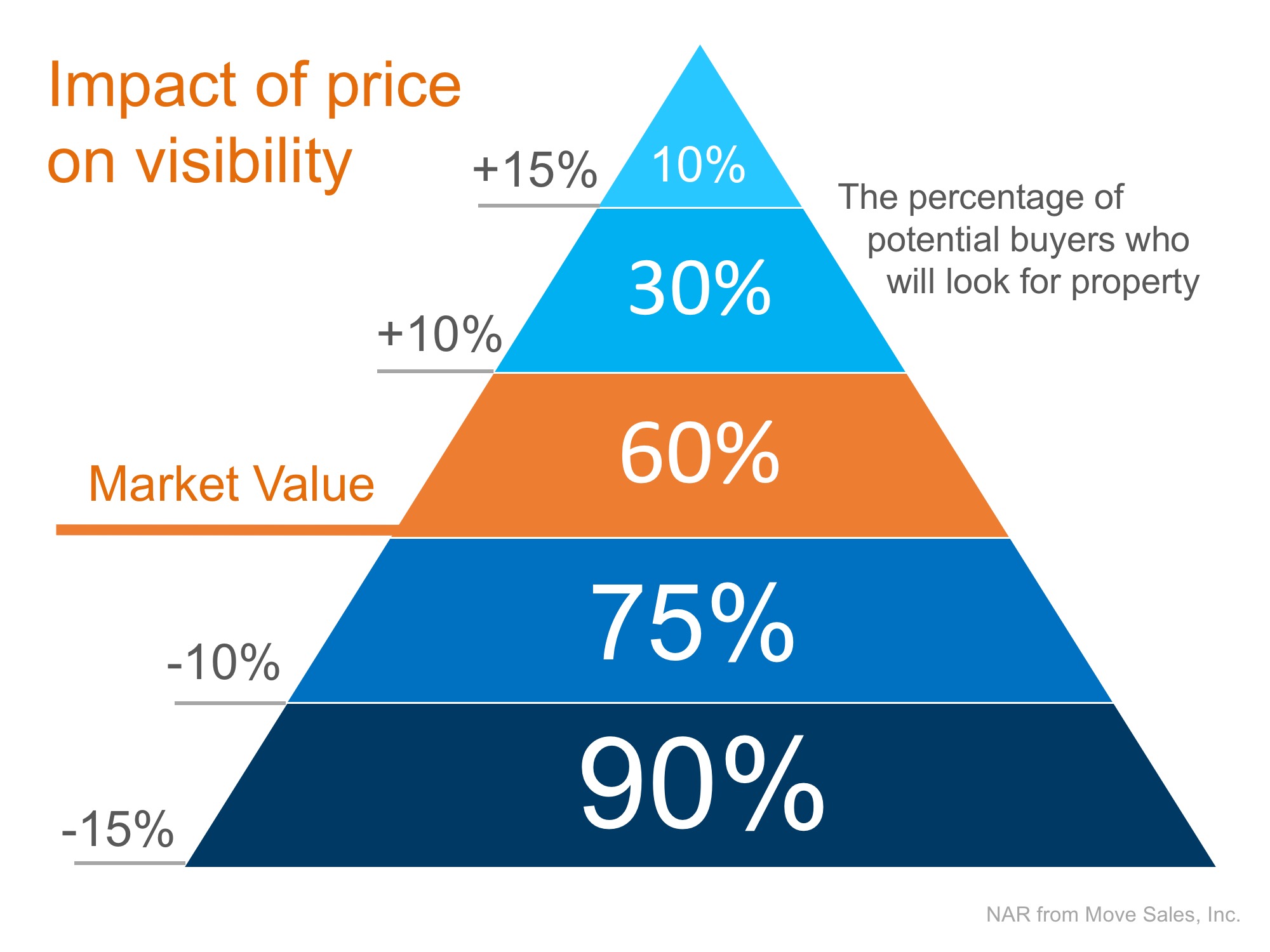
This may seem counterintuitive. However, let’s look at this concept for a moment. Many homeowners think that pricing their home a little OVER market value will leave them room for negotiation. In actuality, this just dramatically lessens the demand for your house (see chart below).


Instead of the seller trying to ‘win’ the negotiation with one buyer, they should price it so that demand for the home is maximized. By doing this, the seller will not be fighting with a buyer over the price, but will instead have multiple buyers fighting with each other over the house.

Realtor.com gives this advice:

“Aim to price your property at or just slightly below the going rate. Today’s buyers are highly informed, so if they sense they’re getting a deal, they’re likely to bid up a property that’s slightly underpriced, especially in areas with low inventory.”


2. Use a Real Estate Professional

This, too, may seem counterintuitive. The seller may think they would make more money if they didn’t have to pay a real estate commission. With this being said, studies have shown that homes typically sell for more money when handled by a real estate professional.

A new study by Collateral Analytics, reveals that FSBOs don’t actually save any money, and in some cases may be costing themselves more, by not listing with an agent.

In the study, they analyzed home sales in a variety of markets in 2016 and the first half of 2017. The data showed that:

“FSBOs tend to sell for lower prices than comparable home sales, and in many cases below the average differential represented by the prevailing commission rate.”

The results of the study showed that the differential in selling prices for FSBOs when compared to MLS sales of similar properties is about 5.5%. Sales in 2017 suggest the average price was near 6% lower for FSBO sales of similar properties.

Bottom Line


Price your house at or slightly below the current market value and hire a professional. This will guarantee that you maximize the price you get for your house.

Looking to Buy, Sell, or Invest? Contact:

David Demangos - Keller Williams Realty
Cell: 858.232.8410 | Realtor® BRE# 01905183
www.AwesomeSanDiegoRealEstate.com
Our Team Goes to Extremes to Fulfill Your Real Estate Dreams!

San Diego Real Estate Expert | Global Property Specialist
Certified Luxury Marketing Specialist | CLHMS Million Dollar Guild Agent
Green Specialist | Certified International Property Specialist
2016 Recognition of Excellence Award Winner SDAR
Sunday, October 1, 2017

7 Pricing Myths When Selling Your Home

Weighing sellers' expectations against market realities can be a delicate dance

-Sellers tend to overprice and spend a tremendous amount of effort trying to defend their price, even if the market doesn't support it.


-Pricing a home correctly is a partnership between sellers and their agent, not a battle of wills.

When it comes down to it, the most important advice a real estate agent can give sellers is how to price their home. No matter how beautiful or well-maintained a property may be, how many upgrades it has or how well it shows, if a home is not properly priced, it’s going to be a tough sell (or not sell at all)

The battle for agents most often lies with aligning what sellers’ think their home is worth with its true market value. These disparate realities can be difficult to merge when working with a seller to set a list price or on a price adjustment. Here are seven pricing myths that often get in the way.

1. It is better to price the home on the high side because the seller can always come down.

If buyers are interested, they can make an offer. Well, not quite. If a home is overpriced, a seller risks losing potential buyers who aren’t stretching their search into an uncomfortable price range. The asking price sets the stage and may invite or dissuade buyers based on the dollar amount. Just as you would painstakingly prepare your home for sale, you never get a second chance to make a first impression price-wise.

2. If a home is priced just right, a seller risks leaving money on the table.

Actually, the opposite is true. A well-priced home tends to generate a lot of interest and can result in multiple offers. A shorter marketing span brings strong offers that could result in a home selling for over asking price. Buyers are less likely to play “let’s make a deal” and nit-pick every little thing; they feel the urgency of competing with other interested parties for the same house.

3. The price gets better with time.

If it doesn’t sell this time, the seller will get a better price by re-listing next spring, next summer, etc. It has been said before, but it needs to be said again: A home that sits is not like fine wine — it does not get better with time. The longer a home stays on the market, the more likely buyers are to question its value. Subsequently, any offers that come in tend to be perceived as too low by an already-frustrated seller who thinks there weren’t any buyers for their home while it was on the market the first time. Waiting to re-list again may mean competing with other houses on the market that are both nicer and offer more bang for their buck.

The additional carrying costs of a mortgage, maintenance and upkeep as well as the possibility of needing to make repairs to an aging roof or AC system eat into the profitability of commanding a better price next year. If the home is somewhat dated on the inside, price out the cost of replacing granite counters, updating appliances, repainting and other upgrades, and it will likely be much less expensive to adjust the price without as much hassle.

4. X price is as low as the seller will go.

When faced with an offer that is less than what they want, sellers love to draw a line in the sand and dig their heels in over an arbitrary number that they deem to be “their bottom line.” Who decides what a property is ultimately worth anyway? Buyers see the glass as half empty versus half full, and in some markets and real estate cycles, they are holding the cards. Sellers can decline an offer based on a number, but they may never get there with another buyer, and a subsequent offer may be lower or layered with conditions and complications.

5. An offer should come in close to asking price.

Sellers are often disappointed at the initial price when an offer is received and ask “why so low?” Does a seller really think a buyer is going to be generous with their initial offer? Unless it is a really hot property, priced aggressively or in a low-inventory market, no buyer is going to willingly offer more than they have to, especially on a first pass. They want to get a sense of the seller’s flexibility or lack thereof before deciding their next move.

6. Outdated features shouldn’t impact the selling price.

So the home has “upgrades” circa 1990 with white melamine cabinets, beveled edge laminate counters and builder grade 12-by-12-inch tile with brass fixtures, and the seller expects the buyer to pay full asking price or close to it? Reality check! The buyers are looking at how much they are going to have to spend to bring the home up to today’s standards and are going to deduct accordingly when formulating an offer.

7. The buyer’s offer is simply too far off the asking price to counter.

A bird in the hand is worth two in the bush. A buyer has stepped up and put pen to the paper with a proposal. An offer is an invitation to negotiate and begin discussions about the property. It can be easy to get offended, but it’s best to keep emotion out of negotiation as much as possible and work in good faith with what’s presented. A seller will learn quickly if it looks like a transaction may come together.

Pricing a property is a delicate dance. The bottom line is that the market doesn’t guarantee as strong a price as sellers usually want or expect — unless the home is a highly sought after, rare type of property. Setting the stage with the right pricing will often set the tone for how smoothly the listing experience will unfold.

Looking to Buy, Sell, or Invest? Contact:

David Demangos - Keller Williams Realty
Cell: 858.232.8410 | Realtor® BRE# 01905183
www.AwesomeSanDiegoRealEstate.com
Our Team Goes to Extremes to Fulfill Your Real Estate Dreams!

San Diego Real Estate Expert | Global Property Specialist
Certified Luxury Marketing Specialist | CLHMS Million Dollar Guild Agent
Green Specialist | Certified International Property Specialist
2016 Recognition of Excellence Award Winner SDAR