Showing posts with label pricing my home to sell. Show all posts

Tuesday, July 5, 2022

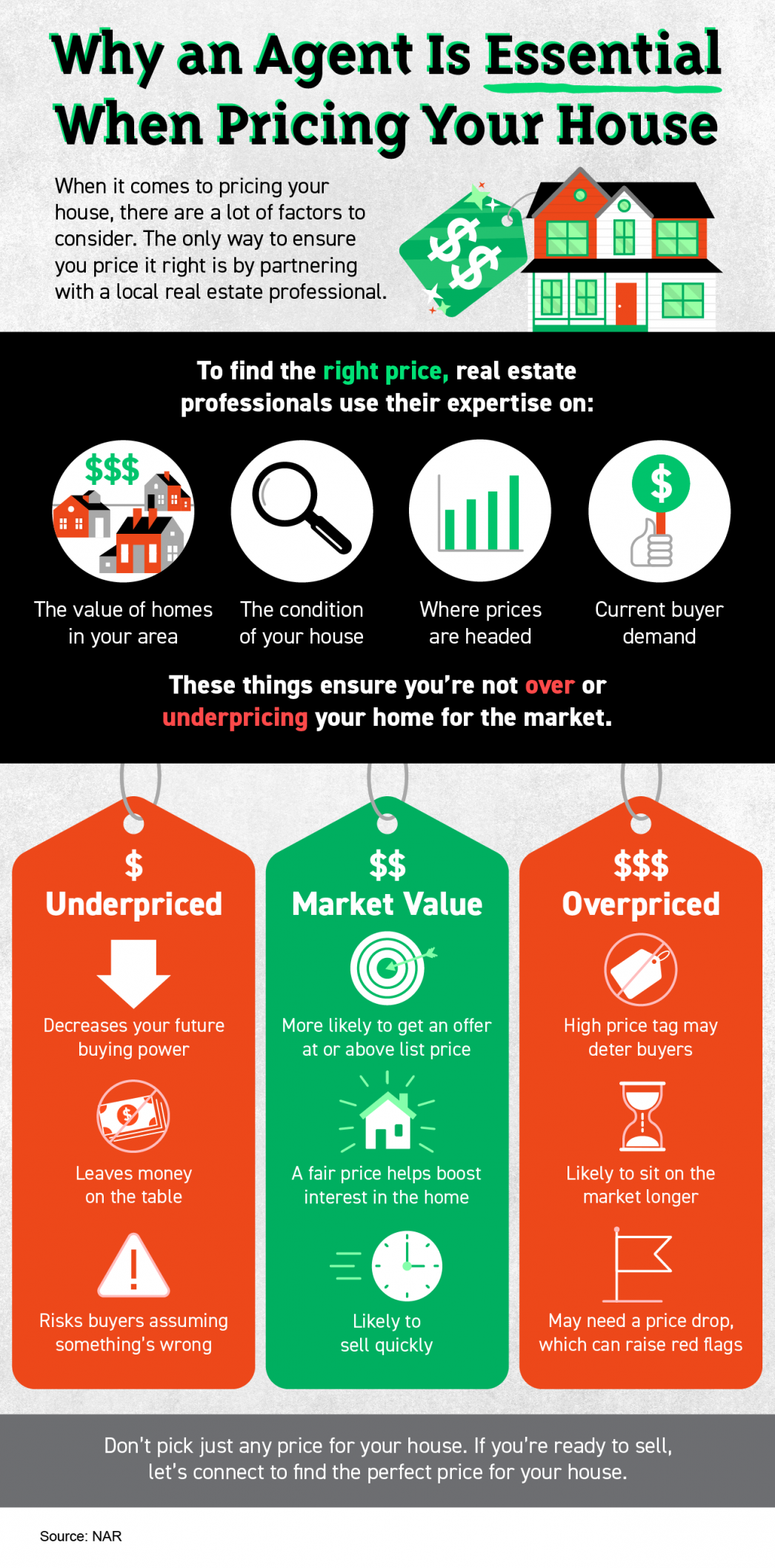
Why an Agent Is Essential When Pricing Your House


Some Highlights:

When it comes to pricing your house, there’s a lot to consider. The only way to ensure you price it right is by partnering with a local real estate professional.

To find the best price, your agent balances current market demand, the values of homes in your neighborhood, where prices are headed, and your home’s condition.

Don’t pick just any price for your house. If you’re ready to sell, let’s connect to find the perfect price for your house.

Looking to Buy, Sell, or Invest? Contact:

David Demangos - eXp Realty
Cell: 858.232.8410 | Realtor® DRE# 01905183
www.AwesomeSanDiegoRealEstate.com
We Go to Extremes to Fulfill Real Estate Dreams!

San Diego Real Estate Expert | Global Property Specialist
Certified Luxury Marketing Specialist | CLHMS Million Dollar Guild Agent
Green Specialist | Certified International Property Specialist
2016, 2017, 2018,2019,2020,& 2021 Recognition of Excellence Award Winner SDAR

Saturday, January 2, 2021

Why It’s Important to Price Your House Right Today

Even in today’s sellers’ market, setting the right price for your house is one of the most valuable things you can do. According to the U.S. Economic Outlook by the National Association of Realtors (NAR), existing home prices nationwide are forecasted to increase by 4.5% in 2021. This means experts anticipate home values will continue climbing next year. Danielle Hale, Chief Economist for realtor.com, notes:

“We expect price gains to ease somewhat in 2021 and end 5.7% above 2020 levels, decelerating steadily through the spring and summer, and then gradually reaccelerating toward the end of the year.”

How to Price Your House

When it comes to setting the right price for your house, the goal is to increase visibility and drive more buyers your way. Instead of trying to win the negotiation with one buyer, you should price your house so that demand is maximized and more buyers want to take a look.

As a seller in today’s market, you might be thinking about pricing your house on the high end while so many of today’s buyers are searching harder than ever just to find a home to purchase. But here’s the thing – a high price tag does not mean you’re going to cash in big on the sale. It’s actually more likely to deter buyers.

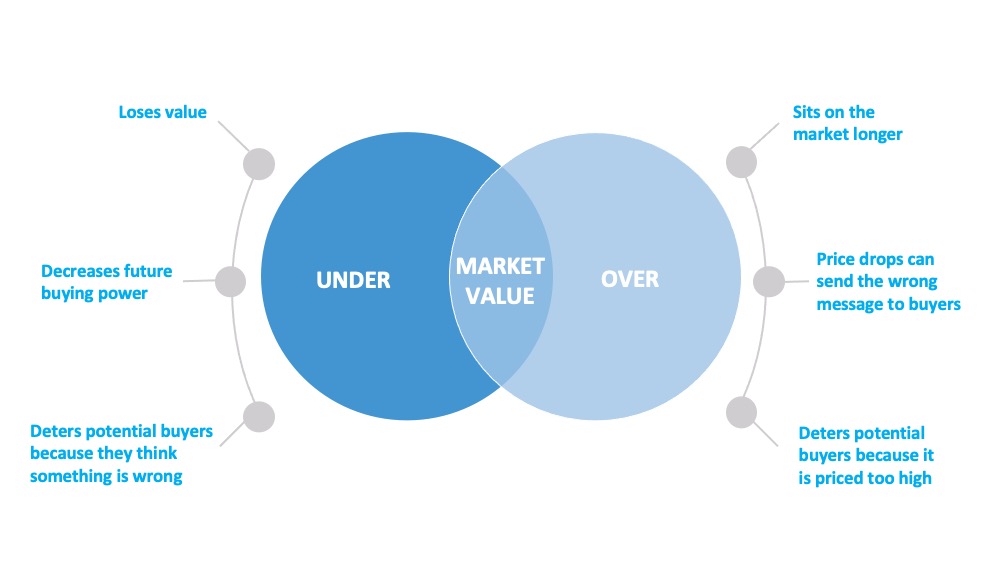
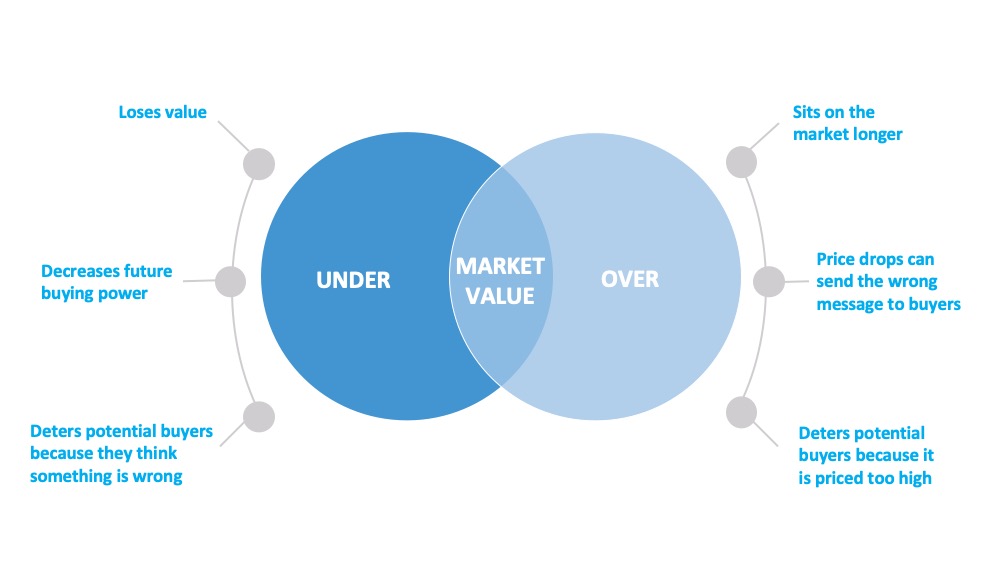
Right now, even when there are so few houses for sale, your house is more likely to sit on the market longer or require a price drop that can send buyers running if it isn’t priced just right from the very beginning. It’s important to make sure your house is priced correctly by working with a trusted real estate professional throughout the process. When you price it competitively from the start, you won’t be negotiating with one buyer. Instead, you’ll likely have multiple buyers competing for the house, potentially increasing the final sale price.

The key is to make sure your house is priced to sell immediately. This way, it will be seen by the greatest number of buyers. More than one of them may be interested, and it will be more likely to sell at a competitive price.

Bottom Line

Let’s connect to price your house correctly from the start so you can maximize your exposure and your return.

Looking to Buy, Sell, or Invest? Contact:

David Demangos - eXp Realty
Cell: 858.232.8410 | Realtor® DRE# 01905183
www.AwesomeSanDiegoRealEstate.com
We Go to Extremes to Fulfill Real Estate Dreams!

San Diego Real Estate Expert | Global Property Specialist
Certified Luxury Marketing Specialist | CLHMS Million Dollar Guild Agent
Green Specialist | Certified International Property Specialist
2016, 2017, 2018,& 2019 Recognition of Excellence Award Winner SDAR

Friday, September 25, 2020

Why Pricing Your House Right Is Essential

In today’s real estate market, setting the right price for your house is one of the most valuable things you can do.

According to the U.S. Economic Outlook by the National Association of Realtors (NAR), existing home prices nationwide are forecasted to increase 4.7% in 2020 and 4.1% in 2021. This means experts anticipate home values will continue climbing into next year. Today, low inventory is largely keeping prices from depreciating. Danielle Hale, Chief Economist at realtor.com, notes:

“Looking at the sheer number of buyers, low mortgage rates, and limited sellers, the strength of home prices–which are now growing at the highest pace since January 2018–makes sense.”

When it comes to pricing your home, the goal is to increase visibility and drive more buyers your way. Instead of trying to win the negotiation with one buyer, you should price your house so that demand is maximized and more buyers want to take a look.
How to Price Your Home

As a seller, you might be thinking about pricing your house on the high end while so many of today’s buyers are searching harder than ever just to find a home to purchase. You’re thinking, higher price, greater profit, right? But here’s the thing – a high price tag does not mean you’re going to cash in big on the sale. It’s actually more likely to deter buyers and have them looking at the houses your neighbors are selling instead.

Even today, when the advantage tips toward sellers because there are so few houses for sale, your house is more likely to sit on the market longer or require a price drop that can send buyers running in the other direction if it isn’t priced just right.


A Trusted Real Estate Professional Will Help

It’s important to make sure your house is priced correctly by working in partnership with a trusted real estate professional. When you price it competitively, you won’t be negotiating with one buyer over the price. Instead, you’ll have multiple buyers competing for the home, and that’s what ultimately increases the final sale price.

The key is making sure your house is priced to sell immediately. That way, it will be seen by the most buyers. More than one of them may be interested, and your house will be more likely to sell at a competitive price.

Bottom Line

If you’re thinking about listing your house this fall, let’s discuss how to price it right so you can maximize your exposure and your return.

Looking to Buy, Sell, or Invest? Contact:

David Demangos - eXp Realty
Cell: 858.232.8410 | Realtor® DRE# 01905183
www.AwesomeSanDiegoRealEstate.com
We Go to Extremes to Fulfill Real Estate Dreams!

San Diego Real Estate Expert | Global Property Specialist
Certified Luxury Marketing Specialist | CLHMS Million Dollar Guild Agent
Green Specialist | Certified International Property Specialist
2016, 2017, 2018,& 2019 Recognition of Excellence Award Winner SDAR

Sunday, October 1, 2017

7 Pricing Myths When Selling Your Home

Weighing sellers' expectations against market realities can be a delicate dance

-Sellers tend to overprice and spend a tremendous amount of effort trying to defend their price, even if the market doesn't support it.


-Pricing a home correctly is a partnership between sellers and their agent, not a battle of wills.

When it comes down to it, the most important advice a real estate agent can give sellers is how to price their home. No matter how beautiful or well-maintained a property may be, how many upgrades it has or how well it shows, if a home is not properly priced, it’s going to be a tough sell (or not sell at all)

The battle for agents most often lies with aligning what sellers’ think their home is worth with its true market value. These disparate realities can be difficult to merge when working with a seller to set a list price or on a price adjustment. Here are seven pricing myths that often get in the way.

1. It is better to price the home on the high side because the seller can always come down.

If buyers are interested, they can make an offer. Well, not quite. If a home is overpriced, a seller risks losing potential buyers who aren’t stretching their search into an uncomfortable price range. The asking price sets the stage and may invite or dissuade buyers based on the dollar amount. Just as you would painstakingly prepare your home for sale, you never get a second chance to make a first impression price-wise.

2. If a home is priced just right, a seller risks leaving money on the table.

Actually, the opposite is true. A well-priced home tends to generate a lot of interest and can result in multiple offers. A shorter marketing span brings strong offers that could result in a home selling for over asking price. Buyers are less likely to play “let’s make a deal” and nit-pick every little thing; they feel the urgency of competing with other interested parties for the same house.

3. The price gets better with time.

If it doesn’t sell this time, the seller will get a better price by re-listing next spring, next summer, etc. It has been said before, but it needs to be said again: A home that sits is not like fine wine — it does not get better with time. The longer a home stays on the market, the more likely buyers are to question its value. Subsequently, any offers that come in tend to be perceived as too low by an already-frustrated seller who thinks there weren’t any buyers for their home while it was on the market the first time. Waiting to re-list again may mean competing with other houses on the market that are both nicer and offer more bang for their buck.

The additional carrying costs of a mortgage, maintenance and upkeep as well as the possibility of needing to make repairs to an aging roof or AC system eat into the profitability of commanding a better price next year. If the home is somewhat dated on the inside, price out the cost of replacing granite counters, updating appliances, repainting and other upgrades, and it will likely be much less expensive to adjust the price without as much hassle.

4. X price is as low as the seller will go.

When faced with an offer that is less than what they want, sellers love to draw a line in the sand and dig their heels in over an arbitrary number that they deem to be “their bottom line.” Who decides what a property is ultimately worth anyway? Buyers see the glass as half empty versus half full, and in some markets and real estate cycles, they are holding the cards. Sellers can decline an offer based on a number, but they may never get there with another buyer, and a subsequent offer may be lower or layered with conditions and complications.

5. An offer should come in close to asking price.

Sellers are often disappointed at the initial price when an offer is received and ask “why so low?” Does a seller really think a buyer is going to be generous with their initial offer? Unless it is a really hot property, priced aggressively or in a low-inventory market, no buyer is going to willingly offer more than they have to, especially on a first pass. They want to get a sense of the seller’s flexibility or lack thereof before deciding their next move.

6. Outdated features shouldn’t impact the selling price.

So the home has “upgrades” circa 1990 with white melamine cabinets, beveled edge laminate counters and builder grade 12-by-12-inch tile with brass fixtures, and the seller expects the buyer to pay full asking price or close to it? Reality check! The buyers are looking at how much they are going to have to spend to bring the home up to today’s standards and are going to deduct accordingly when formulating an offer.

7. The buyer’s offer is simply too far off the asking price to counter.

A bird in the hand is worth two in the bush. A buyer has stepped up and put pen to the paper with a proposal. An offer is an invitation to negotiate and begin discussions about the property. It can be easy to get offended, but it’s best to keep emotion out of negotiation as much as possible and work in good faith with what’s presented. A seller will learn quickly if it looks like a transaction may come together.

Pricing a property is a delicate dance. The bottom line is that the market doesn’t guarantee as strong a price as sellers usually want or expect — unless the home is a highly sought after, rare type of property. Setting the stage with the right pricing will often set the tone for how smoothly the listing experience will unfold.

Looking to Buy, Sell, or Invest? Contact:

David Demangos - Keller Williams Realty
Cell: 858.232.8410 | Realtor® BRE# 01905183
www.AwesomeSanDiegoRealEstate.com
Our Team Goes to Extremes to Fulfill Your Real Estate Dreams!

San Diego Real Estate Expert | Global Property Specialist
Certified Luxury Marketing Specialist | CLHMS Million Dollar Guild Agent
Green Specialist | Certified International Property Specialist
2016 Recognition of Excellence Award Winner SDAR

Saturday, April 25, 2015

How to Receive the Most Money for Your Home

Naturally, sellers want to receive the most money possible for their homes when they sell. There is one item that, if not perfect, will cause your home to sell for less than it should — that single item is the price. 

Pricing your home properly to begin with is without question the single most important factor to selling your home for top dollar. When done properly, this positions your home in the marketplace to sell for the absolute highest possible price. When the home is priced too low, it may sell quickly and yet could sell for less money than it should. When the home is priced too high, it will sit on the market for a long period of time and ultimately sell for less.

The biggest mistake I see by owners selling, as well as by real estate agents, is overpricing a home to start with and having to reduce the price multiple times. When a home is listed for sale, it reaches the highest number of potential buyers the first few days it is on the market. If a home is dismissed as being overpriced early on, you will lose potential buyers, ouch!

Buyers sift through listings online; they look at the main home photo first, then they look at the price. If the potential buyer does not like either of those items, they will move on to the next listing. Ask yourself: How many times have I done that? We do it all the time.

The challenge is pricing the home properly. You can use the Zillow Zestimate; you can see how much a neighbor’s home is listed for and price a home the same, or you can just price the home at the amount of money you “want” to get (or need to get) for it. Unfortunately none of those methods work, and they certainly will not help you sell a home for top dollar. Let’s take a quick look at why these methods don’t work.

The Zillow Zestimate is a very popular, well-marketed tool. Zillow is in the business of generating leads for real estate agents, and it is very good at it. The Zillow Zestimate is an interesting tool, but it is not usually accurate. The entire system is computerized and based off of public records that are sometimes incorrect. There have been numerous occasions when I have come across public records in which the number of bedrooms, bathrooms or the square footage of a home has been incorrect. All of these errors lead to inaccurate Zestimate results.

The biggest issue with the Zestimate is its inability to take into account items such as home features, upgrades and the condition of a property. Those items require an actual human to take an in-depth look at your property and determine how it truly compares to another property. Once that determination is made, proper adjustments to the value are made.